Paris · Antiquities
The Guardian with a King's Face: The Great Sphinx
The Great Sphinx · Paris, France
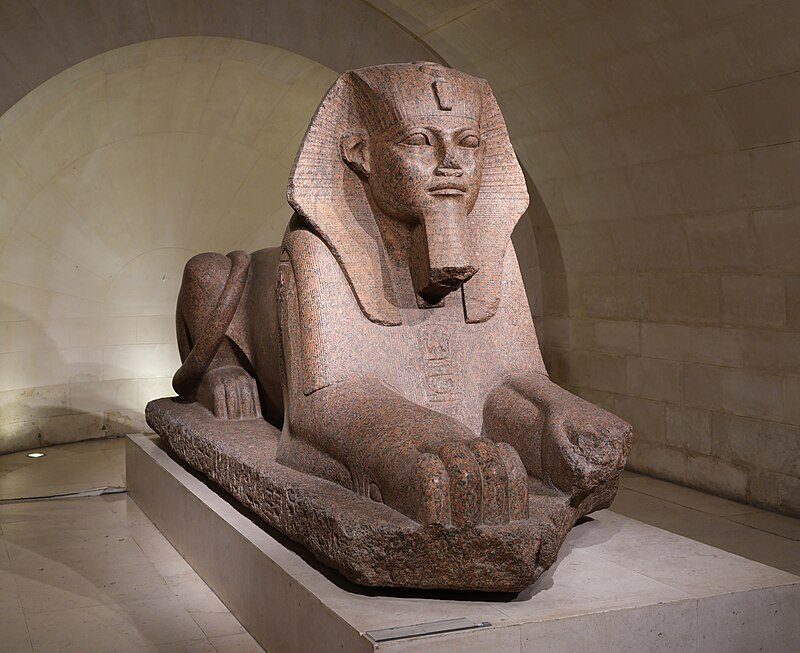
Alongside the pyramids, the Sphinx is one of Egypt's defining symbols. Greek and Roman mythology cast the sphinx as a man-eating monster, but in Egypt itself it was actually revered as a guardian spirit, typically placed at the entrance of a palace or temple, or in front of a pharaoh's pyramid tomb.
This particular sphinx has the face of a pharaoh and the body of a lion. Which king's face it represents remains unknown, but three details confirm it depicts royalty. First, look at the slight bump on the forehead — now broken off, it was originally a cobra ornament called a uraeus, a symbol of royal power in Egypt. Second is the striped headdress, known as a nemes, worn exclusively by pharaohs. Third, the chest bears a cartouche, the hieroglyphic marking used specifically to denote a pharaoh's name.
This sphinx was brought directly from Egypt. When Napoleon's army marched on Egypt, it brought along a large contingent of French archaeologists, who excavated a wealth of artifacts. Egyptians at the time didn't fully grasp the value of these objects, many of which had simply been left neglected, so excavation permits were easy to come by. That's how so many of Egypt's treasures ended up in the hands of France and other major powers of the era.
Since the late 19th century, though, Egypt has recognized the value of these artifacts, banning their export and repeatedly calling for the return of pieces taken abroad.
Included in the Paris tour.
Open the free appFree iPhone app