Paris · Architecture
From Controversy to Icon: The Glass Pyramid
Glass Pyramid · Paris, France
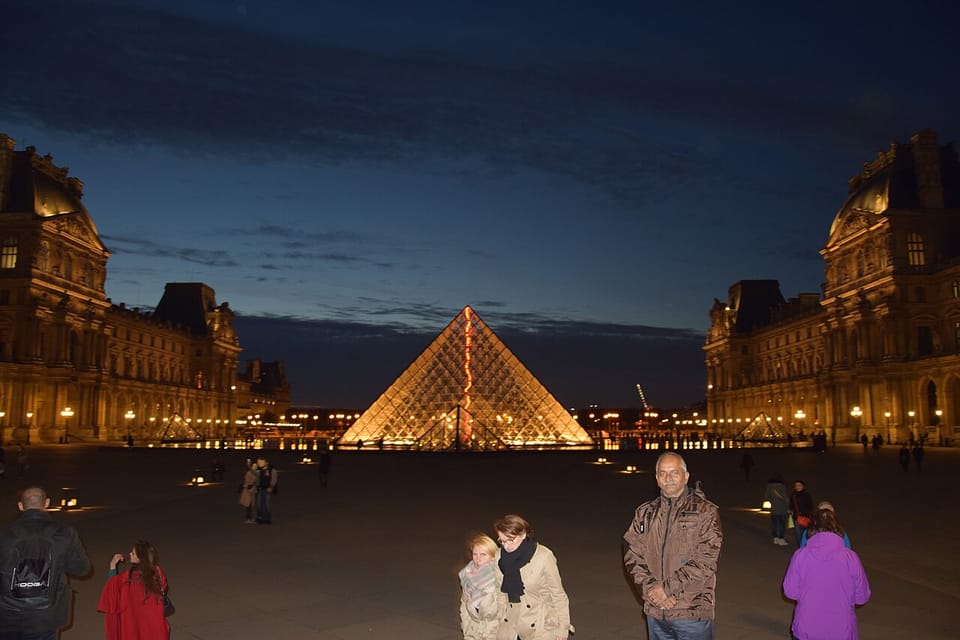
In 1981, François Mitterrand was elected President of France. Believing that France's once-brilliant culture and arts were in decline, he announced the Grands Projets — a massive construction initiative meant to restore France as the world's cultural center.
The timing was fitting, since 1989 marked the 200th anniversary of the French Revolution. Landmark buildings born from this project include the Louvre's glass Pyramid, which we'll see today, along with the Musée d'Orsay (begun under Valéry Giscard d'Estaing and completed under Mitterrand), La Grande Arche at La Défense, Parc de la Villette, and the French National Library, known for housing Korea's Jikji Simche Yojeol.
All of these are now icons of Paris, but every one of them faced fierce criticism when first built. The backlash against the glass Pyramid was especially intense. A pyramid, after all, isn't a French symbol — it's an Egyptian one, and the plan to place an Egyptian form in front of the Louvre, a symbol of France itself, sparked outrage among Parisians.
The Pyramid was designed by the Chinese-American architect I. M. Pei. As soon as he heard about Mitterrand's Grands Projets, Pei worked out his own design for the Louvre before any competition was even announced, then used his connections to meet the president directly and present it. At the time, one of the Louvre's three wings was occupied by the Ministry of Finance, blocking circulation and making the museum awkward to navigate. Pei proposed relocating the ministry so all three wings could become gallery space, and building a large underground hall beneath the Cour Napoléon to guide visitors through the museum. To keep that underground hall from feeling closed-in, he proposed placing a glass pyramid over the square — then used as a parking lot — to flood it with natural light.
As for why he chose a pyramid: he explained that pyramids hold precious treasures beneath them and stand as symbols of eternity, so shaping the structure this way was meant to express a wish that the Louvre, as a symbol of France, might likewise endure forever. Struck by a proposal that combined function, beauty, and meaning all at once, Mitterrand approved Pei's glass Pyramid.
The Pyramid opened to the public in 1989, timed to the bicentennial of the French Revolution. Praise and criticism coexisted even after the unveiling, but as time passed, the early backlash faded, and the Pyramid became the Louvre's defining symbol. Just as Pei had promised, the entrance flow became far simpler — visitors now just line up in front of the Pyramid. And the museum's three wings, once awkwardly arranged in a U shape, were connected by the new underground passages, making the whole visit far more comfortable.