Paris · History & Culture
From Fortress to Palace: A Louvre History
Louvre Museum · Paris, France
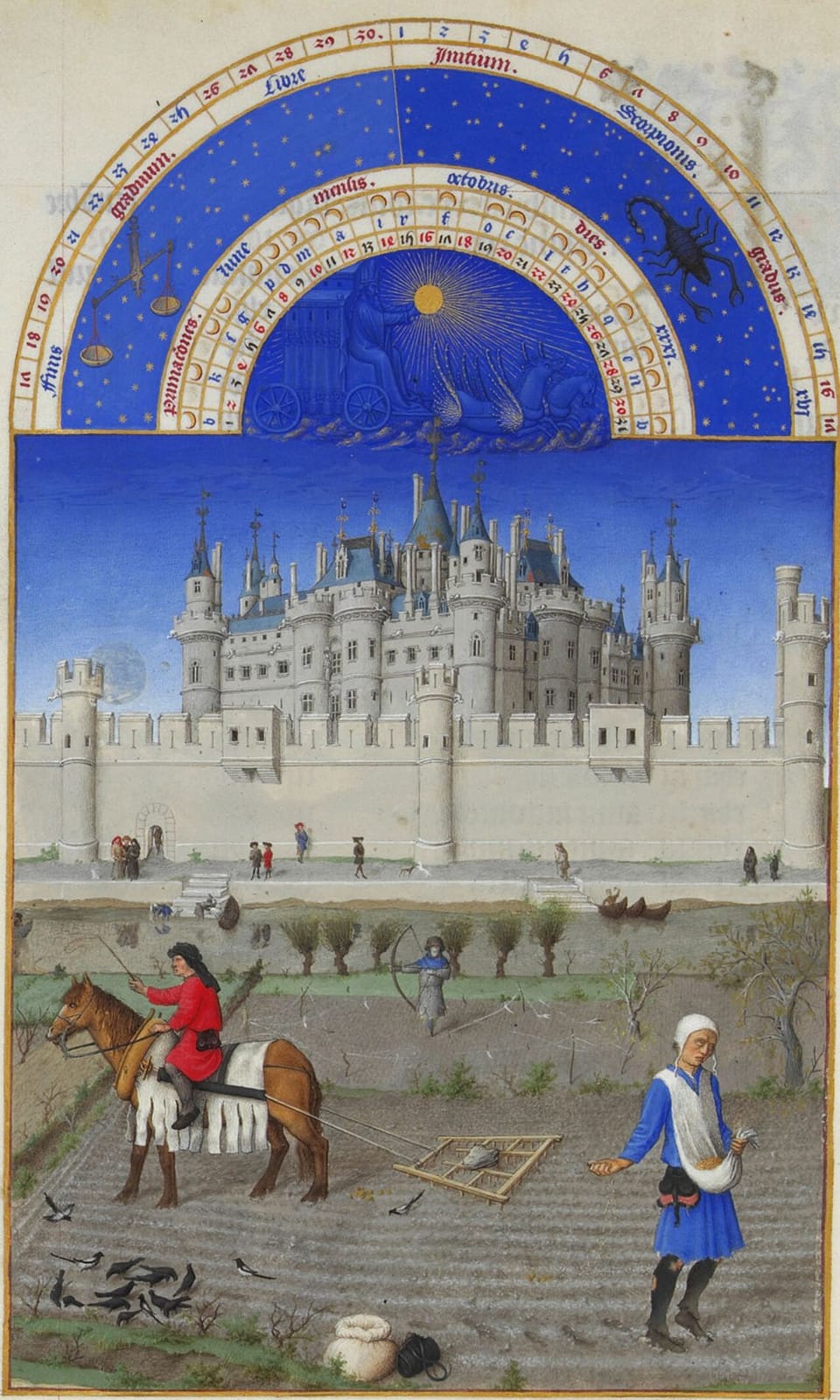
Many people picture the Louvre as a palace before it was a museum — and that's only half right. It was indeed used as a royal palace, but before that, it served another purpose entirely: a fortress.
In the 1200s, most Parisians lived on the Île de la Cité, the birthplace of the city. At the time, England controlled territory stretching into Normandy, right up to Paris's doorstep, and English forces regularly threatened the city. To protect Parisians, King Philip II (Philip Augustus) built a fortress near the island — and that fortress became the Louvre.
The Louvre began its transformation in the 1360s. King Charles V, worried that a palace on the isolated Île de la Cité was too vulnerable, had the interior of the Louvre remodeled and began using it as a royal residence. Under François I, the building was reworked in the Renaissance style, a project completed by his son, Henri II, who gave Paris its Renaissance-era Louvre palace.
After Henri II's death, his wife, Catherine de' Medici, ruled as regent. Having grown up amid the splendor of the Medici family in Florence, the birthplace of the Renaissance, she found the Louvre unsatisfying and built a palace beside it to match her own refined taste — the Tuileries Palace. Later, under Henri IV, a connecting building linking the Louvre and the Tuileries was constructed; it survives today as the Denon wing.
The Sun King, Louis XIV, abruptly moved his residence from the Louvre to Versailles, and the vacated palace became an academy for royal painters. In 1793, during the Revolution, the Louvre opened as a public museum, and Napoleon later filled it with the vast trove of art and artifacts he brought back from his military campaigns, renaming it the Musée Napoléon. Under his nephew Napoleon III, the Richelieu wing — one of the museum's three wings — was added, completing most of the Louvre as it stands today.
So where does Catherine de' Medici's Tuileries Palace stand today? Sadly, it doesn't. During the 1871 Paris Commune, Parisians rose up against the Third Republic government of Adolphe Thiers, and in the unrest that followed, the Paris city hall and other buildings were set ablaze; the Tuileries Palace, a symbol of the monarchy and the empire, burned to the ground. Modern technology could rebuild it — much as Namdaemun Gate and Notre-Dame have been restored — but the prevailing view has long been that there's little reason to bring back a symbol of the monarchy, so it has never been rebuilt.
Built up in splendor over generations, from Catherine de' Medici's time through Louis XIV's, the Tuileries Palace is architecturally missed today. The Louvre we see now, shaped by all of this history, finally took its present form through the Grands Projets, a massive construction program launched in 1981.