Paris · Sculpture
Life and Death: Michelangelo's Two Slaves
The Rebellious Slave and The Dying Slave · Paris, France
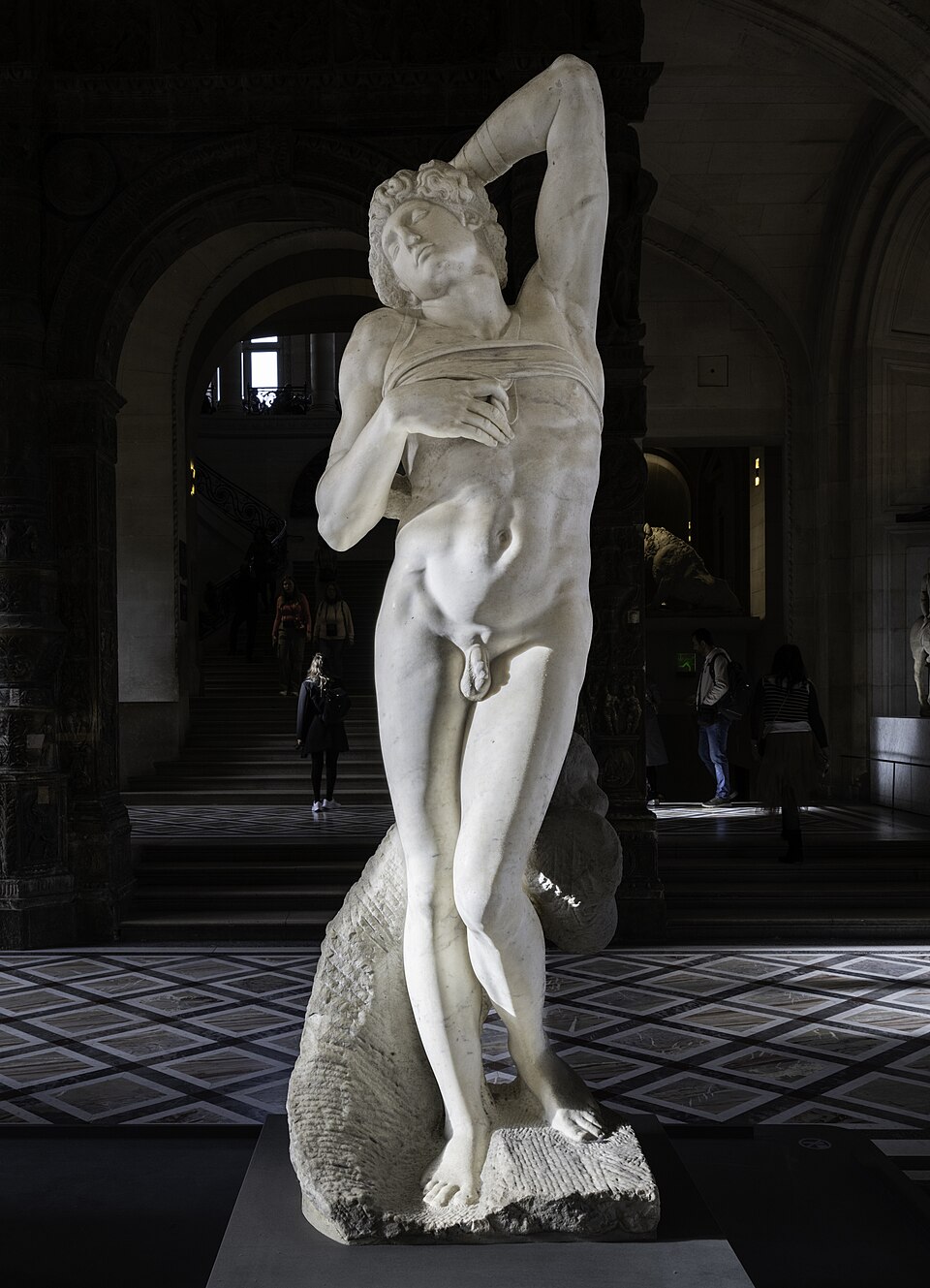
These two sculptures, known as the Slaves, are by Michelangelo, and together they represent life and death. Most people guess that the struggling figure on the left represents death and the peacefully closed-eyed figure on the right represents life — but it's actually the reverse. The figure on the left, straining to break free and live a genuine life beyond bondage, is called the Rebellious Slave; the one on the right, finally escaping a life of captivity through death, is called the Dying Slave.
Both are carved from marble, but their surfaces feel completely different. The Dying Slave has a smooth, soft finish, while the Rebellious Slave's surface is rough and shows visible cracks. This is thought to result from Michelangelo working with a flawed block of marble after being unable to source the one he wanted. It was long assumed to be unfinished, though some now suggest the rough finish may have been intentional. Michelangelo never explained his intent, so this remains speculation.
Why did Michelangelo create these figures in the first place? That part, at least, is documented: they were meant to decorate the tomb of Pope Julius II — the same pope who commissioned Michelangelo to paint the Sistine Chapel ceiling. But Julius died before the sculptures were finished, and the tomb's design was later scaled down, leaving no room for them. Michelangelo gave the figures to Roberto Strozzi of Florence, who took them into exile in France after the Strozzi family lost ground to the Medici. They were later sold to Cardinal Richelieu's family, eventually became French state property, and now stand here in the Louvre.
Michelangelo also carved four additional, unfinished slave figures for the same tomb project, and those genuinely never reached completion. They're now housed at the Accademia Gallery in Florence — the same museum that holds Michelangelo's David. If you're headed to Florence, it's well worth a visit.
Included in the Paris tour.
Open the free appFree iPhone app