Paris · Painting
Not Joan of Arc, but Marianne: Delacroix's Liberty Leading the People
Liberty Leading the People · Paris, France
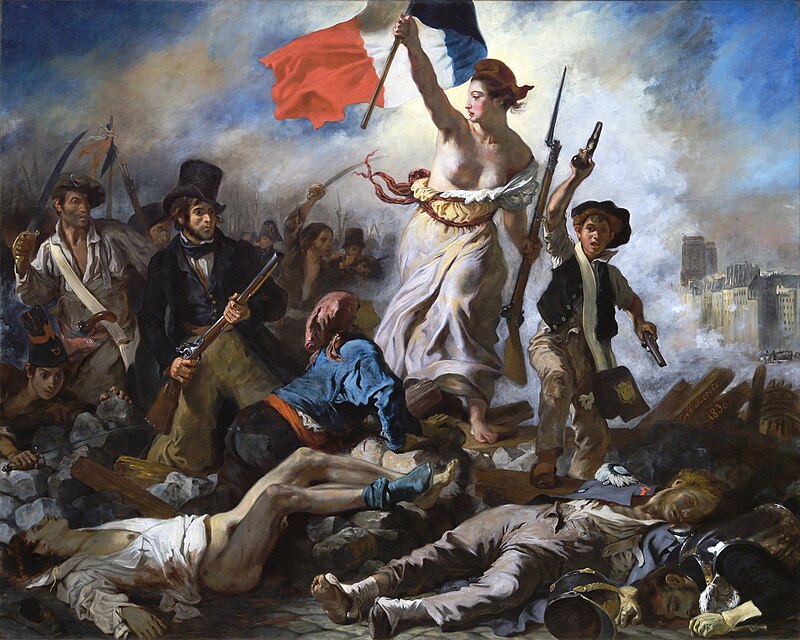
This is Eugène Delacroix's Liberty Leading the People. Though it depicts a French revolution, it's often mistaken for the great Revolution of 1789 — in fact, it commemorates the July Revolution of 1830, a three-day uprising. The woman carrying the French tricolor isn't Joan of Arc either; she's Marianne, the personification of French liberty. The name "Marianne" comes from combining Marie and Anne, the two most common women's names in France at the time.
Marianne's clothing doesn't match the fashions of the day at all — it evokes ancient Greek dress instead. Delacroix reportedly modeled her on Libertas, the Roman goddess of liberty, and her image would later inspire the Statue of Liberty in the United States. Delacroix is said to have drawn inspiration from a laundress who joined the revolution after her younger brother was killed by government troops; she herself was reportedly killed in the fighting soon after.
The cap Marianne wears is a Phrygian cap, traditionally worn by freed slaves in ancient Rome, reinforcing her role as a symbol of liberty. Beyond the tricolor flag in her hand, the painting's colors echo France's flag in two more subtle places: the clothing of a fallen figure at her feet, rendered in red, white, and blue, and a tiny tricolor flag flying atop Notre-Dame Cathedral in the background on the right.
The July Revolution depicted here ended in victory for the people of Paris, who forced King Charles X from the throne. Yet the painting itself was poorly received when it debuted — critics complained that Delacroix had made the goddess of liberty look crude and undignified rather than beautiful. The new government that emerged from the revolution purchased it and hung it in the royal palace, but when the new king, Louis Philippe, began cracking down on his own citizens, the painting was quietly removed and stashed away in storage. It wouldn't be seen publicly again until 1874.
Included in the Paris tour.
Open the free appFree iPhone app