Paris · Antiquities
Where Civilization Began: Mesopotamia
Mesopotamian Galleries · Paris, France
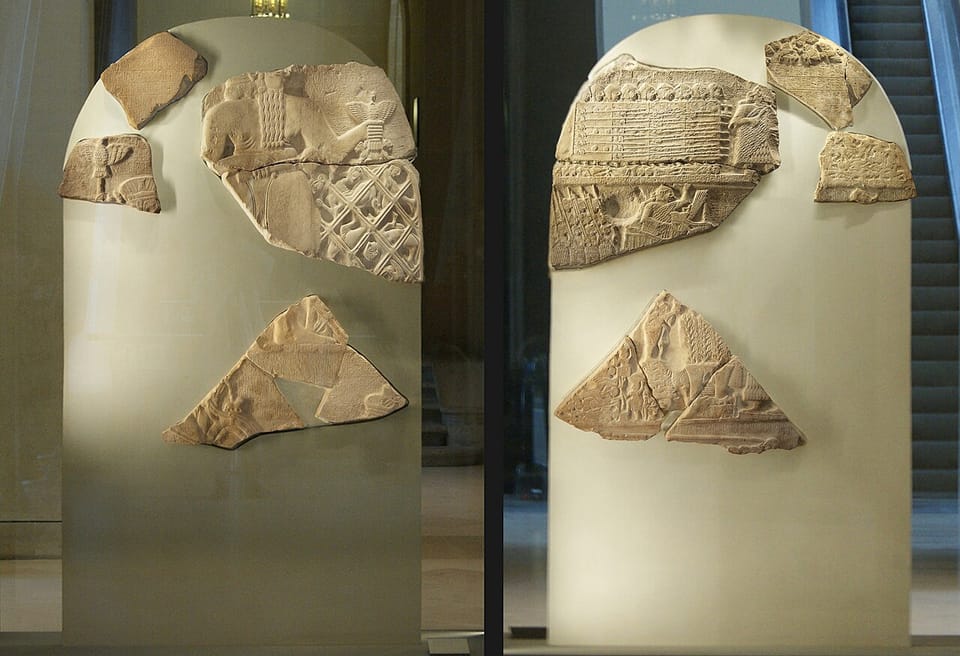
Today's tour begins with Mesopotamia, which is often grouped with Egypt, India, and China as one of the great early civilizations. What these four share is that each grew up along a major river. China had the Yellow River, India the Indus and Ganges, Egypt the Nile, and Mesopotamia the Tigris and Euphrates.
That's actually where the name comes from. In ancient Greek, "mesos" means middle and "potamos" means river, and the ending "-ia" marks a land — so Mesopotamia literally means "the land between the rivers." True to its name, Mesopotamia sat right between the Tigris and the Euphrates.
The land there was remarkably fertile — a single grain of wheat is said to have yielded 60 to 70 times its weight in harvest. With so much surplus food, people began selling what they didn't need to others, and that was the beginning of trade.
Trade, in turn, called for a way to keep records of who had sold what and been paid — and that need gave rise to writing. Cuneiform, considered humanity's oldest writing system, was born in Mesopotamia for exactly this reason. The Louvre holds many artifacts inscribed with cuneiform, and the most famous of them all is the one we're about to see: the Code of Hammurabi.