Paris · Guide
Before You Enter the Painting Galleries: A Thousand-Year Story
Painting Galleries · Paris, France
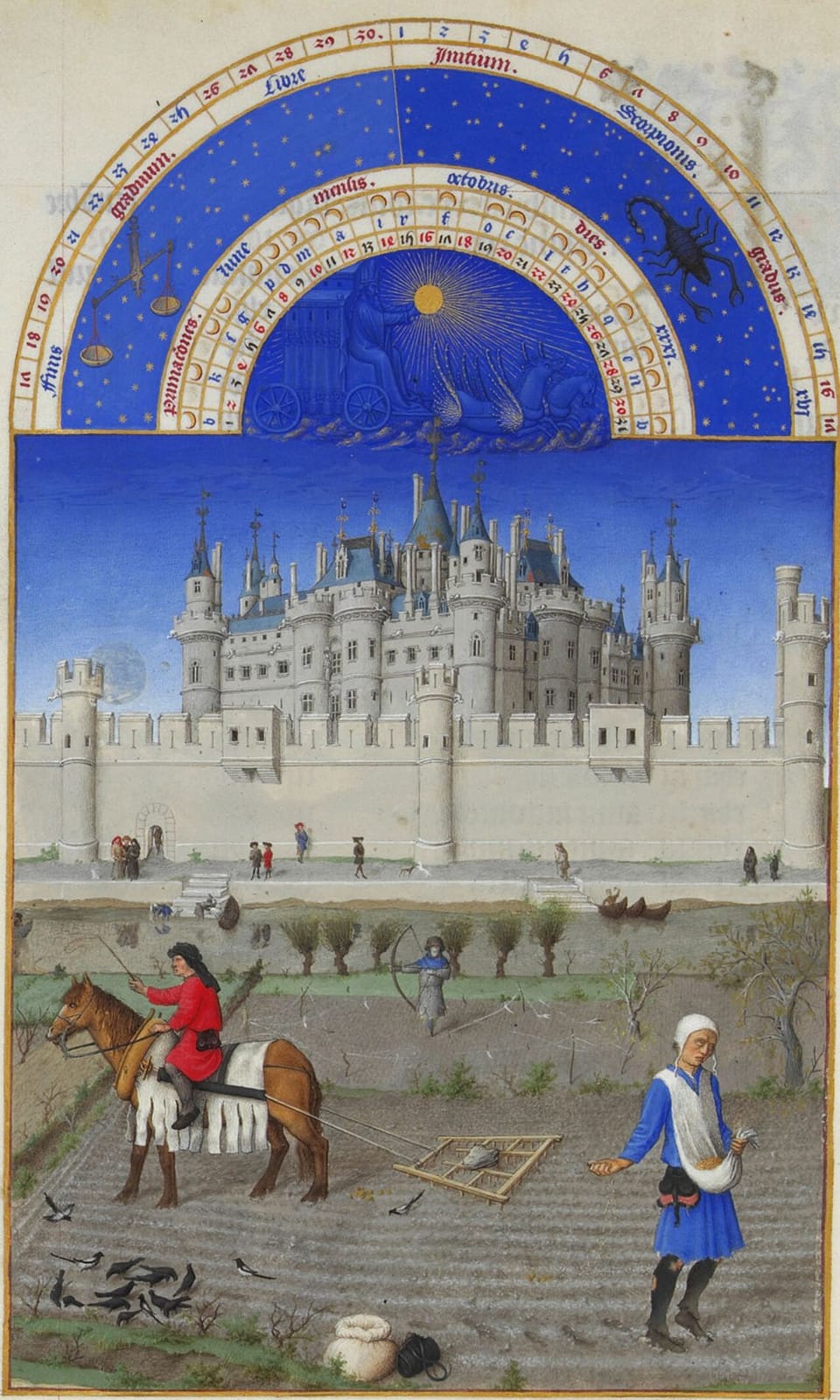
So far, we've seen art from Mesopotamia, Egypt, Greece, and Rome. Hellenistic art in particular celebrated human beauty, a tradition that carried on into Rome. But when the Roman Empire collapsed, Europe fell into an age of endless war and chaos. Amid suffering beyond human control, people placed all their hope in a God who promised an afterlife, and the entire worldview of the age shifted to revolve around religion. That marked the start of the Christian Middle Ages — an era that would last a thousand years, during which human beauty all but vanished from art, replaced entirely by depictions of divine beauty.\n\nThis thousand-year span of God-centered art is generally divided into three styles: Byzantine, Romanesque, and Gothic. Architecture advanced enormously during this period, but painting barely moved — gleaming gold leaf, round halos above saints' heads, the same rigid formulas repeated for a millennium. It's often called painting's "dark age."\n\nBut everything that begins eventually ends. A plague spread by rats swept across Europe, killing roughly a third of the population — and in the face of that catastrophe, people paradoxically began asking "where is God?" and turned their attention back to reality and to humanity itself. That long dark age of painting gradually came to a close in 1400s Florence. There, artists began reviving the human beauty that had been absent for centuries, with figures like da Vinci and Michelangelo emerging as its leading voices. Because this art recalled the beauty once celebrated in ancient Greece and Rome, the era came to be called the Renaissance — literally, "rebirth." From here, starting with works from the transitional period between medieval and Renaissance painting, we'll move through the Louvre's celebrated painting collection.