Paris · Painting
Musée Marmottan Monet
Giverny · Paris, France
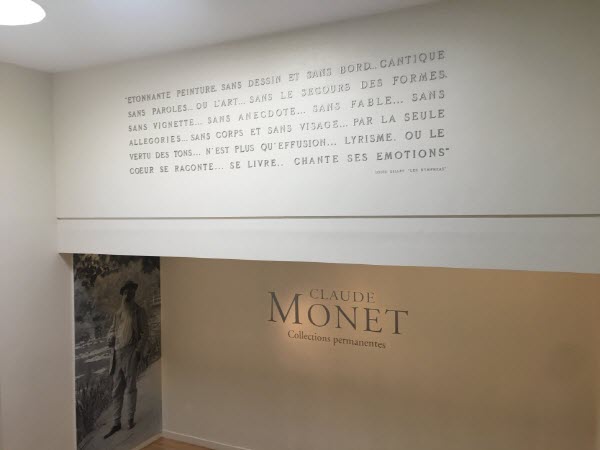
Why "Marmottan Monet" and not simply the Claude Monet Museum? The building began as the Marmottan Museum, home to the art collected by the very wealthy Marmottan family. When Paul Marmottan, a member of the family, donated all the works and the museum to the French Academy of Fine Arts, the Marmottan Museum opened. The family's collection consisted mainly of art from the Napoleonic era, so if you come expecting Monet, you may find yourself among pieces you'd expect at Versailles or the Louvre and wonder when the Monets will show up. Claude Monet's paintings are in a dedicated gallery on the lower level.
So why did the works from Monet's house end up here, rather than at the Musée d'Orsay or the Orangerie? Even before Monet's paintings arrived, the museum held many Impressionist works thanks to another donation. A doctor who had treated Monet and many other Impressionists left his large collection of works to his daughter when he died. Famous painters such as Monet, Manet, Renoir, Sisley and Pissarro seem to have given him paintings to win his favor or in place of medical fees. His daughter then donated the works to the Marmottan, bringing in a wealth of Impressionist art. After Michel Monet's will sent Monet's works to the French state, the question was where to show them, and the Marmottan, already home to so many Impressionists, was chosen. As a result, the largest collection of Claude Monet's work is here, not at the Orsay or the Orangerie. As more visitors came to see Monet, the Marmottan Museum renamed itself the Musée Marmottan Monet.
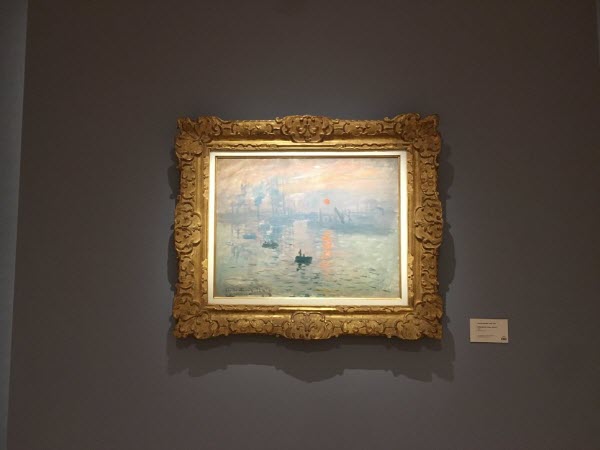
As the Monet collection grew, a dedicated gallery was built underground. Inspired by the Orangerie, it is designed so that Monet's paintings wrap around the viewer in a circle. The most famous work here is Impression, Sunrise, the painting that gave Impressionism its name. Go see it for yourself and take in its power.
Deeper in the gallery you reach the late works, with their thickly layered paint. Our guide recalls that up close they could not tell what the painting showed. The title said Japanese Bridge, but even so they couldn't see where the bridge was. After stepping back a few paces and taking in the whole Japanese Bridge series at once, the bridge from Giverny suddenly came into sharp focus. View the works once up close and once from a distance, and let them bring the Water Garden at Giverny back to mind.