Paris · Painting
Musée d'Orsay: From Railway Station to Impressionist Mecca
Giverny · Paris, France
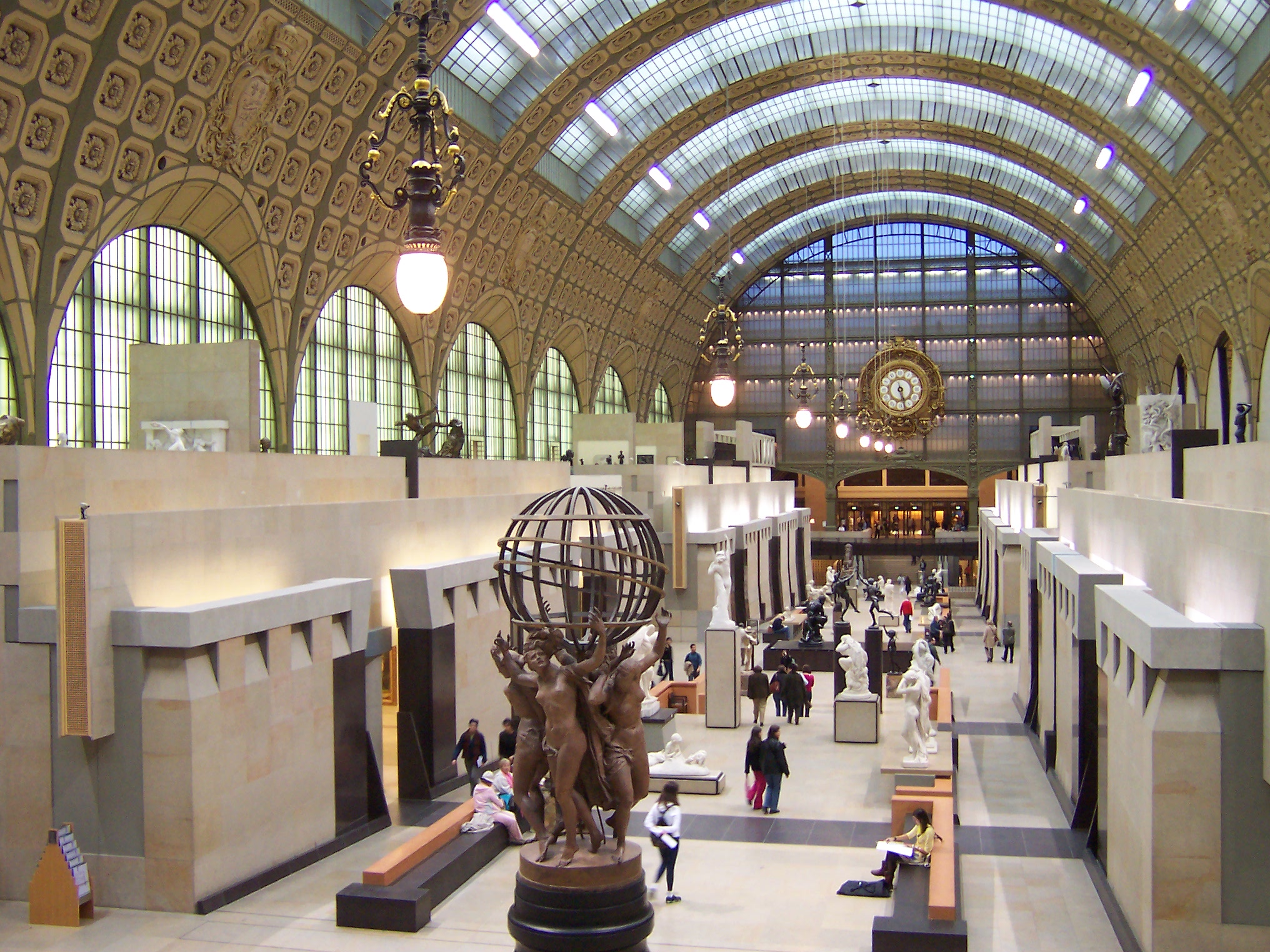
When it comes to Impressionist museums, the most famous of all is the Musée d'Orsay. It covers art from the mid-19th century to the modern era, and alongside paintings you can see sculpture, architecture, photography and decorative arts.
Orsay wasn't built as a museum, either. It began as a railway station, like Saint-Lazare, and its signature feature is a huge clock tower that once told travelers when trains were due. Built as Gare d'Orsay to mark the 1900 World's Fair, it thrived as both a station and a hotel. But trains grew longer, and the platforms no longer fit the newly developed trains, so the station closed. Plans to turn it into a museum were made in 1979, and it reopened as one in 1986.
Because it was a station, you can still glimpse traces of that past. First, there's the station clock. After you've seen everything up to the fifth floor, take a photo from inside the clock; it turns out beautifully. The platform layout is preserved too, and the museum is divided into three main levels: the ground floor, the second floor and the fifth floor. Each level shows works from a different period.
On the ground floor, you'll find Neoclassicists such as Ingres, Realists such as Courbet, and Naturalists such as Millet, Daubigny and Boudin. Head up to the fifth floor for the Impressionists: Monet, Manet, Renoir, Degas, Sisley and the other painters we've been discussing. The second floor holds the Post-Impressionists, artists influenced by Impressionism, including Vincent van Gogh and Paul Gauguin.
Many of the works we discussed in Giverny belong to the Orsay. Alexandre Cabanel's The Birth of Venus, which we used as an example of academic art, hangs on the ground floor. There you'll also find academic painting and works by the Naturalist Eugène Boudin, sometimes called Monet's teacher. On the fifth floor, you'll find Édouard Manet's Luncheon on the Grass and many works by Claude Monet, including Poppy Field near Argenteuil and Camille on Her Deathbed.