Paris · Food & Drink
France, Land of Bread (1): The Baguette and the Bakery Lunch
Paris · Paris, France
Bread and bakeries are central to how the French eat. When people say "bread," many picture the sweet things sold at bakery chains. By French standards, though, those aren't bread at all. They belong to the category of pâtisserie, which means pastries: cakes and sweet baked goods for the sucré (sweet) part of a meal. In France, bread means only what's made from four ingredients: flour, salt, water and yeast to make it rise. The definition of bread varies by culture, and in many places sweet baked goods get lumped in with bread too.
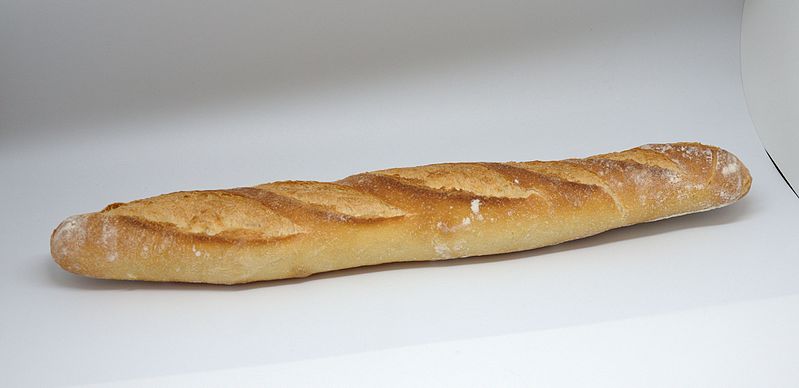
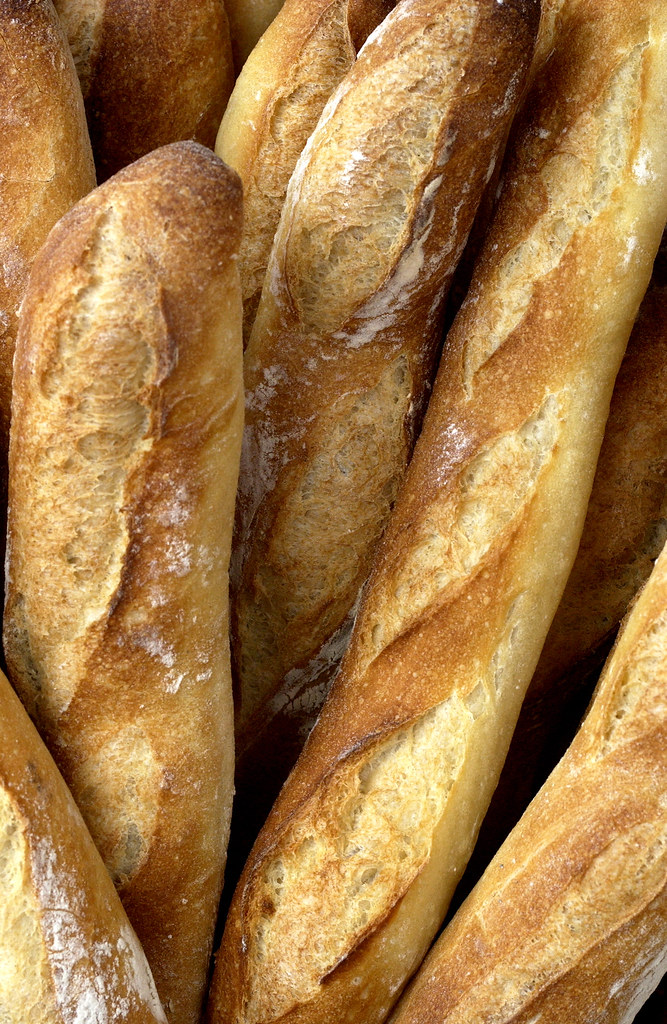
So what kinds of bread does France have? Start with the baguette. The word originally meant any long, thin object, like a chopstick, and that's how the bread got its name. Its hallmark is a crackly crust with a chewy interior. There's a special thrill in taking a bite of a freshly baked, still-warm baguette as you walk out of the bakery, and you wish time would stand still. The 250-gram baguette, whose craft and culture are on UNESCO's Intangible Cultural Heritage list, is literally the symbol of France. If a whole one is too much, ask for a demi-baguette, which is half a loaf at half the price. The phrase is "Une demi-baguette, s'il vous plaît." Une is the word for "a" or "one" before a feminine noun. You can drop it if you forget, but never skip the s'il vous plaît at the end, or the baker might glare at you. A baguette cost around 60 centimes 30 years ago, and in expensive Paris today it's about €1.10.
Here's something only the French tend to know. In 1993, the bakers' association began making the traditional baguette in a more upscale style, to protect their trade from industrial producers who churn out cheap baguettes in bulk for supermarkets. It was a huge success, and most French people now prefer this tradition, which costs a bit more at about €1.30 in Paris. It tastes and feels different from a standard baguette, with a chewier crumb and a much harder crust. The guide knows tradition tastes better but eats the regular baguette because the crust is so tough she fears for her jaw. To the French, though, the harder the bread, the better it is, and crispy doesn't come close. Either way, do try a tradition.
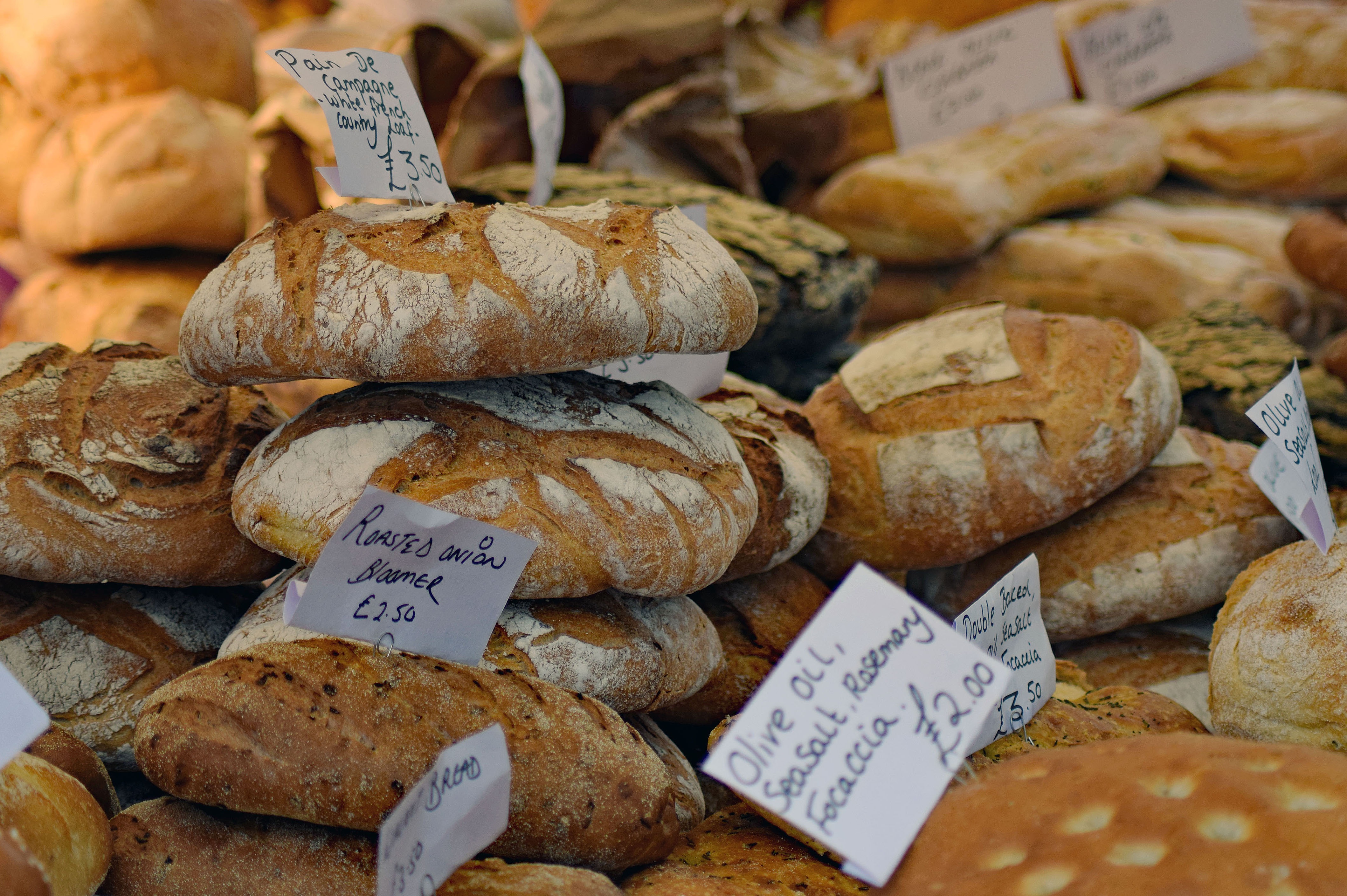
Pain de campagne is a large, round loaf of rye bread. Higher in fiber, it's easier to digest and has deeper flavor than a baguette or a tradition, which gives it an upscale feel. Because it has proportionally more soft crumb, it's easy on most palates. Bakeries slice a whole loaf for you, so there's no cutting at home. It's great toasted as a tartine. It's a bit more expensive, about €2.50 for 400 grams.
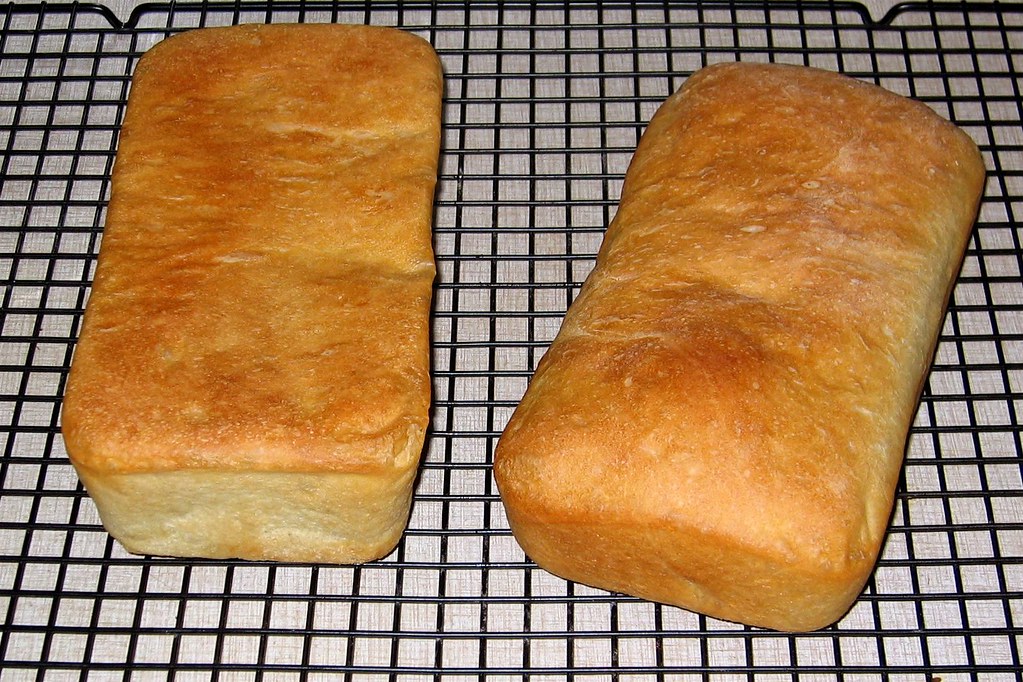
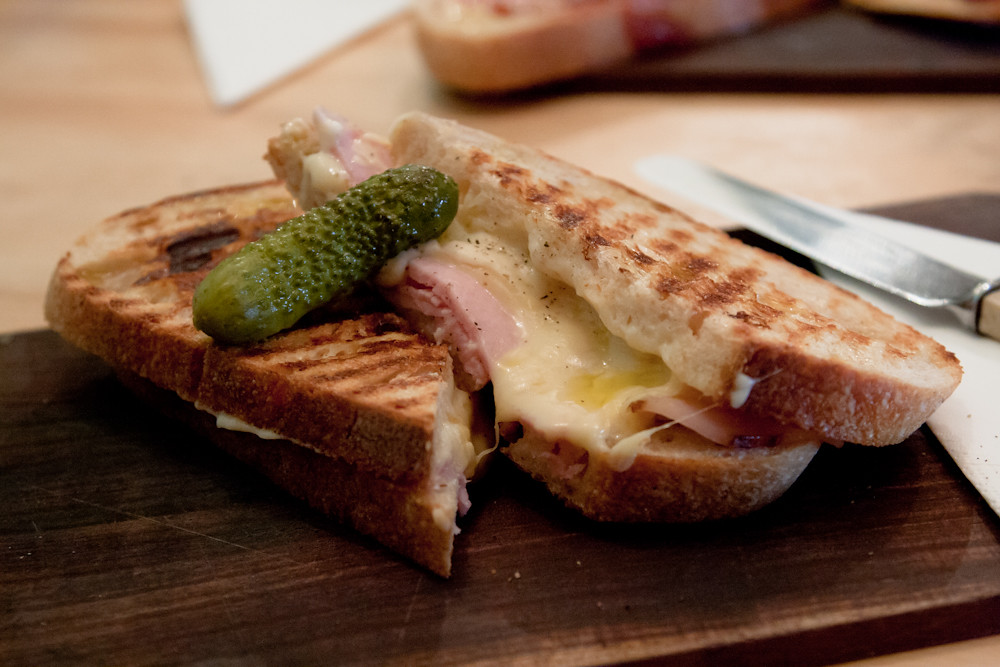
The French take on soft sandwich bread is pain de mie. It's classed as bread but is the only one made with milk, sugar and butter. Even so, the French classify it as salé. The signature dish made with it is the croque-monsieur, a hot French sandwich. Pain de mie is so soft and mild that it's popular in households with children.
Beyond these, there are whole-wheat loaves, multigrain breads, Italian-style breads and each bakery's own specialties.
If you're pressed for time while traveling, bakeries are a lifesaver, because almost every one sells a lunch menu. They stop once lunchtime is over, so time your visit accordingly. Bakeries are among the most popular lunch spots for French office workers and students. A formule, a set that bundles a sandwich with a drink and a dessert, comes to about €10. If you don't want a sandwich, some bakeries sell simple dishes as a plat du jour, and others offer big bowls of salad or cold pasta. It saves time, and eating it in a nearby park on a nice day makes a great memory, so give the bakery lunch a try.