Paris · Architecture
When and Why Was the Eiffel Tower Built?
Eiffel Tower · Paris, France
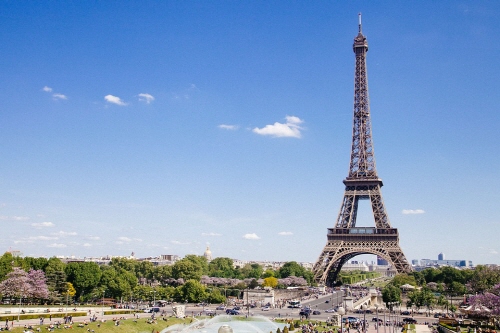
Nicknamed the "Iron Lady," the Eiffel Tower broke ground on January 28, 1887, and was completed in 1889. Until the Chrysler Building went up in 1930, it was the tallest structure in the world. Before that, the world's tallest building was Germany's Ulm Minster at 161 meters, so a tower more than twice as high caused a sensation. The Eiffel Tower stands 300 meters tall, plus a 24-meter antenna, for a total of 324 meters, roughly the height of an 81-story building. It is the second-tallest structure in France, after the Millau Viaduct in the south, the world's tallest bridge, which opened in 2004.
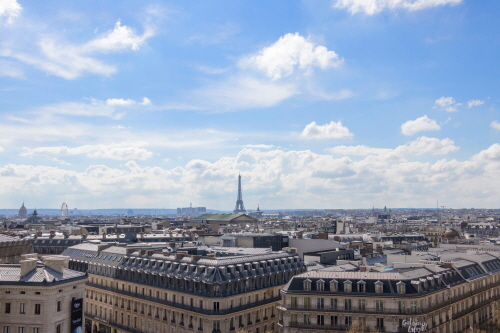
What makes Paris special is that, for a city of 12 million, few buildings rise above five or six stories. Look up almost anywhere and you get wide-open sky, with no jagged high-rises in the way. Apart from the 210-meter Montparnasse Tower, built in 1977, nothing in Paris rivals the Eiffel Tower. Buildings over 180 meters are currently not allowed within the city, and Parisians prefer living in old buildings, even with aging plumbing and heating, and are conservative about new apartment construction. So Paris's low, calm skyline is likely to stay as it is.
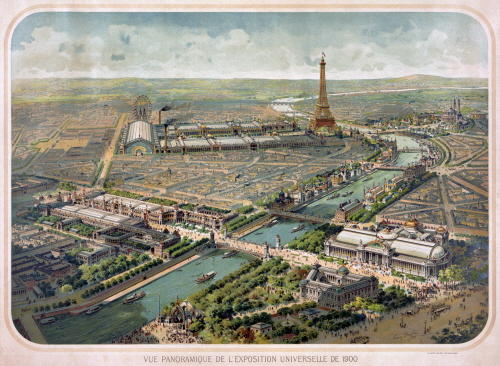
There were two reasons for building the tower. One was to recover from the humiliation of defeat in the Franco-Prussian War, which pitted the Bonaparte dynasty's Second French Empire against the Kingdom of Prussia, and to show off national strength. The other was to create the entrance to the Exposition Universelle, the world's fair held in Paris to mark the 100th anniversary of the French Revolution. That fair ran for half a year, from April 14 to November 12, 1900, celebrating the century just ended and pushing forward the progress of the next. France invited countries around the world to exhibit their achievements and ways of life, so visitors could see both the common ground and the diversity among nations. It was a fine example of cultural tolerance, aiming to broaden understanding through new cultures and to promote peace after the war.
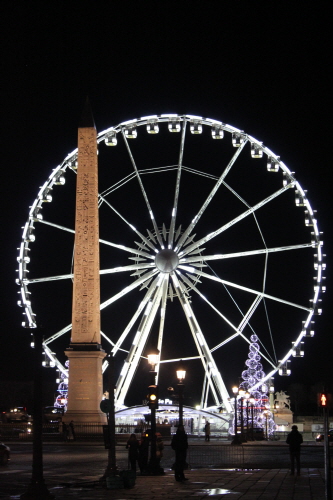
Besides the tower, the Art Nouveau Grand Palais, the Belle Époque Pont Alexandre III and the Gare d'Orsay, now the Musée d'Orsay, were all built for this fair. They still look much as they did then and remain a major part of Paris sightseeing. The Grande Roue de Paris Ferris wheel, matryoshka dolls, the diesel engine, the escalator, the Telegraphone (the first magnetic recorder) and talking pictures were all reportedly shown as well. The fair drew 48 million visitors, but that was only about two-thirds of what had been expected, so it was surprisingly not a financial success.
In 1991 the Eiffel Tower was inscribed as a UNESCO World Heritage Site. Inscription requires meeting strict criteria: it must be a masterpiece of human creative genius; it must reflect an important exchange of human values, over a span of time or within a cultural area of the world, on developments in architecture or technology, monumental arts, town planning or landscape design; and it must be an outstanding example of a type of building, architectural or technological ensemble, or landscape illustrating a significant stage in human history. That it satisfied all of these says a lot about how accomplished the tower is, both technically and aesthetically.
When you finish strolling through the Trocadéro, cross at the crosswalk and head to the right-hand entrance of the Pont d'Iéna. Pause the audio here and resume it on the bridge.