Paris · Architecture
Pont d'Iéna and the Man Who Sold the Eiffel Tower
Eiffel Tower · Paris, France
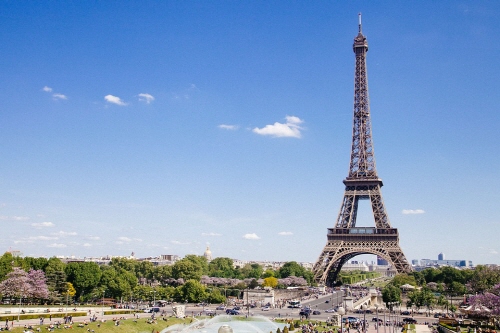
Standing at the entrance to the Pont d'Iéna, you have the Seine flowing on both sides and the Eiffel Tower rising straight ahead. It's a great spot for a clear, close-up shot, so you'll see plenty of people taking photos and offering to take yours. A few even stand in the middle of the roadway to center the tower, but that's not safe, so we don't recommend it. It's crowded here, so keep watching for pickpockets. Pause the audio, take your photos, then pick up the story.
You'll see a carousel at the right end of the bridge. That's our next stop, and you can listen as you walk over. The Pont d'Iéna, 140 meters long and 35 meters wide, links the Trocadéro Gardens and the Eiffel Tower. It was built to commemorate a French victory in battle in 1806. At each end stand two sculptures, made between 1848 and 1853, showing a Gallic, a Roman, a Greek and an Arab warrior, each proudly standing beside a horse.
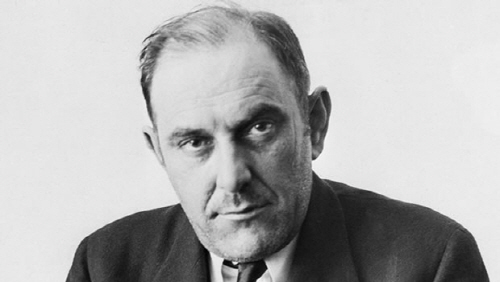
As you walk, here's a fun story. The Eiffel Tower now belongs to the City of Paris, but a con man once "sold" it for scrap. In 1925, a man named Victor Lustig boldly pulled off the scam not once but twice. He wrote to five of Paris's leading scrap-metal firms, claiming the tower was to be demolished and inviting them to bid for exclusive rights to the iron.
He met them at the five-star Hôtel de Crillon, gave a grand presentation on how the tower's upkeep had become too costly, and introduced himself as the government's representative handling the demolition in secret. The firms promised to keep quiet, and Lustig treated them to a lavish lunch and a limousine tour of the tower before sending them off. He then picked the most gullible of the group, said he was a cash-strapped civil servant who could help him win the bid for a small bribe, and collected both the bidding fee and the bribe. When no demolition happened, the victim went to the city authorities to ask what was going on. They laughed and sent him away, and he was too embarrassed to tell anyone.
Lustig had fled to Vienna, but when he learned of this, he returned to Paris and ran the same scam again. This time one of the prospective buyers grew suspicious, looked into it, discovered the fraud and went to the police. Lustig escaped to the United States, where he lived by counterfeiting money, but he was eventually caught and imprisoned in Alcatraz.
The closer you get, the more imposing the tower feels. Look at the arches under the first-floor platform and you'll see the names of famous French scientists, engineers and mathematicians. There are 18 on each of the four sides, 72 in all, every one chosen by Eiffel himself. Inspired by the artists who had opposed the tower's construction, he had them engraved to spark public interest in science. The names glow in gold. For reasons unknown, they were painted over in the early 20th century and restored in 1987. Among them are Breguet, the physicist and watchmaker whose name lives on in a luxury watch brand; Foucault, the physicist known for his pendulum; and Lagrange, the mathematician and astronomer behind the Lagrange points of celestial mechanics.