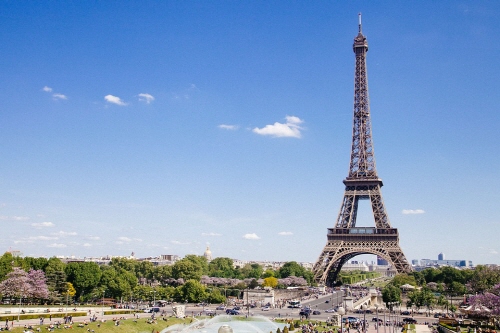
Paris · Architecture
Tickets and Floor-by-Floor Guide
Eiffel Tower · Paris, France
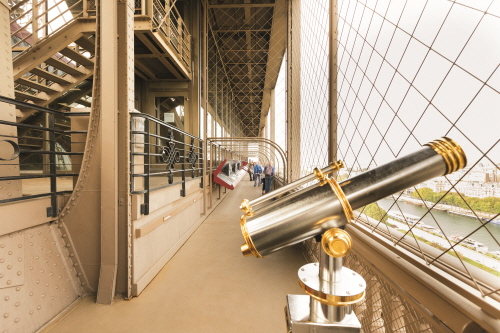
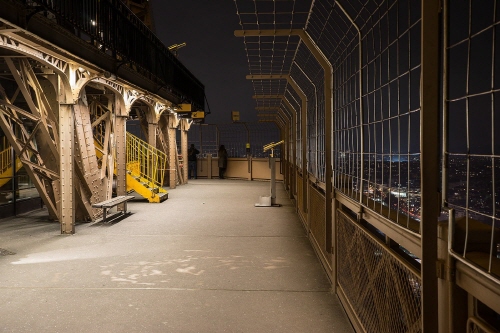
The Eiffel Tower looks great from afar, but up close its ironwork is a work of art in itself. Pause here for a moment, look up, and listen to the floor-by-floor guide.
The tower has three levels, and you'll need a ticket to go in. Prices depend on whether you take the stairs or the elevator and are split by age: 4 to 11, 12 to 24, and 25 and over. You can ride the elevator to the second level, or climb the stairs to the second level and take the elevator from there, so the pricing is quite detailed. Note that the stairs must be booked on the spot, and the on-site line tends to be long. Early morning or close to the last entry time is usually shorter, but there are so many variables that it often comes down to luck. Honestly, the view of the tower from the queue is so different from a distance that this may be the only landmark where a long wait doesn't feel like a chore.
Each level is noticeably different in height, and so is the view. The first level is 57 meters up, the second 115 meters and the third 276 meters. The elevators to the first and second levels are hydraulic, while the one to the third level is modern. You can walk up to the second level, about 700 steps and roughly 15 minutes, which isn't too hard and costs a bit less than the elevator. From the second to the third level, though, the elevator is the only way. Stairs are installed there too, but they aren't open to the public.
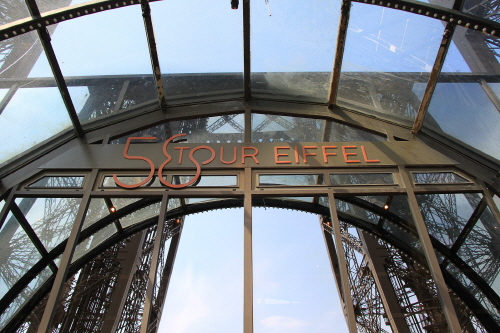
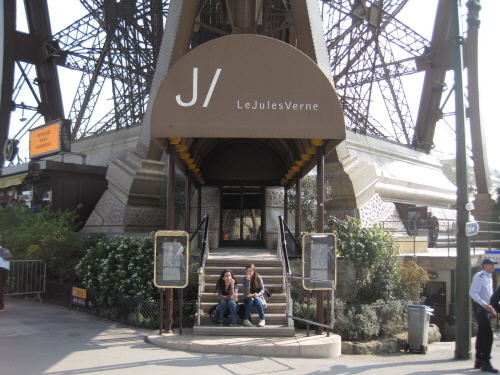
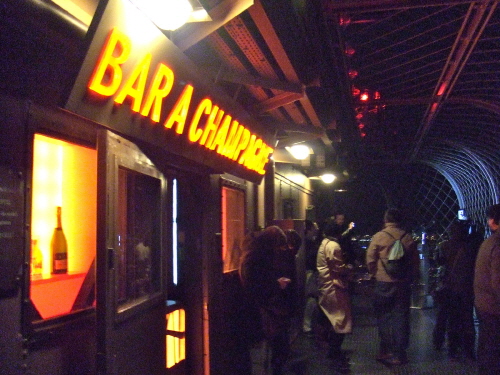
There's food and drink on every level. On the second level, the celebrated Jules Verne is a haute cuisine restaurant that reopened under French chef Alain Ducasse. If that's a bit much, 58 Tour Eiffel is a more casual bistro on the first level, and the third level has a cocktail bar. On a clear day you can see about 70 kilometers beyond the city from the third level, all the way to Charles de Gaulle Airport and the suburbs.
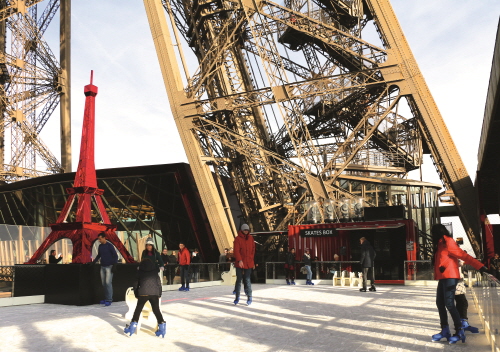
Winter has its own appeal, with a Christmas market throughout December and a seasonal ice rink on the first level. Opened in 2004, the rink returns every year, usually from December through March. Personal skates are not allowed and gloves are required.
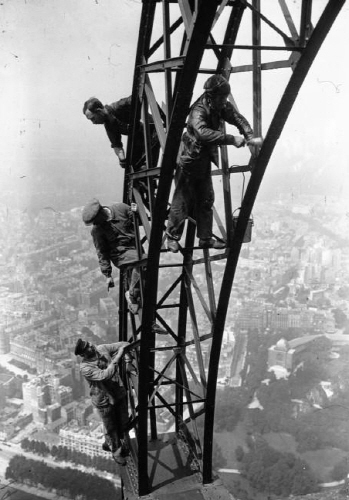
Take a look at the surface as well. The tower has been repainted 18 times since it was built. Every seven years, 50 to 60 tons of paint are brought in to protect against rust and keep the tower looking beautiful. Three shades of grayish brown are blended so the color looks uniform from the ground, darkest at the base and lighter toward the top. The painting has always been done by hand with brushes.
Our next photo spot is the Champ de Mars, stretching out beyond the tower. A barricade currently blocks the way straight ahead, so go a little to the right and then turn around behind the tower to find the path to the park.