Paris · Shopping
Bon Marché, the World's First Department Store
Paris · Paris, France
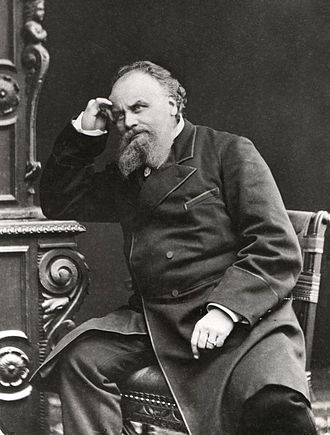
To understand how Bon Marché survived an uncertain economy and became a department store, we first need to look at who ran it: Aristide Boucicaut. Born in Normandy, Boucicaut learned the trade from his father, who ran a hat shop. At eighteen he moved to Paris, worked at several fashion shops, and settled at one called Petit Saint-Thomas, where he picked up the sales methods he would later bring to Bon Marché. A gifted salesman, he became co-manager of Bon Marché and later bought it outright. When he started as co-manager in 1852, it was a fairly small shop with twelve employees and annual sales of 450,000 francs. After he took over, it grew into a huge department store with 1,788 employees and annual sales of 7 million francs.
So what set Bon Marché apart from other fashion shops? Start with the name: "Bon Marché" means "good market" or "cheap," and Boucicaut made high-volume, low-margin selling his first principle. Other shops did this too, but only for goods that could be mass-produced in factories. Bon Marché sold everything that way, including high-quality luxury goods. Where others took a 30 to 40 percent markup, Bon Marché took 18 to 20 percent, for a net profit of just 4 to 5 percent. Other shops lured people in with cheap goods and sent them home with expensive ones, but at Bon Marché you really could buy good goods cheaply, so crowds naturally followed.
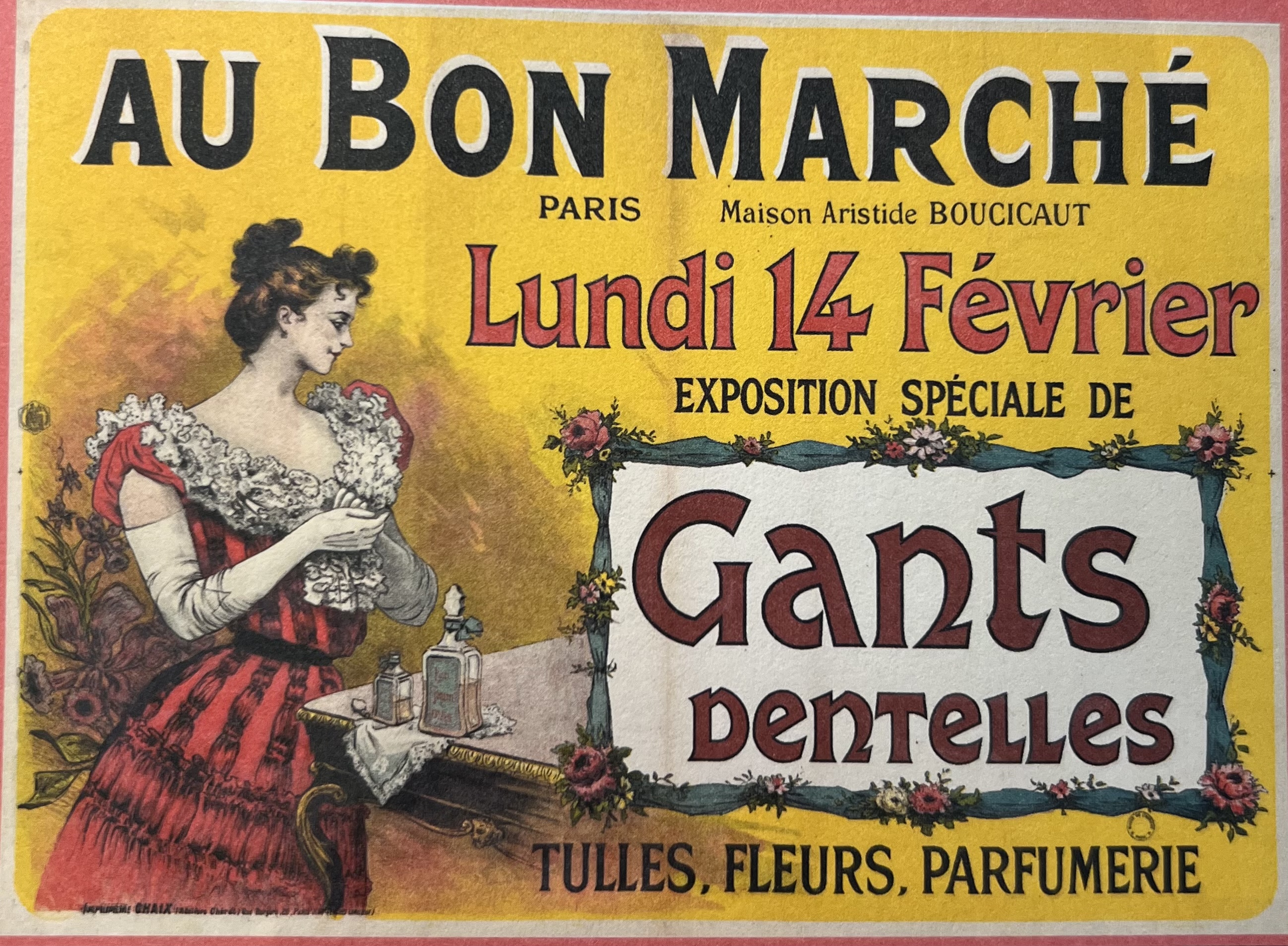
Boucicaut also held "exhibitions" of merchandise. Not fashion shows or runways, but something closer to the events you see in department stores today, such as displaying winter clothes in summer. Exhibitions announced products before they went on sale and showed off their quality. They played on the way that browsing new goods makes you want to buy them, and quietly left customers with the impression that everything at Bon Marché, not just the item on display, was excellent. That made shopping feel safer.
He also used loss leaders: a few high-quality goods sold cheaply. The best known were "white goods," meaning white linens and clothing. Back then, detergent and laundering methods were nothing like today's, and wearing a white shirt or white underwear was among the ultimate luxuries. Women were practically expected to bring white goods into a marriage as part of their trousseau. The chance to buy them cheaply was enough to draw women to Bon Marché, and once there, they browsed and bought other new goods - exactly what Boucicaut wanted.
Other fashion shops went under amid social upheaval and recession because their turnover dropped and profits shrank. Bon Marché's strategies kept turnover up, and it survived. Boucicaut also set sales policies based on trust, telling staff, "Don't push anyone into a sale, and if there's a problem with the goods, tell the customer." His return policy shows it too. Bon Marché's catalog of the time said: "Any purchase that does not please will be exchanged or, at the 'buyer's' wish, fully refunded." Other fashion shops would only exchange an unwanted item or refund a defective one, but Bon Marché allowed exchanges or refunds as long as the item was not too old and unused.
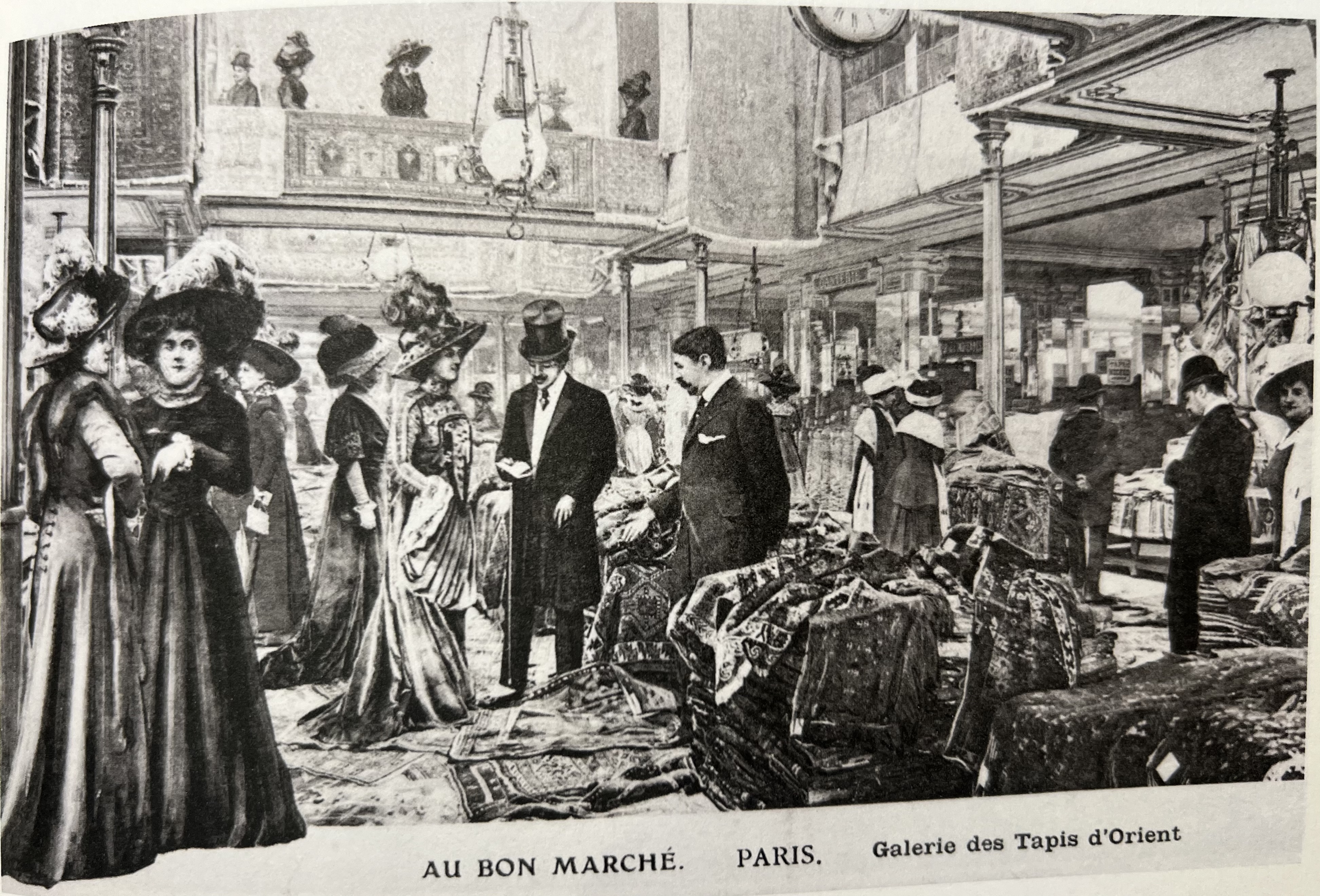
"Keep the tags on and bring your receipt within a week" - a phrase we all know - may have sounded familiar to Parisians back then too. Low margins, exhibitions, loss leaders, and sales built on customer trust made Bon Marché a success, and as it broadened its range and grew, it became the first department store.
Still, to learn that Bon Marché was a great place to shop, people first had to walk through the door, and in the days before mobile phones, many never heard the news. How Boucicaut got people to come is the subject of the next chapter.