Paris · Architecture
'The Departure of the Volunteers' and 'The Triumph of 1810'
Arc de Triomphe · Paris, France

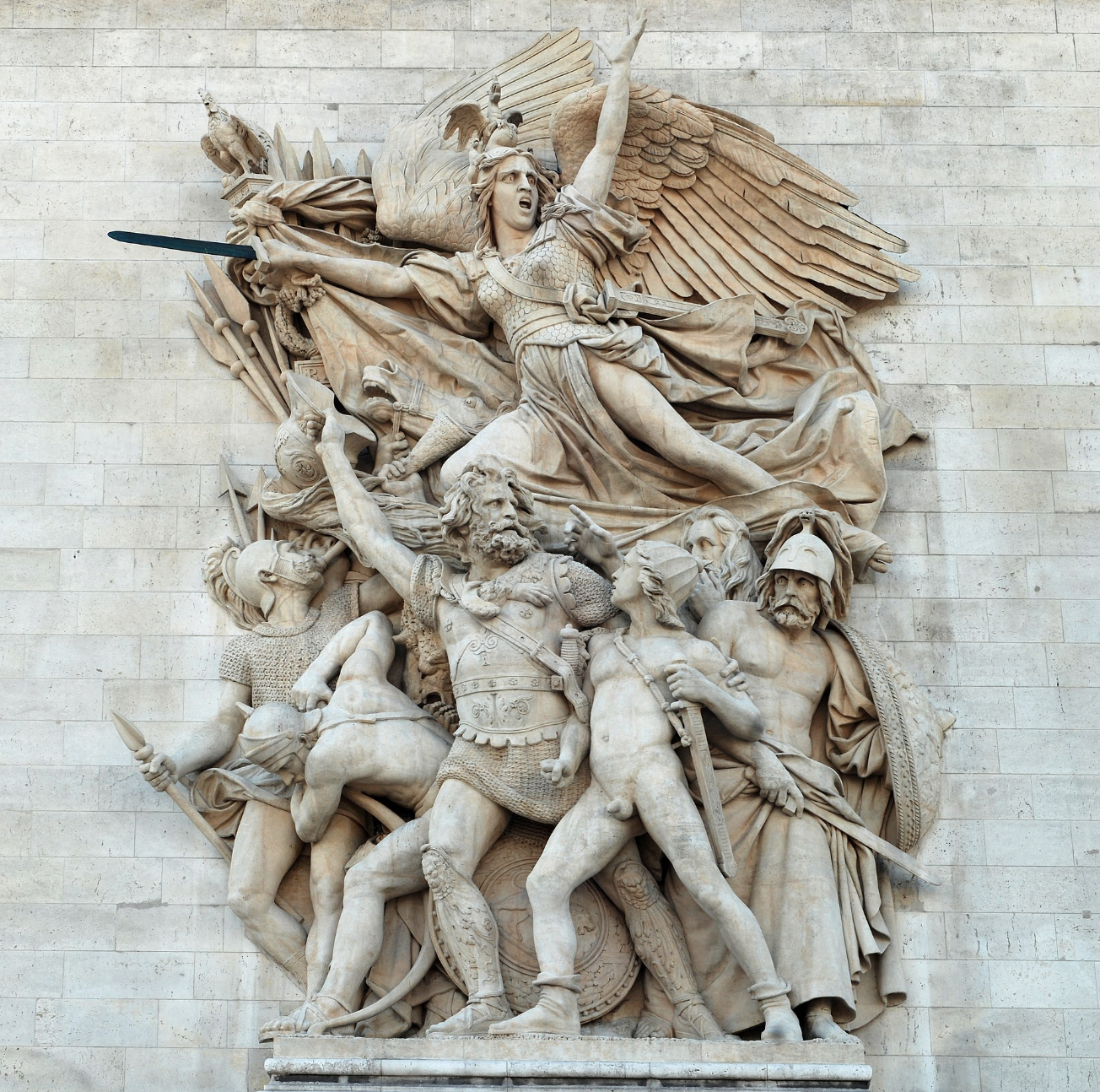
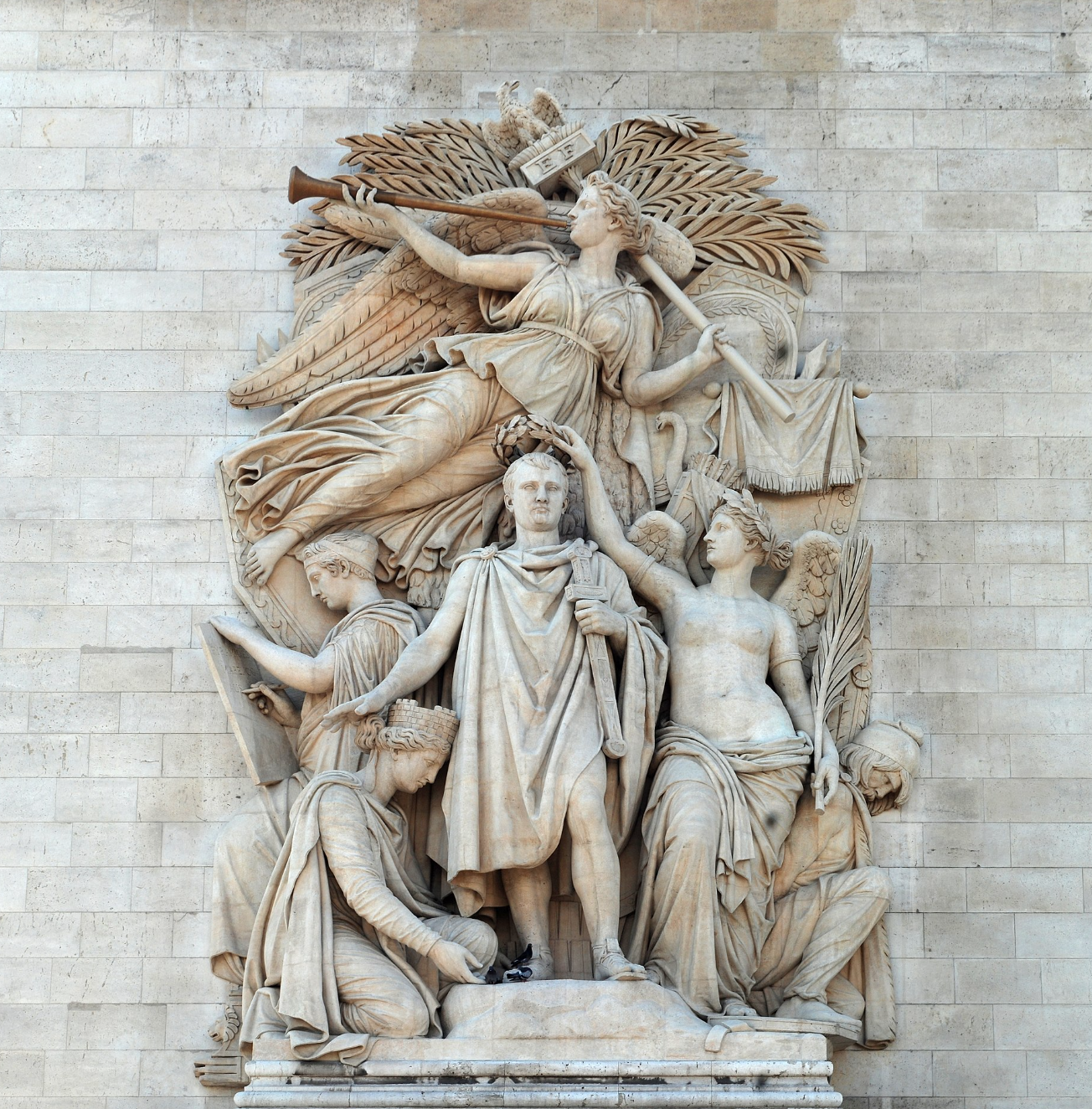
The sculptures on the pillars sit closest to eye level, so they are the easiest to appreciate.
The group on the right-hand pillar is the most famous work on the Arc. Its full title is "The Departure of the Volunteers of 1792," and it was carved by François Rude to commemorate the birth of the First French Republic after the August revolution. At its center, a winged goddess of war thrusts her sword forward, as if calling the crowd below to march. France was then in the midst of upheaval, with the absolute monarchy and the class system badly shaken. Other European powers feared the revolution would spread to their own thrones and hierarchies, and sent armies to crush it quickly. To defend the republic from this foreign intervention, some 200,000 volunteers were raised, and at the Battle of Valmy against the Prussian and Austrian allies they won the first victory of the Revolutionary Wars. According to one tale handed down about the work, the goddess's face was modeled on the sculptor's wife, who must have had a wonderfully spirited face!
On the left pillar is "The Triumph of 1810" by Jean-Pierre Cortot, made to celebrate the Treaty of Schönbrunn, signed in 1809 between the Austrian Empire and France. The central figure is Napoleon, crowned with laurel by the goddess of Victory. Kneeling at his lower left is a woman wearing an unusual crown shaped like city walls, a personification of a city conquered by Napoleon. Above her, another woman writing on a stone tablet is Clio, the Greco-Roman muse of history, recording his deeds. 1810 was the peak of Napoleon's reign, when the French Empire reached its greatest extent. It was also the year he divorced his first wife, Joséphine, and married the Austrian archduchess Marie Louise.