Paris · Architecture
A Monument to Napoleon's Victories
Arc de Triomphe · Paris, France
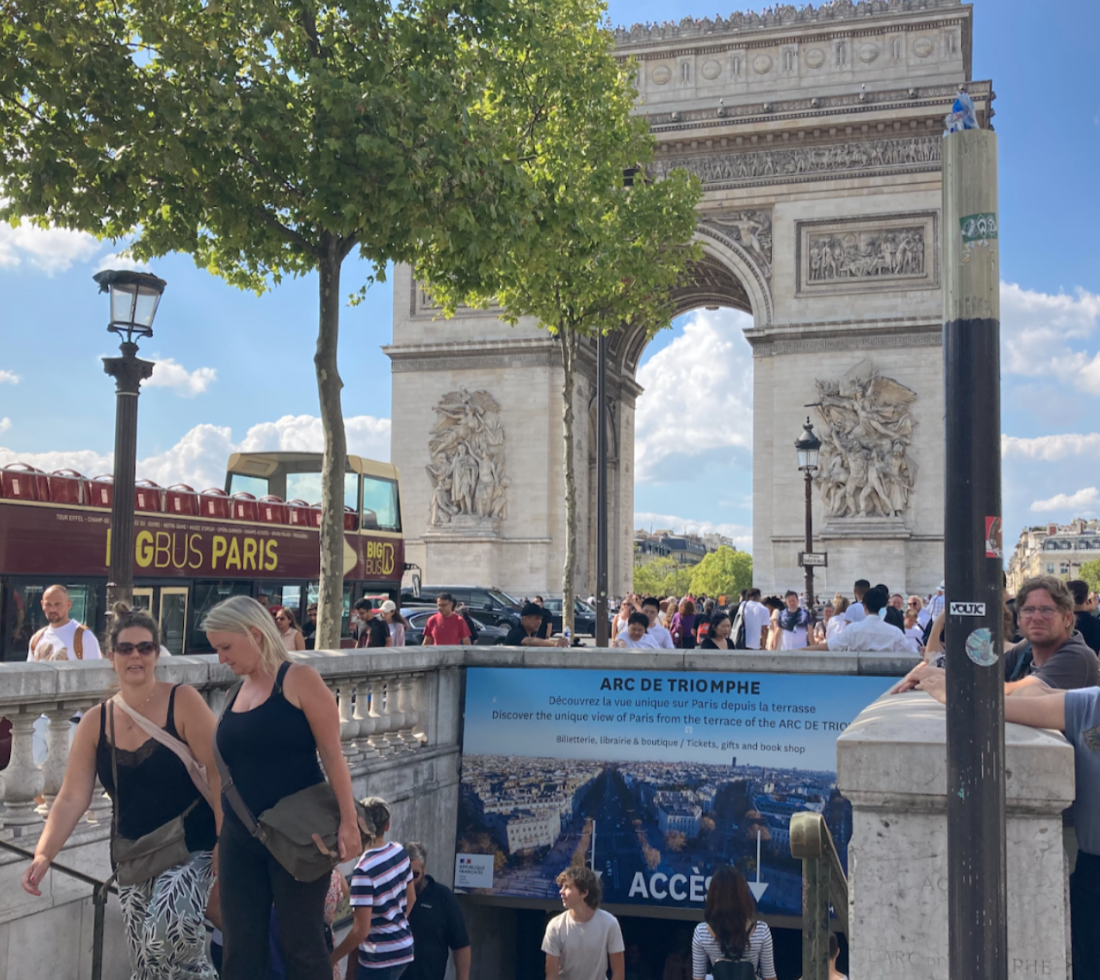

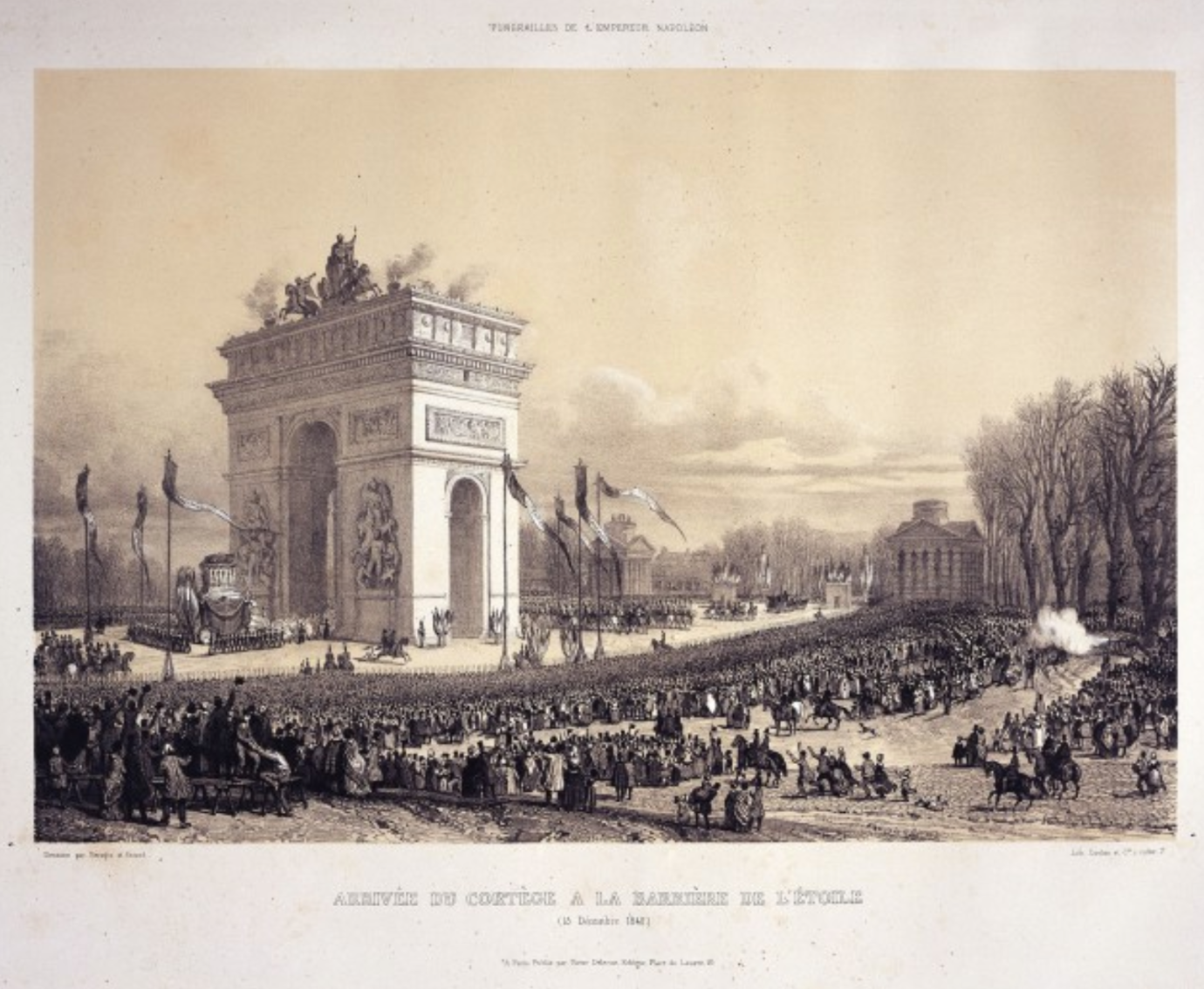
Exit Charles de Gaulle–Étoile station at Exit 1 and the Arc de Triomphe comes into view. Walk to the entrance of the underground passage and find a spot where you can see the whole monument. Most visitors are surprised by its size: it stands 50 meters tall and about 45 meters wide. Construction took a full 30 years, from 1806 to 1836, and when it was finished it was the tallest triumphal arch in the world.
Why build it so big? Napoleon wanted to show off his triumphs on the battlefield. The arch was also meant to honor fallen soldiers, but its sheer scale reflects Napoleon's love of anything grand.
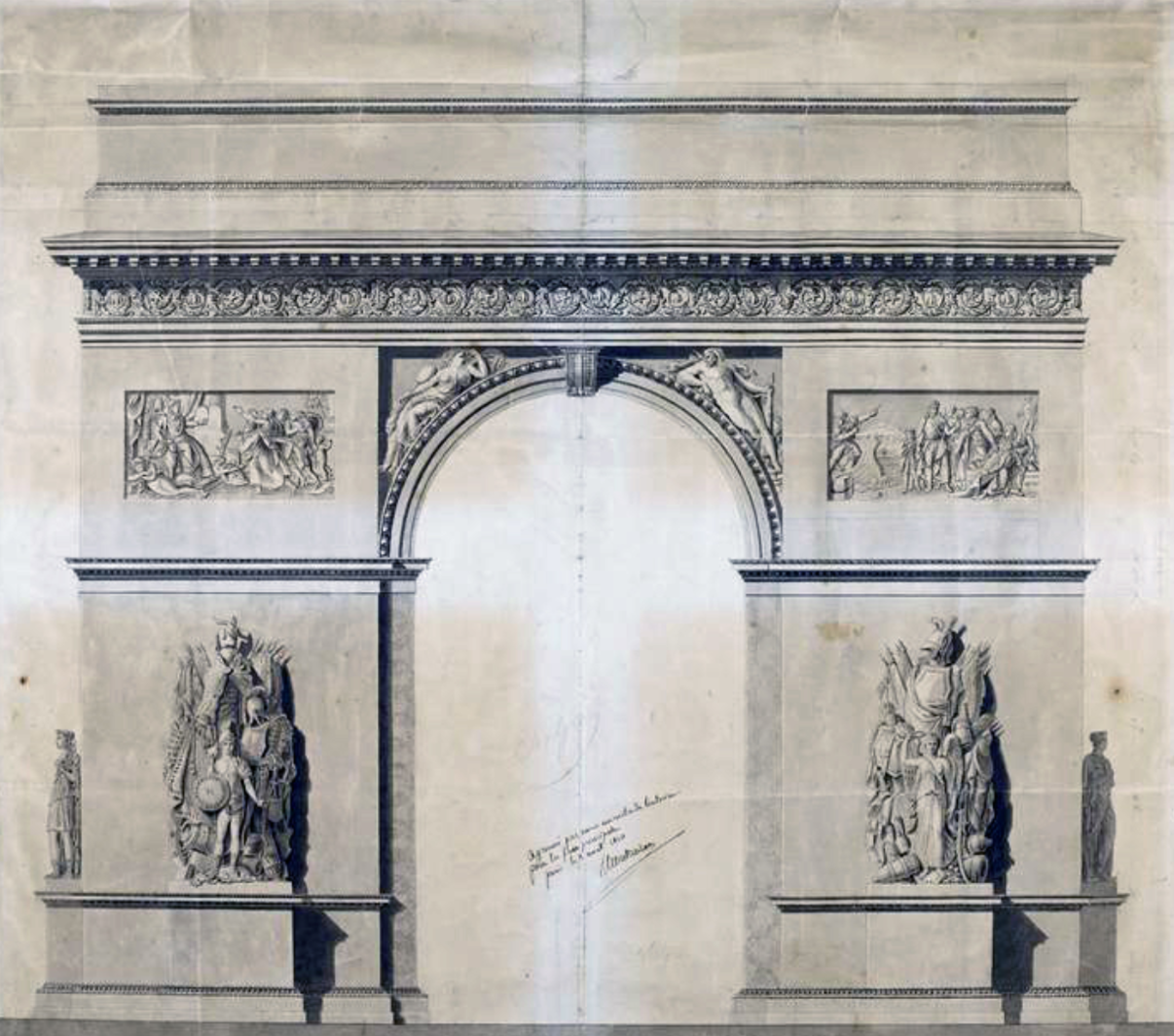
After his greatest victory, at Austerlitz, Napoleon promised his troops that they would return home through a triumphal arch. On August 15, 1806, his own birthday, he ordered one built, as if giving himself a present. Various designs followed, and in 1808 the plan by architect Jean Chalgrin, the arch you see today, was chosen and work began.
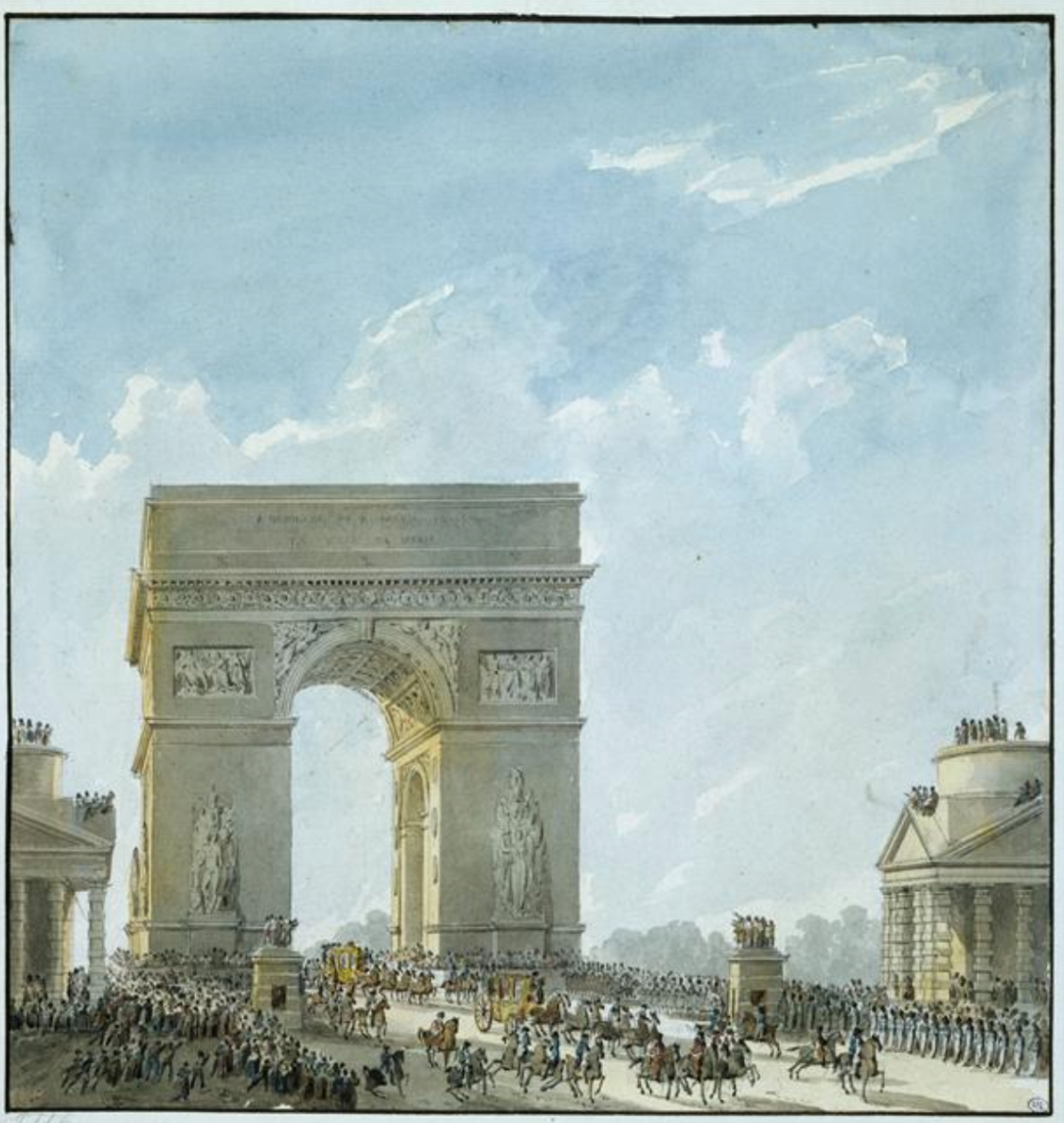
The start was far from smooth. The site was not flat ground but a leafy hill known as Chaillot, and leveling it alone took about two years. As construction dragged on, the promise to his soldiers went unkept. At the 1810 celebration of his marriage to the Austrian archduchess Marie Louise, a wooden panel painted with the arch stood in for the real thing.
Napoleon never saw the finished monument. In 1840, 19 years after his death, only his coffin, returned from his final exile, passed through the Arc de Triomphe amid cheering crowds on its way to its resting place at Les Invalides.