Medieval Louvre foundations
Transcript
Here's what your guide tells you about this work in the MuseCat app.
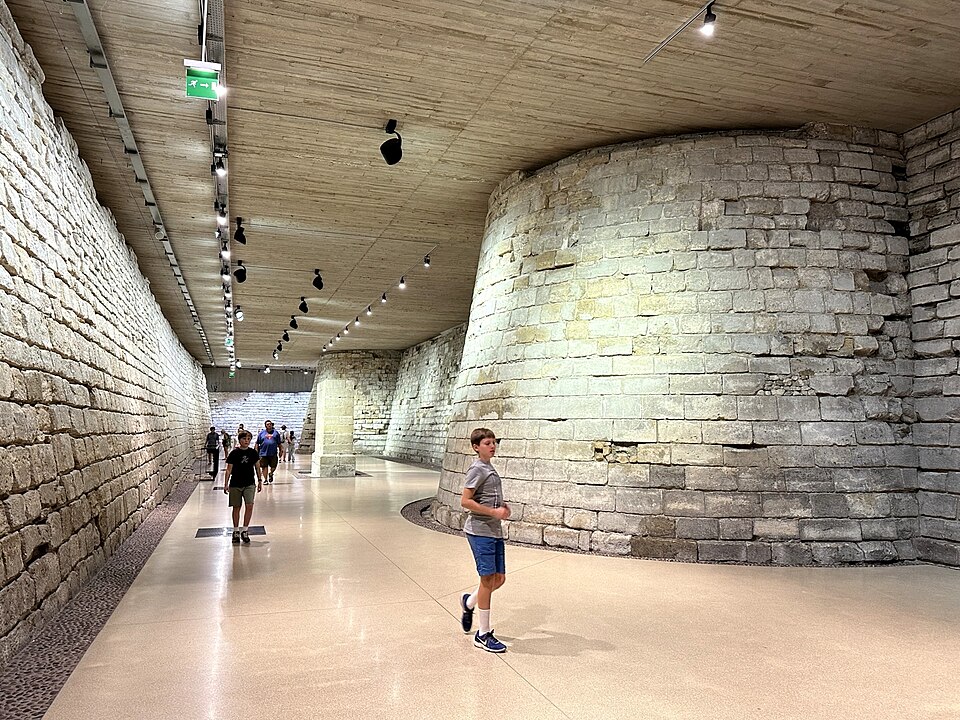
This is proof that the Louvre was once a fortress. When they excavated for the Glass Pyramid, they also excavated here. And what they found was this: the remains of the original moat of the medieval fortress, exactly as they were. Since Francis I began rebuilding the Louvre in the Renaissance style, the medieval form of the building had only existed in historical documents. Nobody expected to find it physically. And suddenly, there it was!
They decided it was too important to ignore. So instead of covering it back up, they turned it into an exhibition space. They didn't restore anything. What you see is exactly what they found. Now look at the walls. There are marks carved into the stone: hooks, squares, hearts. Can you see it? A lot of hearts, especially.
What do you think they are? Medieval graffiti? Good guess, but no. This indicates who was supposed to receive how much money at that time.
Have you ever heard of "guilds"? They're guild marks. In the Middle Ages, guilds were associations of merchants and craftsmen. Each guild had its own mark. The heart guild carved a heart. The hook guild, a hook. Why? Because back then there was no clear payment system. So each guild marked how much work they had done and how much they were owed. "The heart guild worked this section, pay us." They're not decoration. They're invoices carved in stone!
And it's not unique to the Louvre. In any medieval building in Europe you can find these marks if you know where to look.
Next time you visit a cathedral or a castle, look at the walls. Now you know what they mean.