Paris · Palace & Rooms
The Mercury Salon
Palace of Versailles · Paris, France
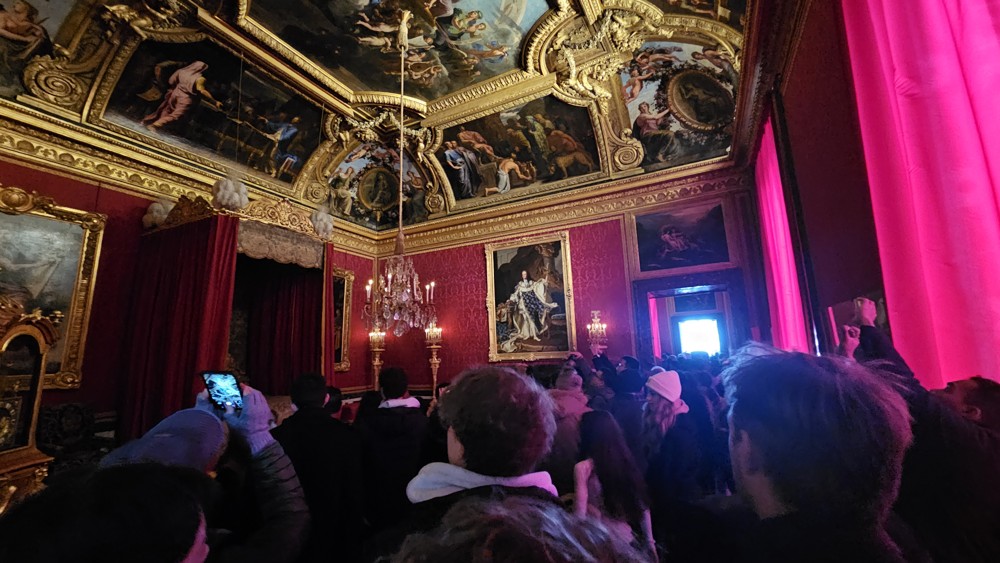
The ceiling shows Mercury riding a chariot drawn by two roosters, equipped with his winged cap and sandals and the winged staff wrapped by two serpents. As the messenger god, Mercury needed all those wings to move swiftly between the gods, and between gods and mortals, carrying messages back and forth. The image symbolizes Louis XIV's own skill at communication and diplomacy.
The bed in this room belonged to Louis XIV's "ceremonial bedchamber." Far from a place for restful sleep, it functioned more like an elaborately staged theater set. In reality, Louis XIV retired each night to a small, cozy private bedroom nearby, where he actually slept. Every morning before dawn, he would return to this official chamber through a hidden passage and lie back down in the bed, preparing to "wake up" as if he had spent the night there.
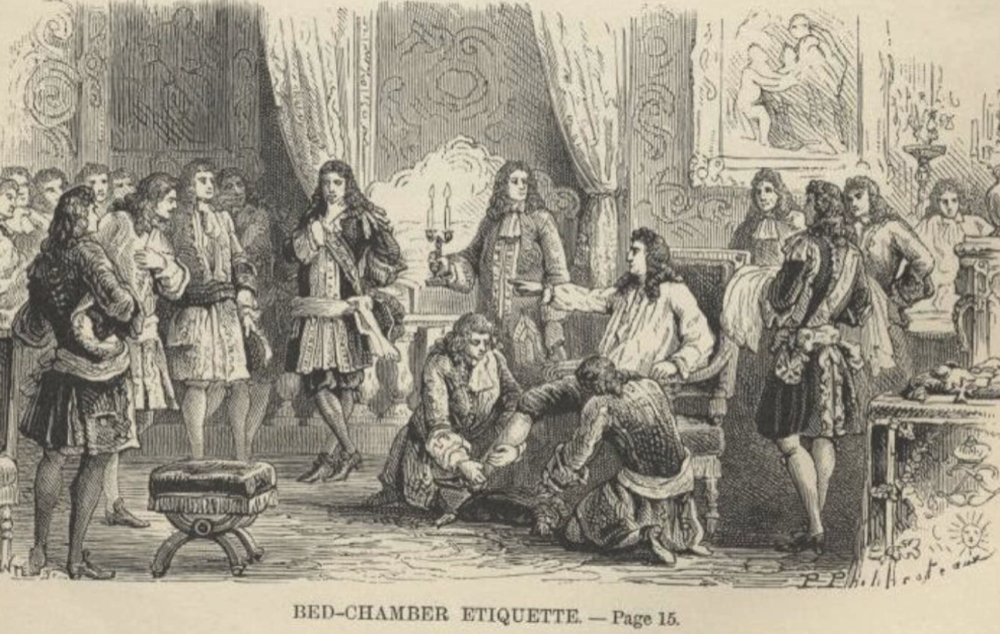
All of this elaborate staging served one purpose: taming the nobility. Each morning, nobles were required to pay their respects to the king. As the doors opened, they entered one by one in strict order of rank, competing subtly to flatter him. Helping the king wash his face, dressing him, bringing his chamber pot — even these menial tasks, along with where one was permitted to stand or whether one's chair had a back, were all carefully graded by privilege, stoking an endless rivalry for loyalty among the nobles. This room, then, reveals the Sun King's calculating precision: he even gave up a comfortable night's sleep to keep the nobility firmly under his control. And yet it was in this very room that Louis XIV's true final sleep took place — when he died, his body lay in state here, and it was here that the nobility came to pay their last respects.