Paris · Palace & Rooms
The Four-Hundred-Year Room — A History of Versailles
Palace of Versailles · Paris, France
Versailles began life as a small, quiet village far from Paris, and the site looked nothing like the palace it would become. In late 1623, Louis XIII built a hunting lodge here; in 1634 he had it rebuilt in brick, and his son Louis XIV inherited it. Starting in 1665, Louis XIV began turning this country retreat into what would become today's Palace of Versailles, and after roughly fifty years of large-scale construction it emerged as the largest palace in Europe.
In 1670, the architect Louis Le Vau built symmetrical apartments for the king and queen flanking the original chateau. In 1684, Louis XIV moved the government and the entire royal court to Versailles for good. Now the center of power, the palace saw its garden-facing terrace transformed by the architect Jules Hardouin-Mansart into the Hall of Mirrors, which became the setting for the court's most important ceremonies and audiences. Mansart kept expanding the palace to house the nobility and every branch of government, until it could accommodate roughly ten thousand people, including servants, kitchen staff, and stable hands.
In 1701, late in his reign, Louis XIV moved his bedroom to the exact center of the palace, making that room the pivot point where the king's daily rituals and the life of the court intersected. Ten years later, Mansart completed his final project at Versailles: a grand royal chapel to match the scale of the palace. Louis XV, who came after, began to loosen the rigid etiquette of the court during his time at Versailles, building smaller, more private apartments for comfort. Late in his reign, in 1770, a royal opera house went up — the palace hadn't had a dedicated performance venue until then — and in 1774 the architect Gabriel modernized the facade facing the town. These massive building projects relied on forced labor from ordinary people, and resentment built along with every new wing.
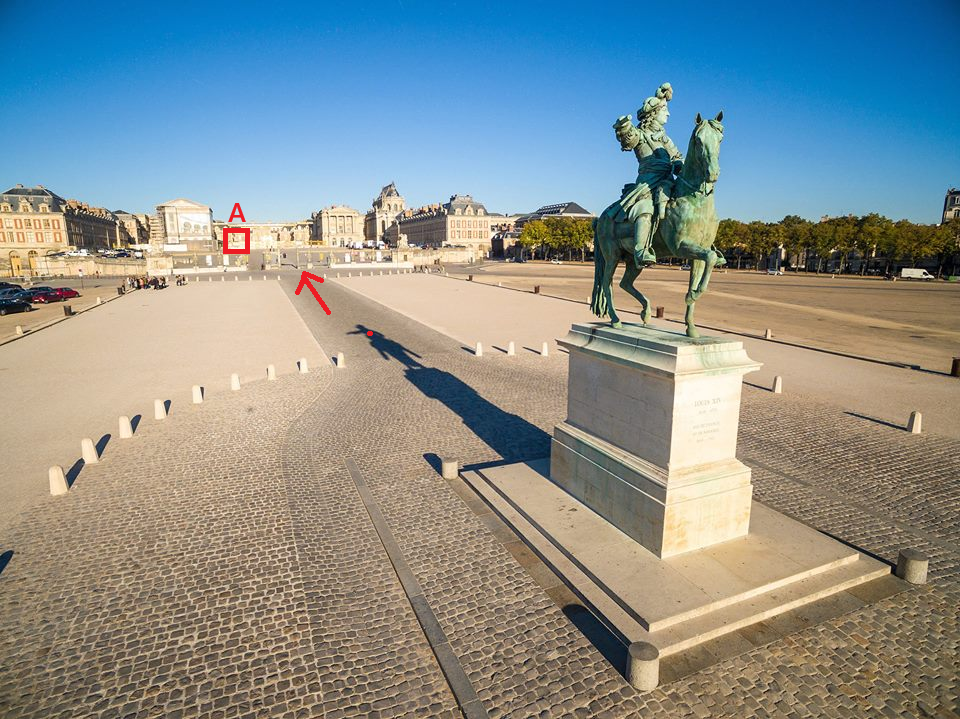
When the French Revolution broke out in 1789, the royal family was forced to leave Versailles for Paris, and the palace's future became uncertain. The King's Gate, a symbol of absolute monarchy, was torn down, and Louis XVI and Marie Antoinette had to abandon Versailles. In 1793, the palace's painting collection was moved to the Louvre, and its furniture was auctioned off and scattered far and wide. Even amid this upheaval, though, the building itself was fortunately preserved.
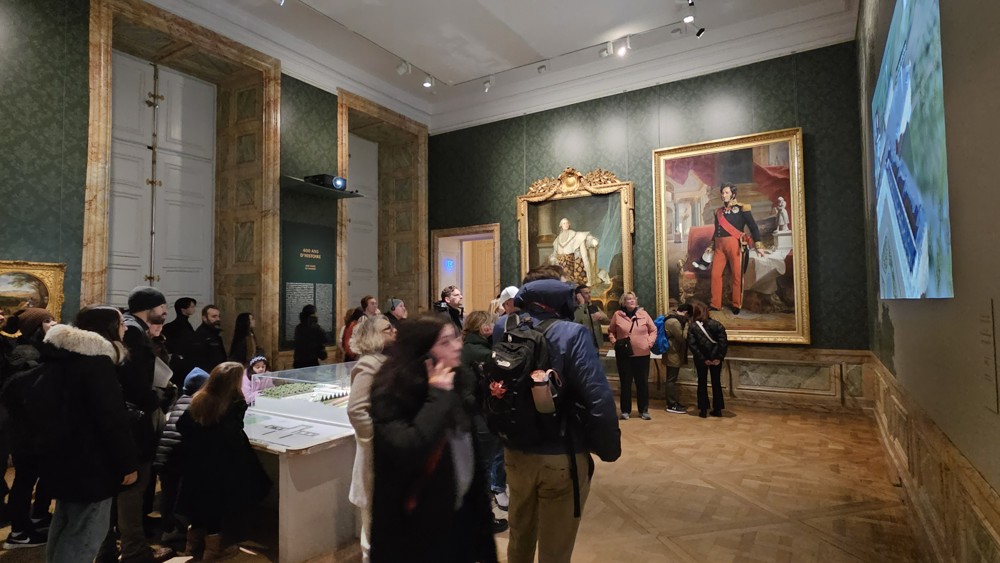
In 1804, after the fall of the monarchy and the establishment of the First Republic, Napoleon renovated the Grand Trianon as a summer residence. In 1815, Louis XVIII built the "Dufour Pavilion" to balance the pavilion opposite it, and in 1832, King Louis-Philippe transformed the palace into the Museum of French History, replacing the apartments once used by the princes with the vast Gallery of Battles. Today's Versailles is the product of this long history — a former royal residence with a distinguished collection, a history museum, and, in its own way, a palace of the Republic.