Paris · Architecture
Genesis, Window 13: The First Page of Humanity
Sainte-Chapelle · Paris, France
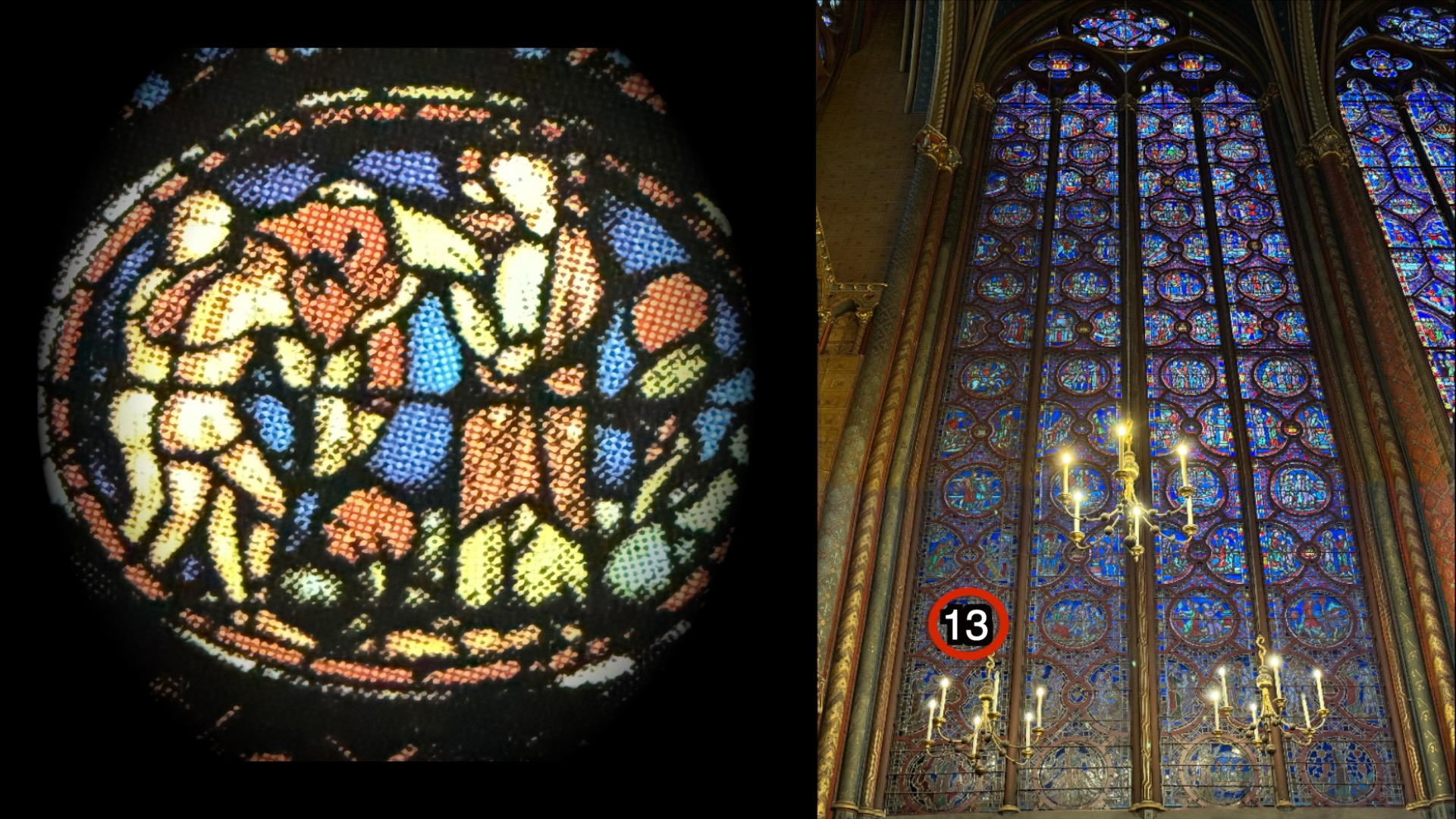
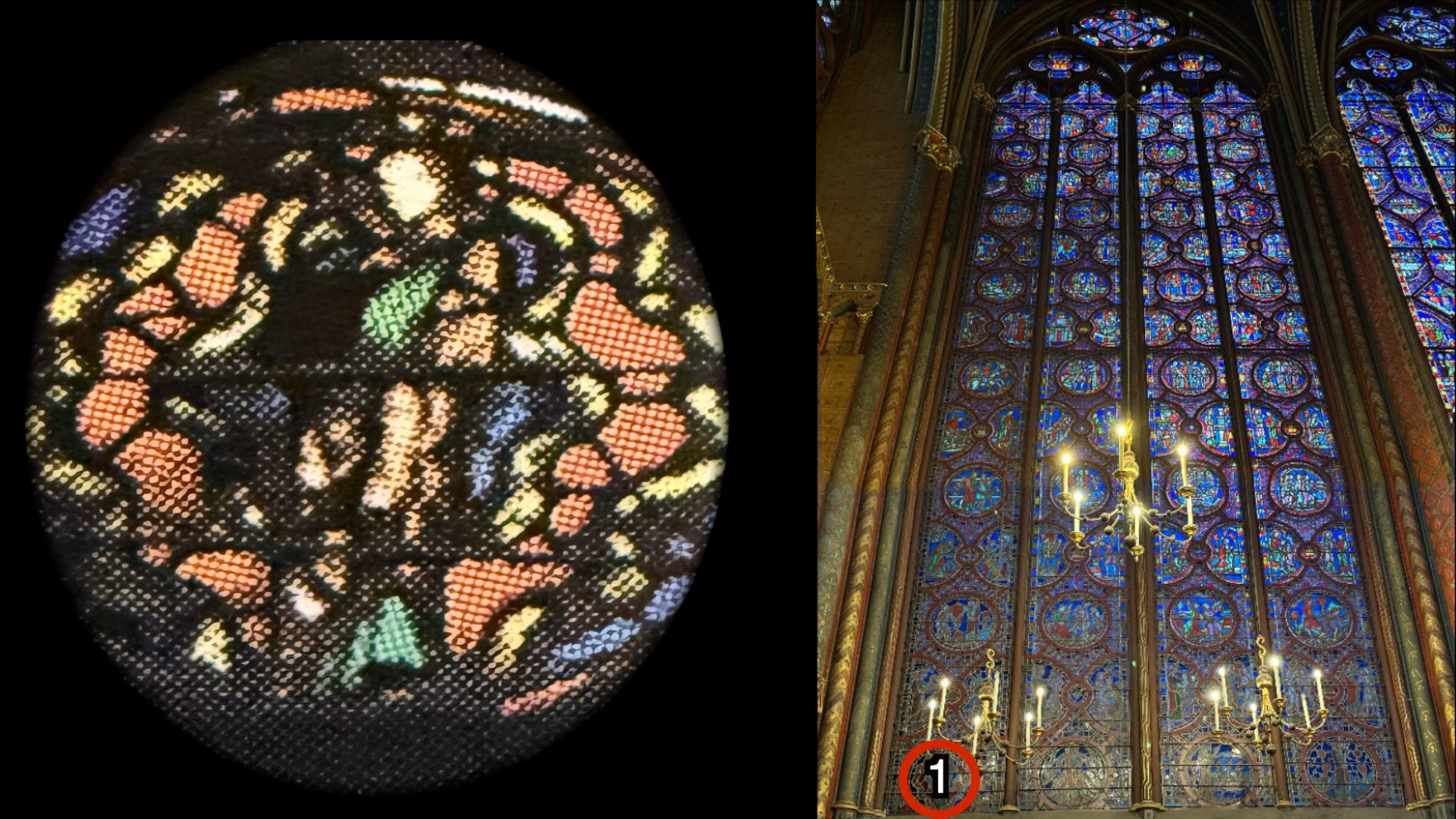
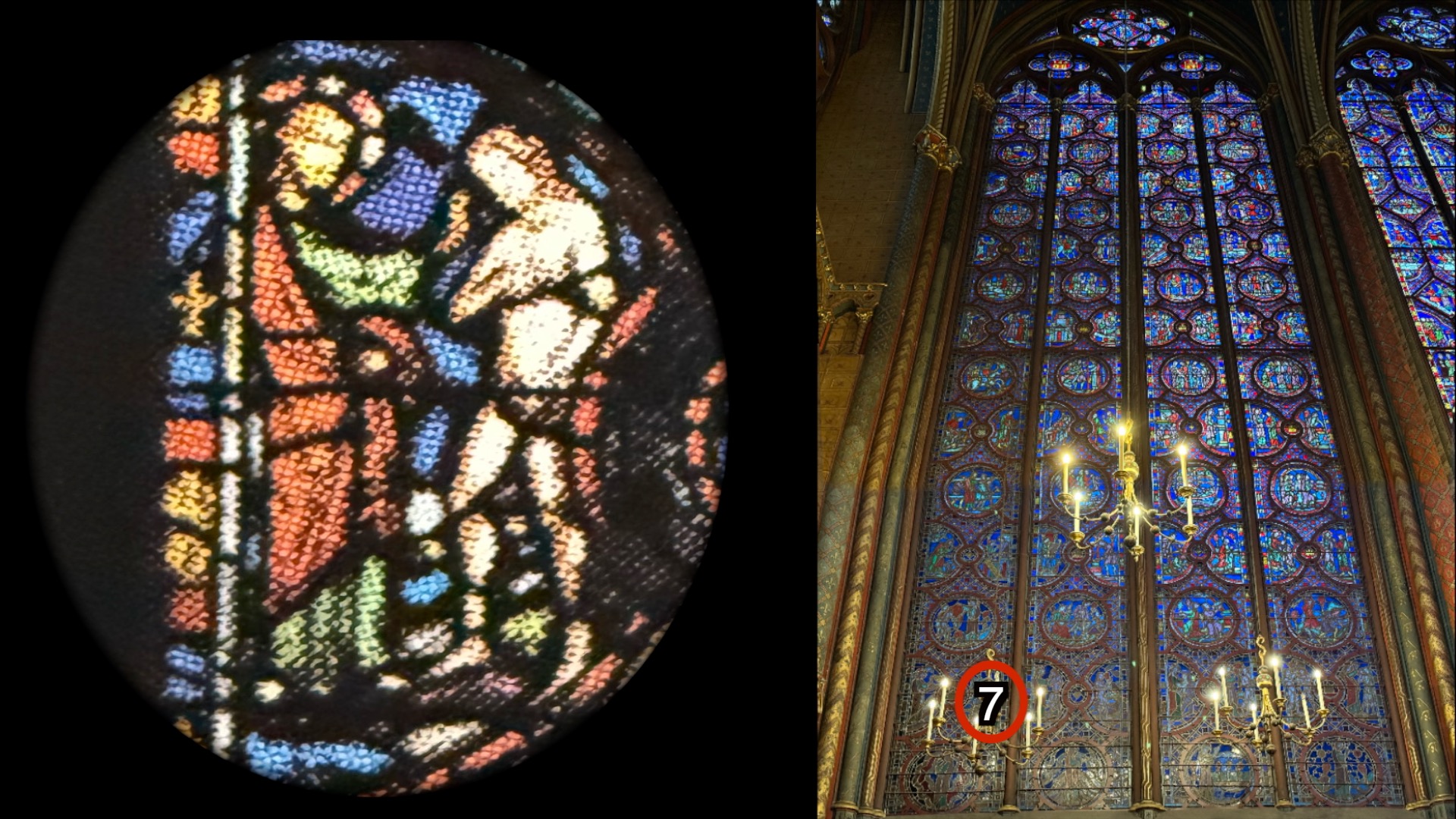
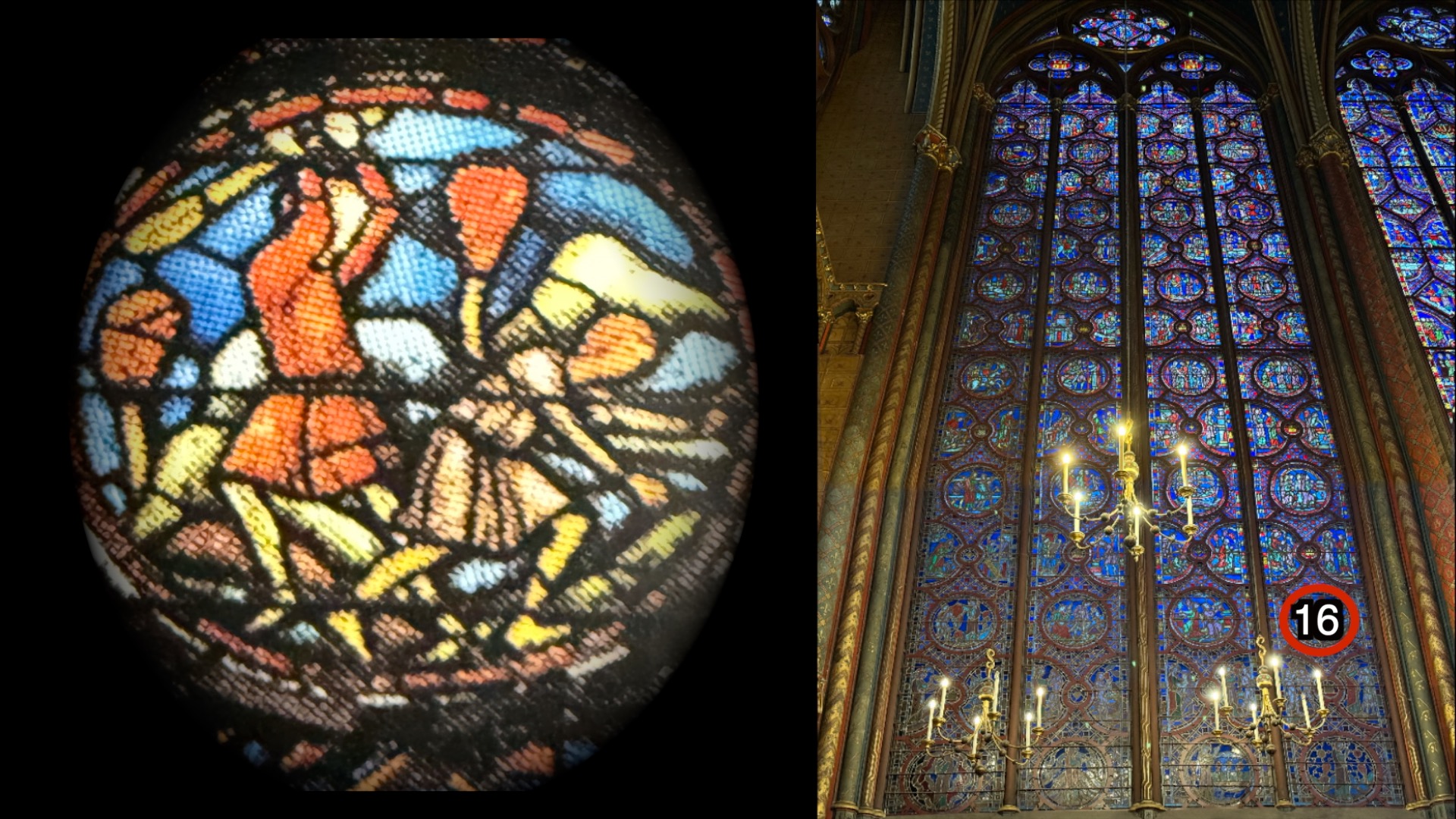
Window 13 is the one closest to the entrance on the left-hand wall, and its subject is Genesis. The big side windows are arranged so that time moves forward as you walk deeper into the chapel, so it makes sense that humanity's first page sits in the first window by the door.
Almost none of the 13th-century glass survives here. Damage from the installation of an organ and from construction on a neighboring building left most of what you see today repainted in the 19th century. That actually turns the window into a treasure hunt: exactly one panel of genuine 800-year-old glass remains. Read it from bottom to top, like a picture book in five tiers.
The bottom tier shows the creation of the world, with four scenes side by side of God raising a hand to point: the separation of light from darkness on the first day, then sky and sea, then the sun, moon and stars. Just above, animals and humans are born, and Eve rises from the side of the sleeping Adam. That scene is the window's only 13th-century original.
One tier up, the story turns dark. Eve picks the fruit in front of a snake-wrapped tree, and an angel drives the couple out of Paradise. Above that comes humanity's first tragedy: Cain striking down his brother Abel.
At the center is the most fun part, Noah's Ark, which looks a little odd. Instead of the ship we know, it is a wooden box like a small house floating on the water. The Latin Bible's word for the ark, arca, originally meant "chest," not "boat," and 13th-century craftsmen took it literally and drew the ark like a treasure chest. At the same height, the workers building it hold a saw, a hammer and a chisel. Never having seen tools from Noah's day, the artisans drew the tools Paris carpenters used every day. Looking at Noah's Ark, you are really looking at a 13th-century Paris building site.
Anachronisms like this appear throughout the chapel: a Persian palace drawn like a Parisian castle, Roman soldiers in 13th-century armor. These windows are a Bible and, at the same time, an encyclopedia of everyday life in the 13th century.
Higher up, the Tower of Babel collapses as it reaches for the sky. Beside it is the window's most nerve-racking moment, Abraham raising his knife over his son on the altar as God tests his faith. Above that is the ladder of angels Jacob saw in his dream.
At the very top, in the triangular tip of the window where the story of Joseph wraps up, two familiar emblems are set into the glass: the little castle of Castile, the symbol of Blanche of Castile, the king's mother.