Paris · Sculpture
Too Beautiful for Hell: The Kiss
Musée Rodin · Paris, France
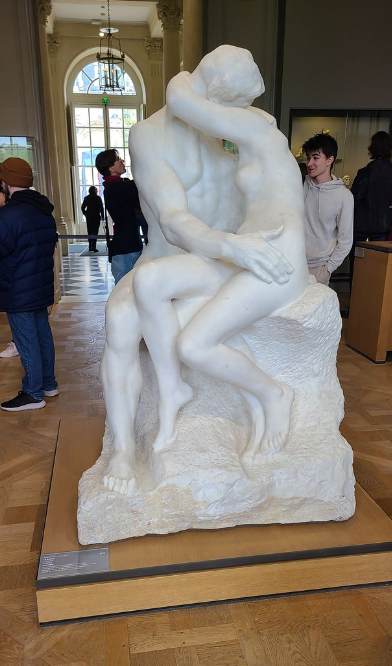
The Kiss is one of Rodin's signature works, portraying two figures from Dante's Divine Comedy: Paolo and Francesca. Francesca, married young to the lord of Rimini, falls in love with Paolo, her husband's brother, and the two ultimately cross a line they shouldn't have. Rodin captured that moment of mutual love between them in stone.
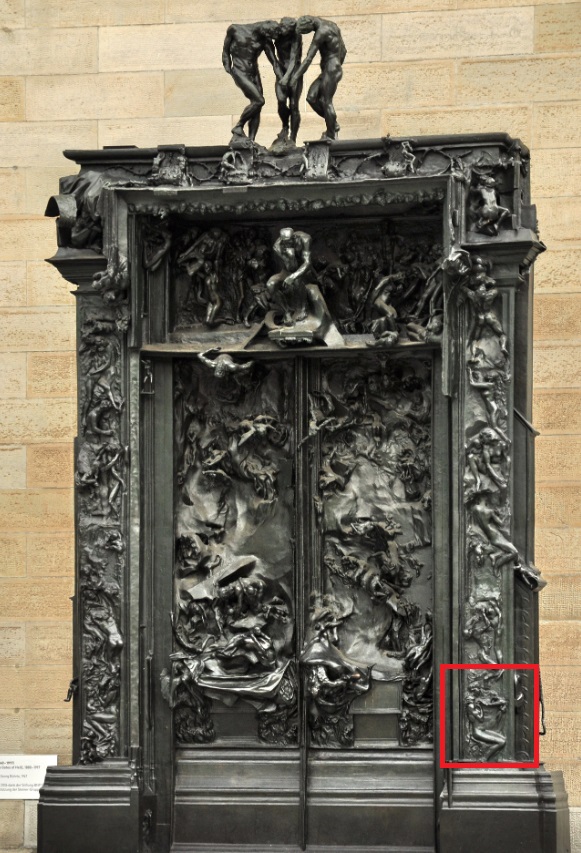
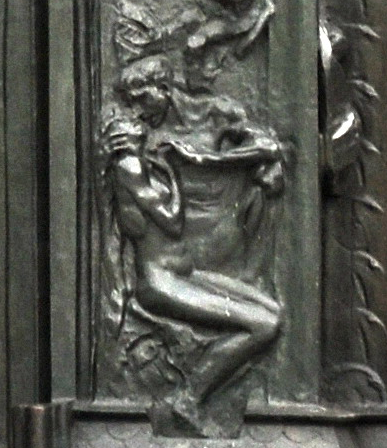
The piece was originally conceived as one of the central sculptures for The Gates of Hell. But the finished work came out so beautiful that it clashed with the mood the Gates were meant to convey, and it was eventually replaced by a different sculpture. Unwilling to give up on the theme entirely, Rodin created a smaller, somewhat different version and placed it in the lower right corner of The Gates of Hell. Both versions show a man and woman kissing, but their poses and overall feel differ.
This sculpture is also a strong example of Rodin's non-finito technique — Italian for "unfinished." Look at the rock the two figures sit on, and you'll notice its rough, unpolished texture, as if the carving had simply been left incomplete. Similarly, while their faces and torsos are finished with great precision, their arms and legs are left comparatively rough. This reflects Rodin's deliberate choice to focus his attention on emotion and essential movement, leaving less important areas loosely rendered.
Rodin unveiled this piece to the public in 1887, and it became known as The Kiss, earning enormous acclaim. It was carved from Carrara marble, a prized stone from northern Italy's Carrara region — the same material used in masterpieces like Michelangelo's Pietà in the Vatican, the Pantheon in Rome, and Marble Arch in London, a measure of just how world-renowned its quality is.