Paris · Sculpture
Stripped of Every Symbol: Rodin's Saint John the Baptist
Musée Rodin · Paris, France
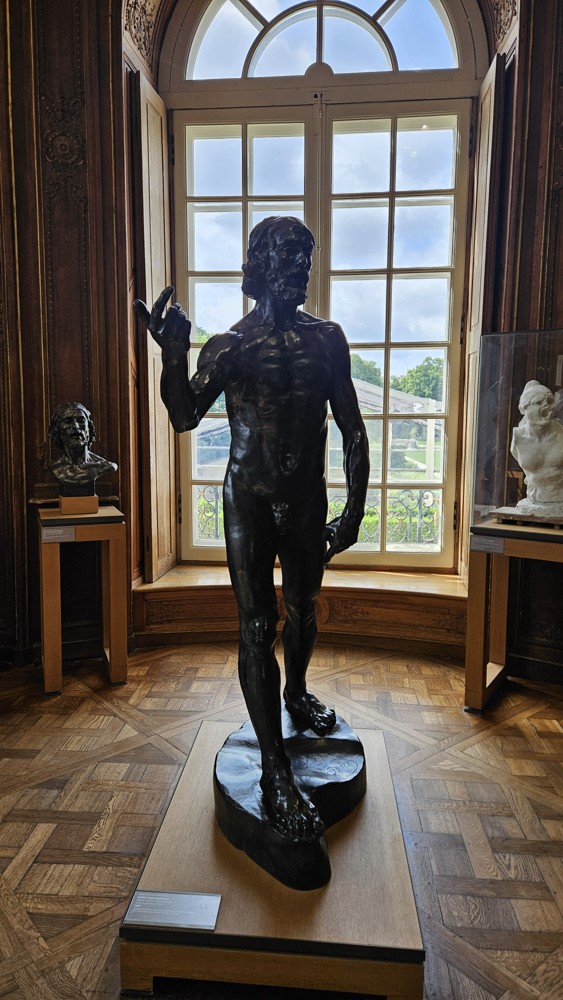
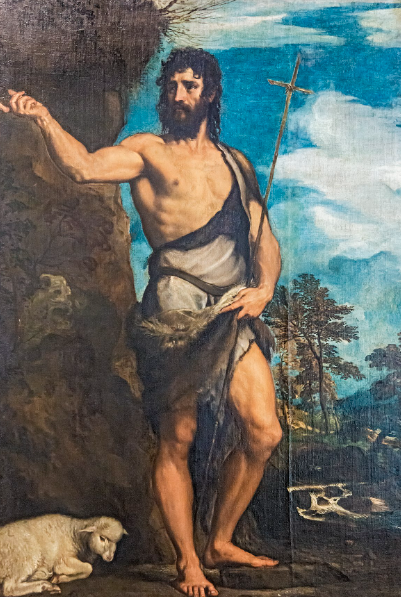
Travel through Europe long enough and you'll run into countless depictions of Saint John the Baptist. He's usually shown carrying his signature reed cross or wrapped in camel skin. In this sculpture, though, Rodin strips away every one of those traditional symbols and renders John completely nude.
The model was a man named Pignatelli, a farmer from Italy. As with The Age of Bronze, Rodin again chose a non-professional model, since it let him capture a freer, more natural pose. While Pignatelli was trying out different stances, he settled into the one you see here, and Rodin reportedly cried out, "That's a man walking!" — deciding on the spot to capture that exact moment in sculpture. The title, too, has an interesting origin: the instant Rodin first laid eyes on Pignatelli, he thought of Saint John the Baptist. A lifetime of farm work had left Pignatelli with sun-weathered skin, an unkempt beard, and a lean but wiry build — all of which, to Rodin, resembled the image of John preaching in the desert.
This time, Rodin deliberately made the figure larger than life. Having already faced accusations over The Age of Bronze, whose life-sized scale had fueled rumors of body-casting, he scaled this piece up intentionally to avoid the same suspicion. Once again, the public was captivated by the lifelike quality of the human form, and riding that wave of popularity, the French government went on to purchase this work from Rodin as well.