Paris · Painting
Les Demoiselles d'Avignon: The Door to Cubism
Musée Picasso Paris · Paris, France
Les Demoiselles d'Avignon, with its row of standing women, is famous enough that many of you will recognize it. Strictly speaking, it depicts prostitutes in a brothel in Barcelona, Spain. Today it is highly acclaimed, but when it was finished in 1907, it was not shown to the public at all, and the friends who saw it in his studio heaped abuse on it. The Fauvist painter André Derain reportedly said that one day they'd hear Picasso had hanged himself behind that big canvas. Picasso, of course, did nothing of the kind. He outlived his contemporaries by a long way, and this painting both introduced Cubism to the world and became the first key to the new challenges Picasso would take on within it.
Since the Renaissance, European painting had used perspective to create depth, and the system of conveying distance around a vanishing point endured for centuries. Cézanne, who led modern art before Picasso, broke with it. What mattered was not painting things as they are but how the painter sees them. Influenced by Cézanne, Picasso's Cubism put less weight on describing a subject accurately and in detail than on the subjective impression it left. He began wrestling with how to show a three-dimensional object on a flat surface, and how to render a solid object seen from many viewpoints at once.
That's why the figures in this painting have no individual features, and you can hardly imagine what the real women looked like. Their bodies look like twisted sculptures, and parts of them seem sliced into cross-sections and pasted back together. One figure sits with her back turned yet looks straight at us. The curtain in the background looks like colored paper, and with the figures and background spread across a single canvas, there is little sense of depth or perspective.
After Picasso's death, hundreds of studies related to this painting turned up in his studio. In the sketches, the women were not alone. There were two men, customers of the brothel. In the final painting the men have vanished, leaving only the women. So where are the men? They are us, the people the women are staring at. In the early 20th century, those looking at the painting were mostly bourgeois viewers, critics, intellectuals and painters. Prostitution was already seen as a form of violence, so those viewers must have felt psychologically uncomfortable before it. That is why the painting shows a certain hostility toward its audience.
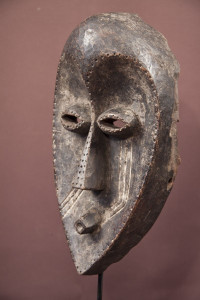
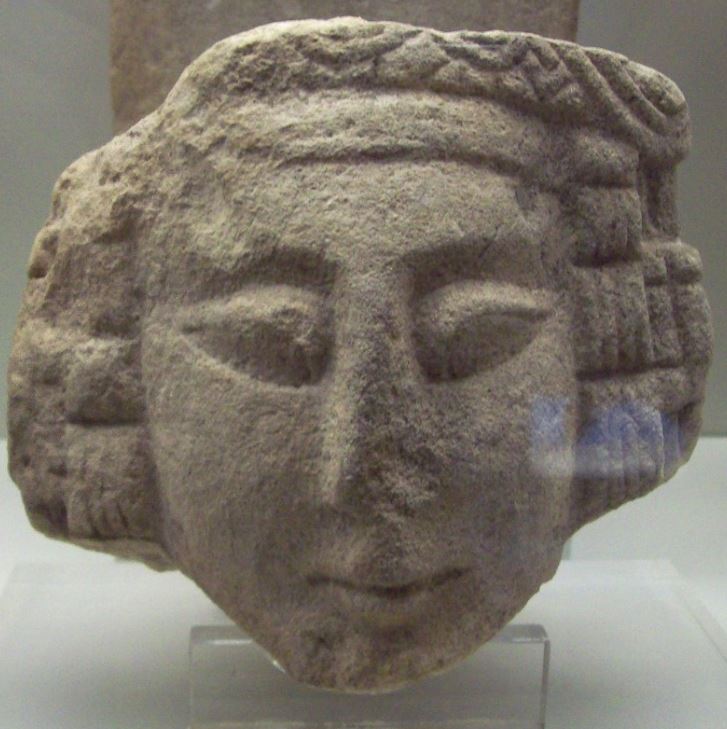
Interest in traditional African sculpture was also growing among European artists then, not just Picasso. The story goes that when he ran into his colleague and rival Henri Matisse in Paris, Matisse was holding a small Congolese figure, and the sight gave Picasso a fresh shock. After that, he went to the ethnographic museum at the Trocadéro and spent a long time sketching African sculpture. European art had focused on bodily proportion, muscle and the shadows cast by a bent arm, whereas traditional African sculpture is linear and strikingly simple, with little regard for muscle, proportion or likeness. Picasso seems to have found in these extremely simple, almost symbolic lines a powerful impression, a symbolic force and a pure, unspoiled sensibility. That is why the two women on the right and the one on the far left strongly recall African masks. The two in the middle feel a bit different, shaped by ancient Iberian sculpture.
So the work that introduced Cubism to the world was Les Demoiselles d'Avignon, and what you are viewing now are its studies.