Paris · City Walks
Shakespeare and Company: Where Film and Literature Meet
Paris · Paris, France
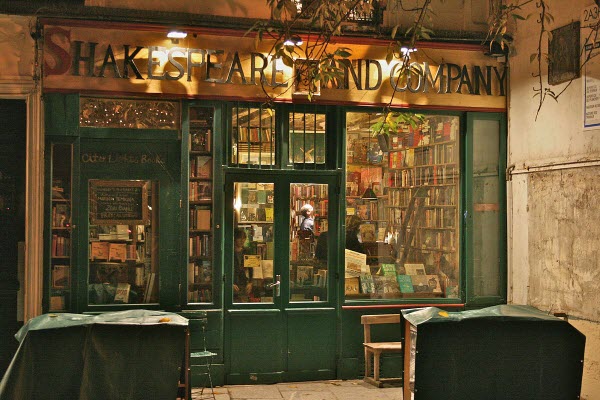
Many films are set in Paris, but your guide's favorite is Before Sunset, mentioned earlier. It's part of a trilogy with Before Sunrise and Before Midnight, set in Vienna, Paris and Greece respectively.
Jesse, an American, and Céline, a Frenchwoman, meet on a train and hit it off. Jesse has to get off in Vienna and fly home to the US the next morning, while Céline is staying on to Paris, so he proposes that they spend the day together in Vienna. He's short on cash, so no hotel, just wandering the streets. Céline, who likes him too, gets off with him. Before Sunrise covers the hours between then and Jesse's departure at dawn. They fall in love, but don't want to swap contact details only to trade a few messages and fade, so they don't, and promise to meet again at the same station in six months. Nine years later, Before Sunset opens with the question: did they meet? Mild spoiler: they didn't. But Jesse wrote a bestselling book about that day, and he holds author talks around the world, and the one in Paris takes place right here, at Shakespeare and Company. Céline hears about it and comes, and the two reunite here after nine years. Jesse has to fly back to the US that evening, and Before Sunset follows them until sunset. Nine years on again comes Before Midnight, which was actually shot nine years later, so the actors, characters and audience all age together. We recommend watching all three in a row.
The bookshop also makes a brief appearance in Midnight in Paris, perhaps the most famous film set in the city. Gil, the writer at the heart of the story, appears in the shop for only about ten seconds, but there must have been a reason for filming it. The story begins when Gil, an American visiting Paris, travels back in time to the 1920s, where he meets and talks with giants of the arts: F. Scott Fitzgerald, Ernest Hemingway, and the painters Pablo Picasso and Salvador Dalí. The encounters change him.
Director Woody Allen reportedly built the film's picture of the era from A Moveable Feast, Hemingway's memoir of his young years in Paris. The title means a feast with no fixed date. In it, Hemingway describes the cafés he frequented and the streets he walked in the 1920s, and he gives one chapter to a favorite bookshop. You can probably guess which: Shakespeare and Company. When Hemingway was struggling to make ends meet in Paris, the owner, Sylvia, lent books for free to an artist she barely knew, and he describes her as extremely kind.
Sylvia Beach, an American, first opened Shakespeare and Company as a shop that sold and lent English-language books. Americans and Britons living in Paris came to talk literature, and that's how it became known; the people who gathered there included Hemingway, Fitzgerald and Djuna Barnes. Woody Allen brought those figures into his film.
When it opened in 1919, the shop lent books free to poor artists and opened its space for discussion. When George Whitman opened a successor shop at the current location in the 1950s, he put cots in the shop and offered free lodging not only to struggling artists but to travelers as well, a tradition that continues today. It's called Tumbleweeds, and you apply by emailing the address on the shop's website. The conditions: every guest reads one book a day, helps out in the shop for a few hours, and leaves behind a chapter of autobiography. Reading and helping out make sense, but why an autobiography? The current owner explains, "This is a special place where people can share their own stories." In fact, the shop once published a memoir drawn from thousands of these personal statements. It's not just a place that sells books but one that listens to people's stories, which is why it has been loved for so long.