Paris · City Walks
Hôtel de Ville: Paris's Stage of Power and Protest
Paris · Paris, France
Your first stop is Paris City Hall. If you came by metro, you got off at Hôtel de Ville on Line 1 or 11. Read the way an English speaker would, "hotel" sounds like a place to stay, and visitors often assume it's the name of a hotel. But in French, hôtel de ville simply means city hall, and Hôtel de Ville station is City Hall station.
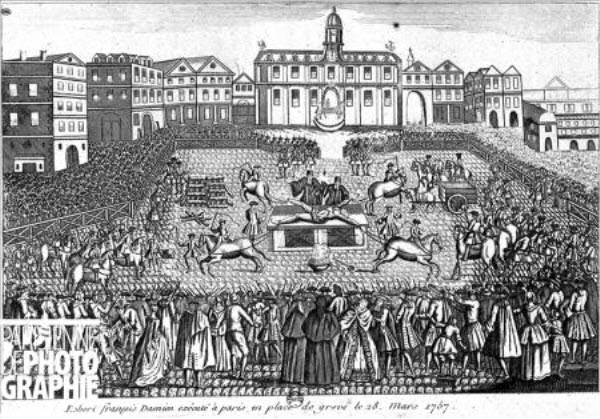
Standing at the heart of Paris, the building has watched the city's turbulent history unfold. The square in front of it has long been the place where Parisians gather. City hall originally stood nearby at Châtelet and moved here in 1357. For about 500 years, from 1310 to 1832, the square was also a place of public executions. Damiens, who tried to assassinate Louis XV by stabbing him, was put to death here: his limbs were tied to four horses and torn apart while crowds gathered to watch.
On July 14, 1789, under Louis XVI, citizen soldiers furious at a corrupt king, nobles and clergy rose up, and the French Revolution began. More than 1,000 people, including Louis XVI and Queen Marie Antoinette, were guillotined, though not here but at Place de la Concorde. The revolutionaries occupied City Hall and used it as their base. But Robespierre, who led the revolution, gradually lost sight of its purpose and ruled by terror, arresting and executing anyone who opposed him. Opposition formed, and Robespierre ended up trapped inside City Hall. In the end he was executed at the same Concorde guillotine that had claimed so many others, and the Reign of Terror ended.
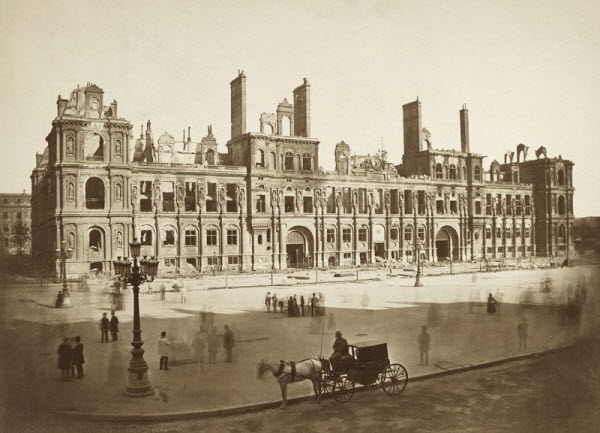
Later, Napoleon's nephew, Napoleon III, became emperor and monarchy returned. Unlike his uncle, though, he had little talent for war. He suffered defeat after defeat in the Franco-Prussian War and was eventually taken prisoner, leaving the country suddenly without an emperor. When the French government, having made a truce with Prussia, set itself up in Versailles rather than Paris, outraged Parisians founded their own government, the Paris Commune. With two governments in one country, civil war broke out, and in resisting the Versailles government troops, the Commune set fire to City Hall. The building you see today is its restoration, a site where power, freedom and resistance have collided.
The many statues adorning the facade honor 338 figures who made Paris great, among them the philosopher Voltaire, Delacroix, painter of Liberty Leading the People in the Louvre, and Cardinal Richelieu, chief minister to Louis XIII. Lit up at night, the building seems to shine even brighter.