Paris · City Walks
The Arc de Triomphe: Napoleon and the Square of the Star
Paris · Paris, France
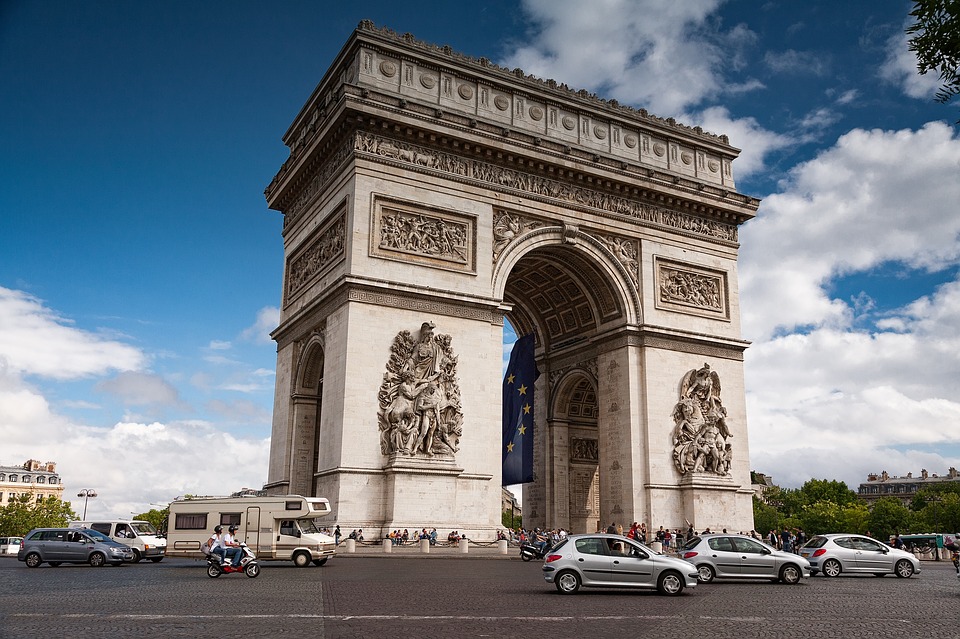
First-time visitors to the Arc de Triomphe may be struck by its size, or they may think, "Is that it?" That's because triumphal arches aren't unique to Paris; you'll see several while traveling in Europe. So this one has a proper name: the Arc de Triomphe de l'Étoile. Étoile is French for "star." Yet the arch looks nothing like a star. The name comes from the square as seen from above. Today twelve avenues radiate from the arch, but in the early 18th century five roads met here, and the layout looked like a star, so it was called Place de l'Étoile. The arch built there took the same name. Then in 1944, General Charles de Gaulle, a hero of World War II, passed through the arch in a victory parade, and when he died in 1970, the square was renamed from Place de l'Étoile to Place Charles-de-Gaulle in his honor. Arc de l'Étoile, Place Charles-de-Gaulle: it starts to get confusing. That's why, if you arrived by metro, the station you got off at is called Charles de Gaulle–Étoile, with both names together.
Before you walk to the base of the arch, a warning: there are no crosswalks and no lane markings. Cars from twelve roads circle the roundabout and peel off with hardly any rules; each driver simply merges and exits on their own. Accidents are rarer than you'd expect, but a novice driver might circle several times. In Mission: Impossible – Fallout, Tom Cruise loops around the arch before shaking off the police. Never cross here on foot. Even if it takes longer, use the underground passage to reach the center. The entrances look like metro entrances: one is on the Champs-Élysées side, and the other on the opposite avenue.
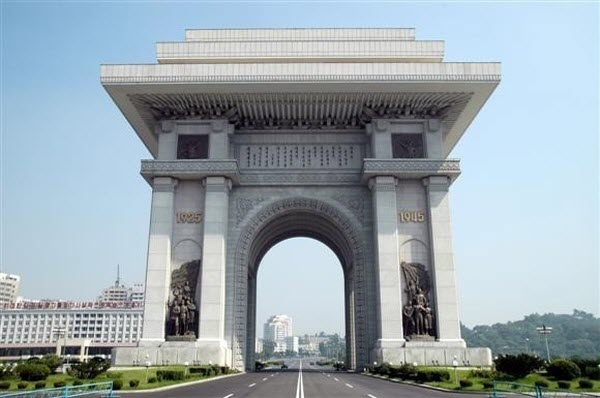
Standing right under the arch and looking up, you feel its scale even more. Search for "world's largest triumphal arch" and this one comes up often. When it was built it was the biggest in the world, but today it ranks second. The largest arch is in Pyongyang, North Korea. Built in 1982 to honor the leader's achievements and modeled on this arch, it had to be bigger than the original because it was meant for a great figure, so it was made larger. The Arc de Triomphe, too, was the world's biggest arch when it was built, and it too was built to honor the achievements of a great figure: Napoleon, emperor of France.
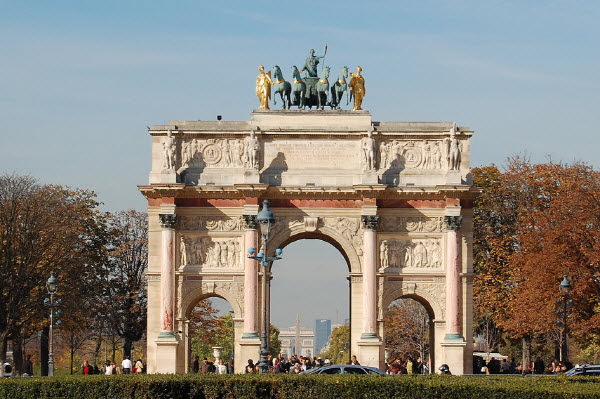
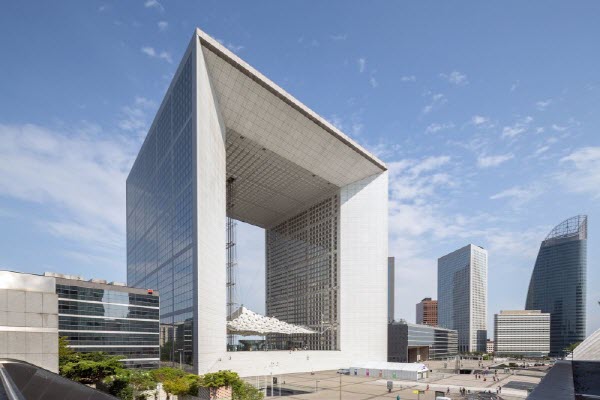
Napoleon was known as a god of war. He was a skilled fighter and a sharp mind, strong in strategy and tactics. As a general he won battle after battle and conquered most of the European countries around the Mediterranean. He began to think of himself as like a Roman emperor, who had ruled the whole Mediterranean coast, and the general finally rose to emperor himself. Then he gave an order: build a Roman-style triumphal arch to honor my achievements. Under that order, two arches began construction in 1806. One is this Arc de Triomphe. The other is visible when you turn your back to the arch: the Champs-Élysées stretches straight out, and beyond it come the Place de la Concorde, the Tuileries Garden and the Louvre. In front of the Louvre stands the Arc de Triomphe du Carrousel. The Carrousel arch and the Arc de Triomphe lie in a straight line. Face the arch again and, through its wide-open arch, you can see yet another square arch. It's the Grande Arche, the "new arch," in La Défense, a business district full of high-rises, unlike central Paris. Like the other two, it was built to line up on the same axis.
Back to the story: the Carrousel arch was finished in two years. Go see it and you'll know why: it's rather small. For a monument meant to honor the great Napoleon, he was not pleased. So the Arc de Triomphe was made big and grand. Unfortunately, it was built so large that it wasn't completed in Napoleon's lifetime. Only after his death was he carried through it on a carriage, on the way to his resting place at Les Invalides, the military museum.
Inside the arch you'll see countless names. Packed across the walls and ceiling are the names of the generals who fought alongside Napoleon on the battlefield. Look closely and some are underlined: those are generals who died in battle.
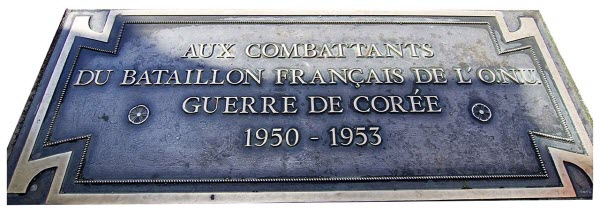
From the center inside the arch, look toward the Grande Arche at La Défense. On the floor you'll see several square bronze plaques. Look at the one in the far left corner. Its last word is CORÉE, French for Korea. It honors the French soldiers who fought as part of the UN forces in the Korean War, which raged from 1950 to 1953. So under the arch you can find a trace of the Korean War.
Now turn around. Beneath the arch lies the tomb of an unknown soldier who died in the world wars. At the center of the arch where you stand is a flame, lit on November 11, 1923, to honor those soldiers and others whose bodies were never found, and it has burned ever since. The inscription reads, "Here lies a French soldier who died for the fatherland." It honors everyone who sacrificed for their country.