Paris · City Walks
Champs-Élysées and the Arc de Triomphe
Paris · Paris, France
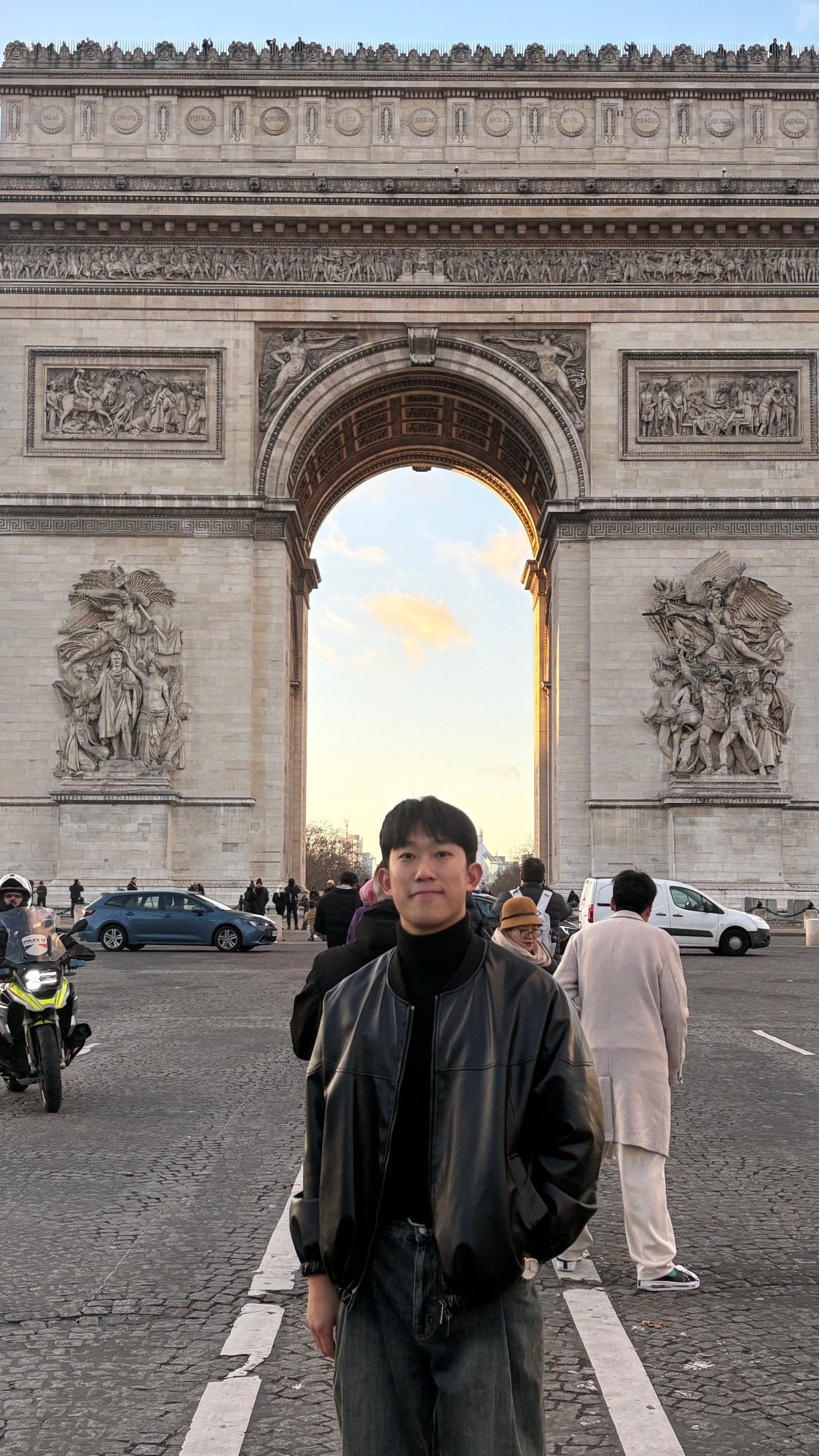
Welcome to the Champs-Élysées and the Arc de Triomphe de l'Étoile, the subject of the song "Aux Champs-Élysées." If you are coming from the Pont Alexandre III or Les Invalides, the route and directions are in the reference images. Once you reach the area around the Arc, continue the tour from there. If you plan to walk the whole Champs-Élysées to the Arc, note that it is farther than it looks. The guide saw the Arc in the distance and assumed it would be quick, but it took a good 20 minutes. If you are tired, use public transport.
Behind the Arc lies the Champs-Élysées, where France's major political and cultural events take place. The name is rather surprising. "Champs" means fields, and "Élysées" refers to the place where heroes who died in war are said to rest, so it is the "fields where fallen heroes rest." At a glance, it is a long line of luxury brands and shops, yet the name is rather grand. After hearing about the Arc, you will see why. Napoleon built the Arc de Triomphe, together with the Arc du Carrousel, to commemorate his victories in war. It is the second largest triumphal arch in the world, after the Arch of Triumph in Pyongyang. Why did Napoleon build it so big? You may have heard the rumor that he was short. In fact he was taller than average for his time, but he was self-conscious about his height, and is said to have been furious when buildings were built small. On seeing the Arc du Carrousel, completed in his lifetime, he reportedly raged, "Are they mocking me for being short?" So the Arc de Triomphe was built on a far grander scale, but it was completed only after Napoleon's death, so he never saw it. Take a photo at the photo spot in the reference images, then head to the Arc. Reach it by underpass, with the way down shown in the reference images; do not jaywalk.
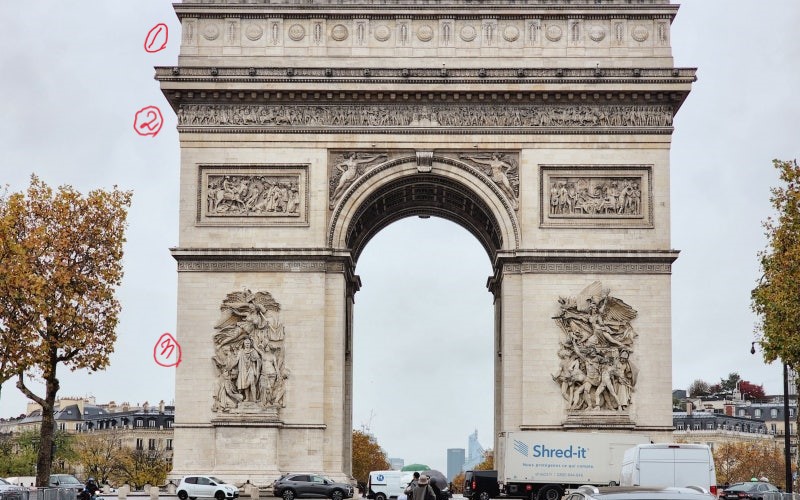
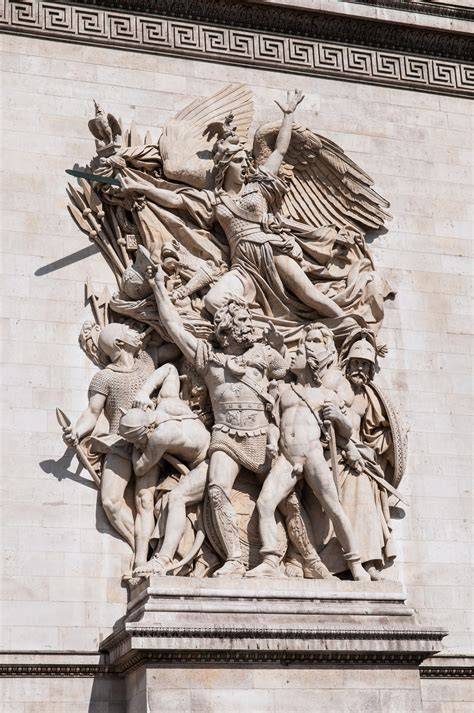
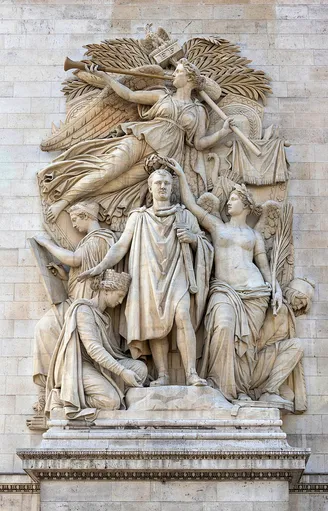
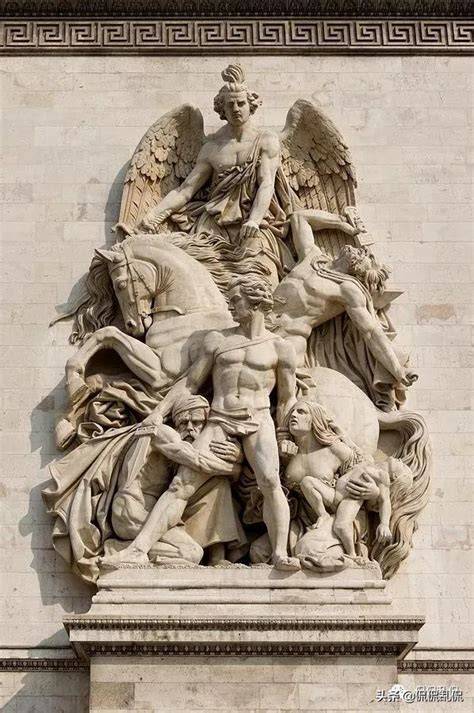
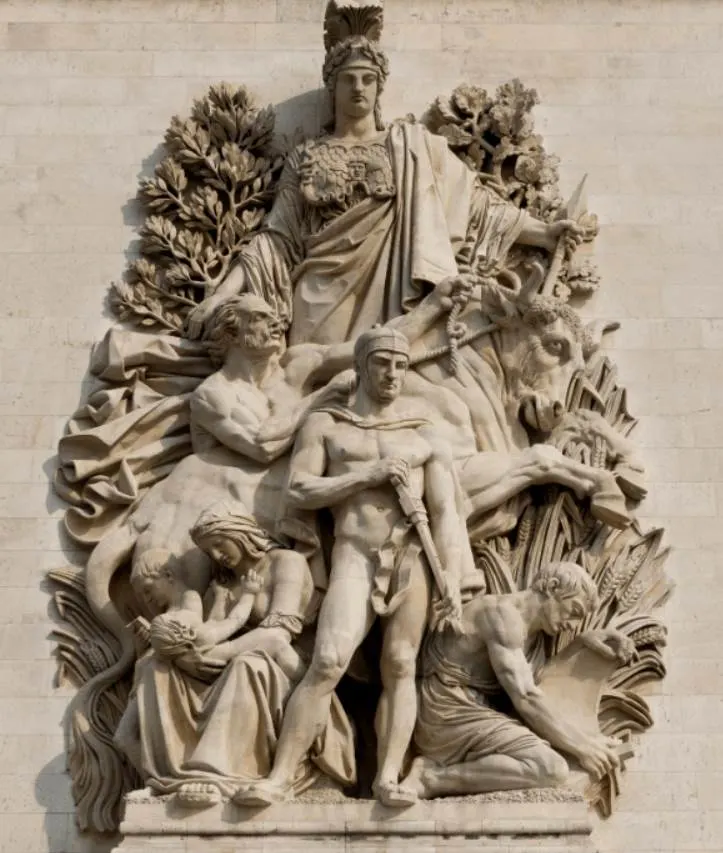
Now for the exterior. At the very top, a row of shields and swords holds the battles Napoleon led and the names of his generals. Just below, the soldiers on horseback show Napoleon's army returning from campaign. Four reliefs, front and back, are carved on the pillars, showing the Departure of 1792, the Triumph of 1810, the Resistance of 1814 and the Peace of 1815. In the 1810 relief, a figure stands in the center while another places something on his head. The central figure is Napoleon, and the woman crowning him with laurel is Nike, goddess of victory. The kneeling figure before him represents Vienna in Austria, showing Napoleon's victory over the allied forces of Russia and Austria during his campaigns in Europe. After all this, you can see why the avenue in front of the Arc is named the Champs-Élysées, fields for the heroes who fell in war.
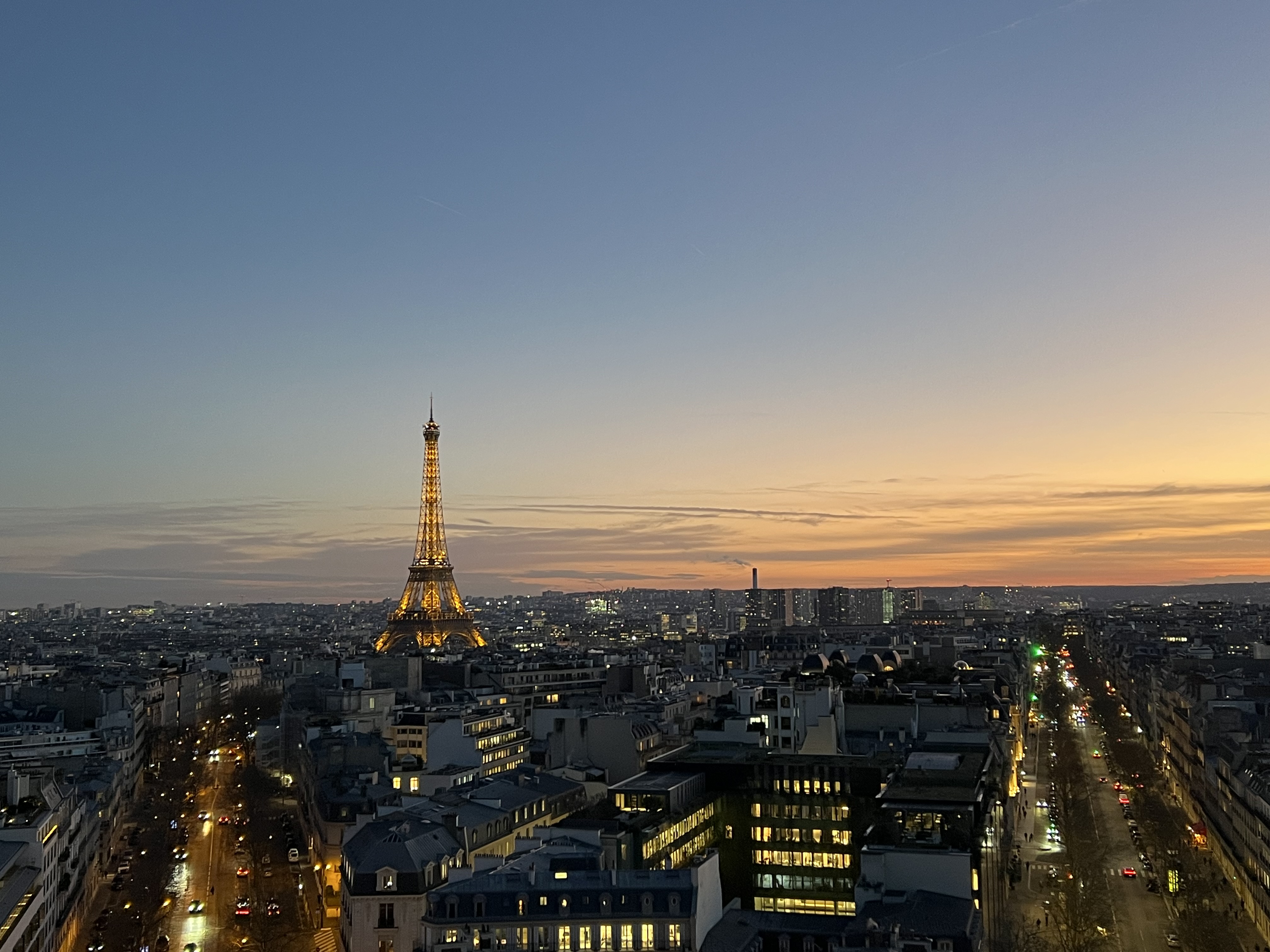
At the top of the Arc is an observation deck, free with the Museum Pass. Even without the pass, it is worth paying to go up. The climb is somewhat tiring and dizzying, but at the top you can look out over Paris, and the twelve avenues radiating from the Arc explain the name "Étoile," meaning star. If you can choose a time slot, book one at sunset: you can catch the sunset, the night view and the Eiffel Tower sparkling for the first time that day. The next stop is the Eiffel Tower, now close at hand.