Paris · City Walks
The Eiffel Tower: From Palais de Chaillot to the Summit
Paris · Paris, France
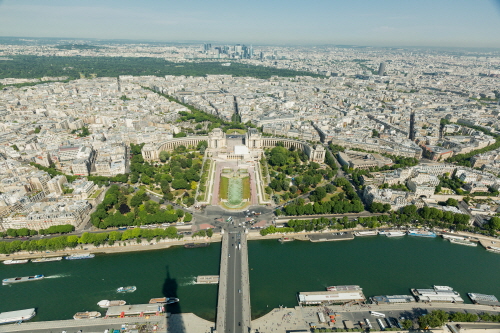
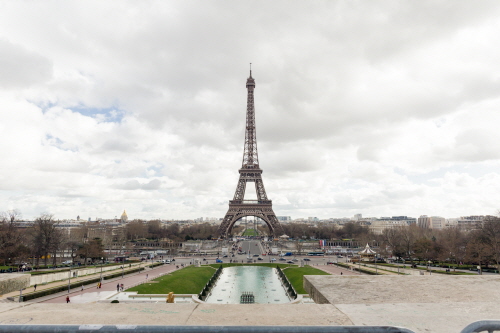
It takes about 20 minutes to walk from the Arc de Triomphe to the Palais de Chaillot, the best spot for viewing the Eiffel Tower. If you'd rather not walk, take the metro or a bus. The palace stands near the Trocadéro metro station. It was built for the 1937 Paris World's Fair and now houses the Maritime Museum, the Museum of Mankind and the National Theatre, among others. For visitors, though, it is best known as the finest place to see the Eiffel Tower. The Seine lies between the palace and the tower, so they're not exactly close, but from the Chaillot terrace you can take in the tower's whole front in a single glance. Since the Eiffel Tower is the tallest structure in Paris, getting too close actually makes it impossible to see in one go.
A symbol of both Paris and France, the Eiffel Tower was built for the 1889 World's Fair, held to mark the centennial of the French Revolution. It's named after its builder, Gustave Eiffel, and was originally approved on the condition that it come down after the fair. When it first rose, critics condemned it as an eyesore that spoiled the Parisian skyline, and it nearly had to be dismantled. Plenty of people reportedly tried to find places where it couldn't be seen. Guy de Maupassant is famous for hating it. The well-known story goes that he disliked it so much, yet ate at the restaurant inside it every day, and when asked why, he replied that it was the only place in Paris where he couldn't see the tower. In truth, the Eiffel Tower is easy to see from almost anywhere in Paris. Most buildings in the city are only four or five stories tall, while the tower rises a full 300 meters.
When it was built, a 300-meter tower was almost unimaginable. In an era of timber and stone, building high was not easy. But around then, new materials such as iron and aluminum emerged, and architects rushed to use them in all sorts of monuments and buildings. Every country hosting a world's fair would put up a bold structure of its own. The Eiffel Tower was seen as out of step with the rest of Paris, but it was also an experimental piece of architecture the city badly needed to catch the world's attention. Opponents were won over only when the plan was announced to keep it standing for 20 years after the fair before taking it down.
Despite all the controversy, crowds flocked to see and climb the tower as soon as the fair opened. More than two million people went up within eight months of its opening. Born in the transitional moment between classical and modern Paris, the Eiffel Tower was both called an ugly lump of iron that ruined the view and hailed as the symbol of Paris. That same transitional era explains why it still stands more than a century past the date it was meant to be removed. With television and radio just emerging, Paris needed a broadcasting tower, and the already-built Eiffel Tower was ideally suited. Installing a transmitting antenna on it saved it from demolition.
Today the tower is a beloved observation point. It has three levels. The first has the entrance to a restaurant, and the second and third are observation decks. Note that in Paris, the floor above the ground floor is called the first floor, and the ground floor is the "zero" floor. You can reach the second and third levels by stairs or by elevator, with different entrances and prices. The stairs are cheaper but only go as far as the second level, and from there you must take the elevator to the third. If you want to reach the summit and don't need to climb on foot, taking the elevator from the start is more efficient in cost and time, though you'll still change elevators at the second level. From the very top you can look out over all of Paris, though there is one thing you can't see: the Eiffel Tower itself, the city's most famous sight, since you're standing on it.
After sunset, the tower sparkles for five minutes at the top of every hour. To see it in full, go back to the Palais de Chaillot, stand on the Pont d'Iéna between the tower and the palace, or look up from the Champ de Mars, the park where the tower stands. Watch it shimmer and close out your day in Paris.