Paris · Architecture
Saint-Séverin Church
Paris · Paris, France
Saint-Séverin is a gem of medieval Gothic architecture. What you see now is the west façade, where the bell is one of the oldest in Paris. The bell tower is Early Gothic and the rest is Late Gothic, so you can see the evolution of the Gothic style in one place. The doorway in particular was the main portal of the church of Saint-Pierre-aux-Bœufs, which was cleared away during work around Notre-Dame. It has sharply pointed arches and layered archivolts stepping inward.
■ The exterior Look up at the rose window. The stone tracery inside it is the flame-like Flamboyant style, the best example of Late Gothic here.
Walk around the church starting on the right. At the top of the buttresses are gargoyles that serve as rainspouts. Because the church isn't as tall as others, you can see them at eye level. Each has its own expression and pose, which makes for great photos.
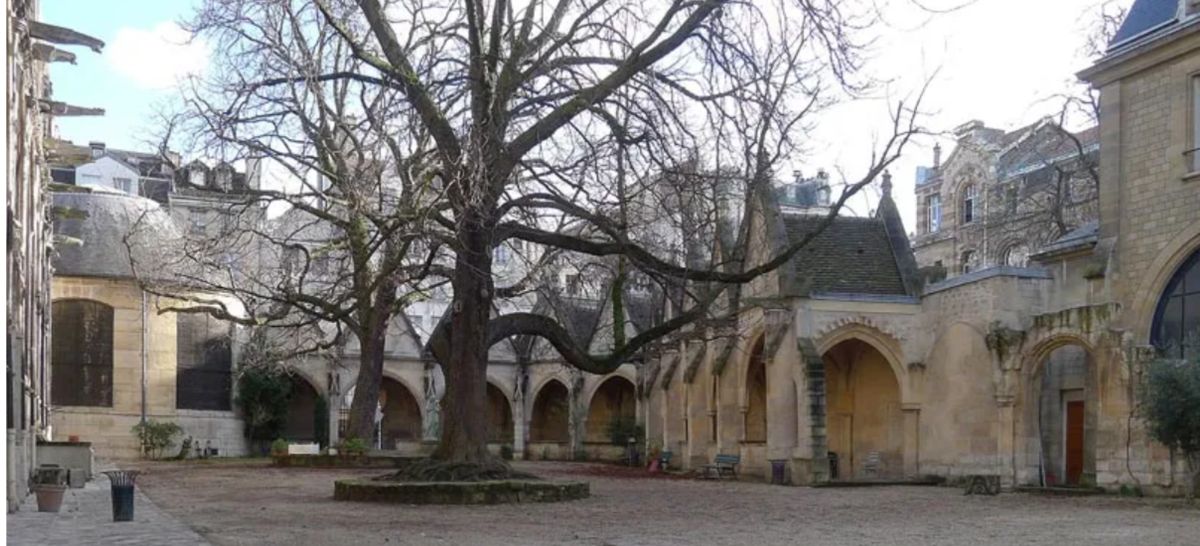
Go a little further in and you'll find a medieval cloister and courtyard. This was a medieval cemetery and ossuary, and it still has a quiet, slightly eerie feel. Medieval inscriptions survive on the cloister walls, and the best known reads: "Good people passing by, pray for the dead."
At the east end, the apse, the regularly repeating flying buttresses and triangular roofs make it look like a crown. You can also see the double flying buttresses, the pinnacle of Late Gothic engineering. On the north, or left, side is the church's original main entrance, built for the people of the Sorbonne and the Latin Quarter. Traces on the outer wall show where the side aisles were widened to hold more worshippers. Pilgrims on the Camino de Santiago in Spain also entered here to pray before setting off.
■ The interior Two unusual sights inside.
The first is the spiral columns. Behind the choir, two columns twist together into one. They aren't decorative: they actually hold up the ceiling, which makes them all the more remarkable. Some people think of Gaudí's Sagrada Família.
The second is the stained glass. A 15th-century rose window sits alongside modern art stained glass in abstract colors, which makes for a fun comparison.
■ Next stop Next is Shakespeare and Company, Hemingway's regular haunt, for a bookshop and café. With the protruding chapel at the apse behind you, cross the road to the right. Turn left around the building and you'll see the tower of Notre-Dame ahead, and the Shakespeare and Company café is at the end of that street. Obey the signals and watch for bicycles and cars. It takes about two minutes.