Paris · Architecture
Richelieu and the Three Musketeers
Paris · Paris, France
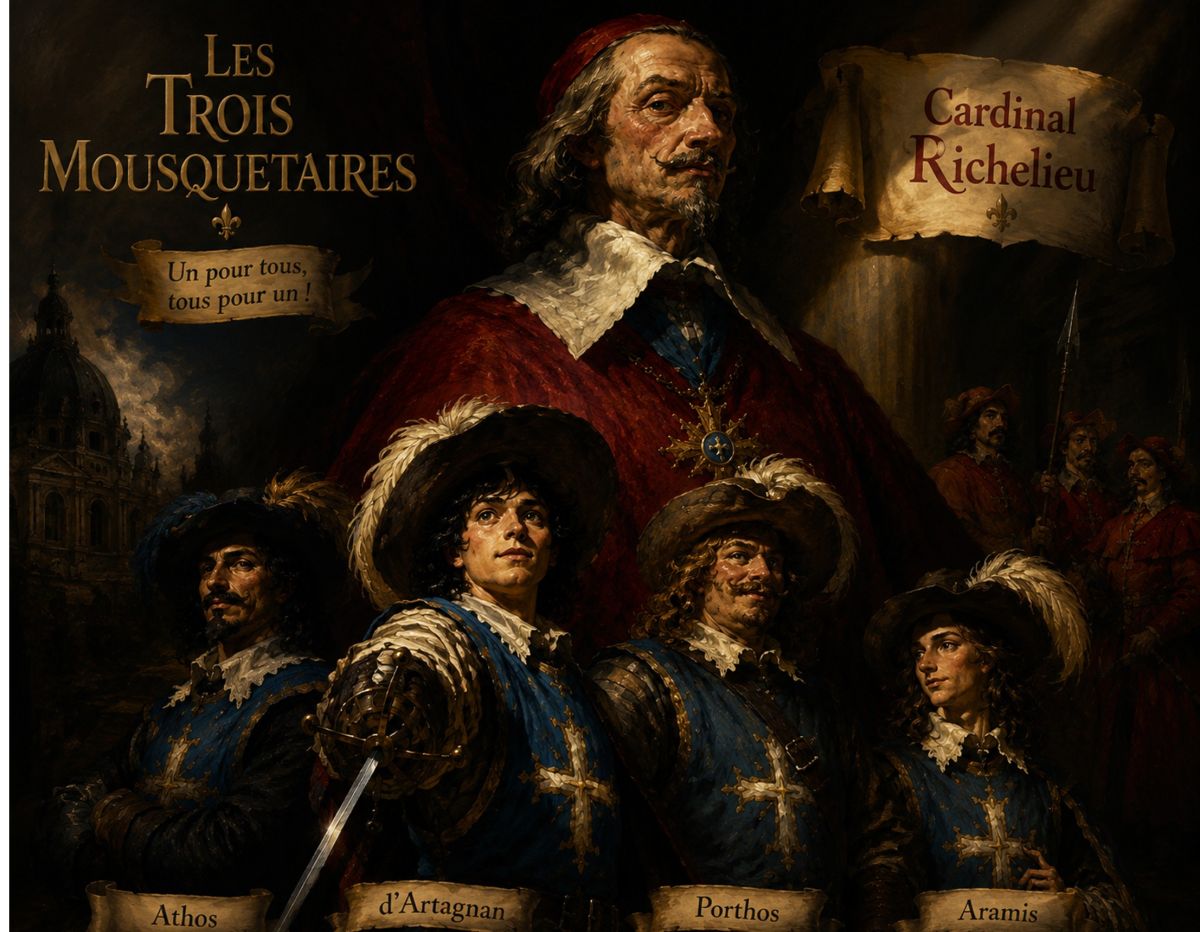

You may not know the name Alexandre Dumas, but you certainly know his work. One of France's best-known novelists and playwrights, he is famous for stories that blend adventure and history with great skill. His signature works are beloved on screen, on TV and even on the musical stage.
■ Dumas the writer Dumas's father was a general in Napoleon's army and was of mixed African descent, and Dumas himself faced discrimination in French society. He moved to Paris, wrote prolifically and won fortune and fame, though his lavish lifestyle sometimes left him in financial trouble. His life may remind you of Victor Hugo's, whom we just met. His mansion, the Château de Monte-Cristo, is now a museum. His son, Alexandre Dumas fils, was also a famous novelist.
■ The Three Musketeers and Richelieu The man whose tomb you just saw at the Sorbonne Chapel is the Cardinal Richelieu of Dumas's best-known novel, The Three Musketeers. One of the Louvre's three wings is also named for Richelieu, and so is one of the national library sites we'll cover shortly. His name turns up surprisingly often around Paris, starting with street names.
The Three Musketeers tells of a young man named d'Artagnan who comes to Paris hoping to become a king's musketeer and, together with the three Musketeers, protects the queen, caught in a conspiracy, from the cardinal's scheming. Many people remember the episode in which they cross to England to retrieve the queen's diamond pendant. The political rival who puts the queen in that predicament is Cardinal Richelieu.
If you're thinking, "Wasn't it a necklace, not a pendant?", that was a different affair, one of the biggest scandals in the French royal family, involving Marie Antoinette and unrelated to Richelieu. Marie Antoinette had nothing to do with it either, but public opinion, which had already made her an icon of extravagance, did not side with her. The scandal even helped spark the French Revolution.
The characters driving the story may be real people, but this is a historical novel, not a history book. The real Cardinal Richelieu was not a sneaky political schemer, so don't confuse fiction with fact.
■ Following the writer through Paris The first and last stops are both libraries.
First, the Bibliothèque nationale de France, also known as the Mitterrand Library, holds various editions of and materials on Dumas's best-known works. One of the oldest national libraries in the world, with a large collection of old books on French history and of literature, it is considered extremely important. It has survived more than 650 years, from the king's private collection through the Royal Library to the National Library. It was built to mark the bicentennial of the French Revolution, as four glass towers shaped like open books, said to be named Time, Law, Numbers and Letters. Exhibitions and lectures are held often, and the general reading rooms are open to the public free of charge.
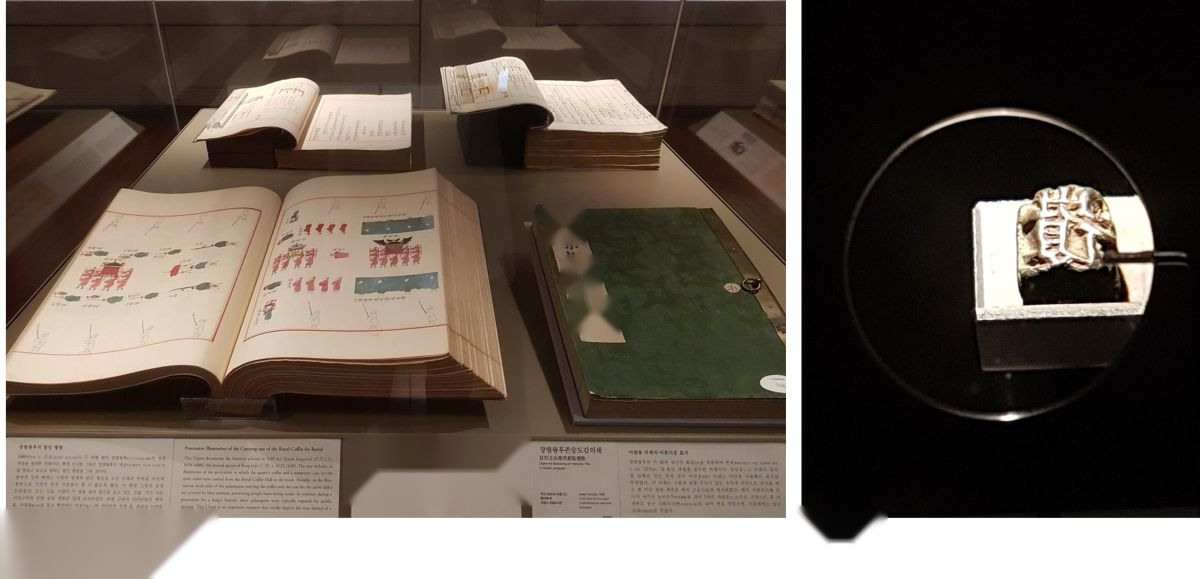
It also holds important materials related to Korea. These include a Goryeo-era printed work known as the world's oldest metal-type book. You can't see it unless there's a special exhibition, but there's something special about knowing it is there. Until this book was discovered, metal movable type was credited to Gutenberg, but the discovery of a book printed about 70 years earlier rewrote world history. It's listed in UNESCO's Memory of the World Register. Some other Korea-related items have been returned to Korea on permanent loan.
The last stop on the trail is the Bibliothèque nationale de France, Richelieu site. It's one of the oldest main buildings of the Palais Richelieu, and its historic spaces are open to the public free of charge. The grand, majestic circular reading room, with its beautiful domed ceiling and delicate ironwork, and the classical building itself, are worth the visit. Using the reading rooms requires advance booking and registration.
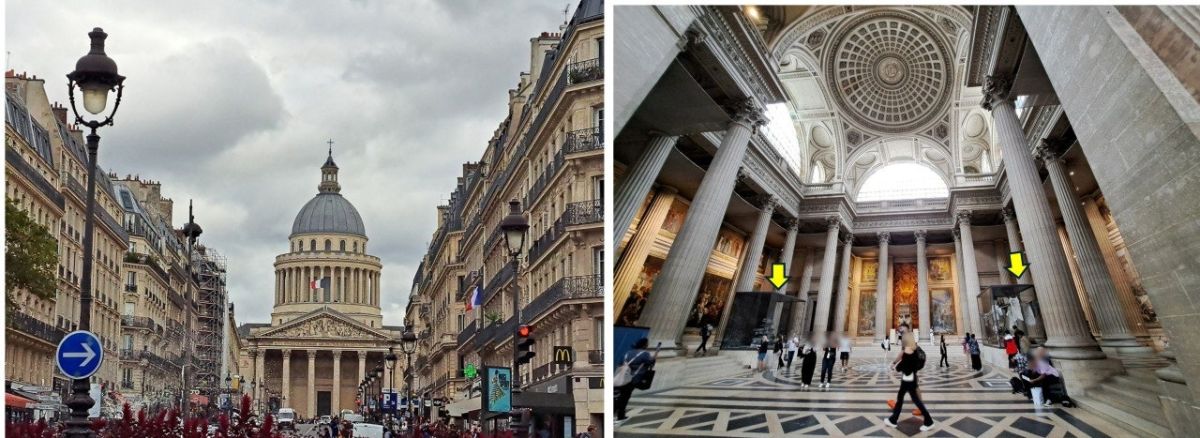
■ The Panthéon Next is the Panthéon, which we touched on in the Hugo story. It's France's mausoleum for its great figures: built as a church, it became the resting place of great figures after the French Revolution. Influenced by the Pantheon in Rome, it features Corinthian columns that recall the Parthenon in Greece. Unlike Rome's, though, the Paris Panthéon's ceiling is not open to the sky. The Paris Museum Pass is accepted here, but the observation deck costs extra.
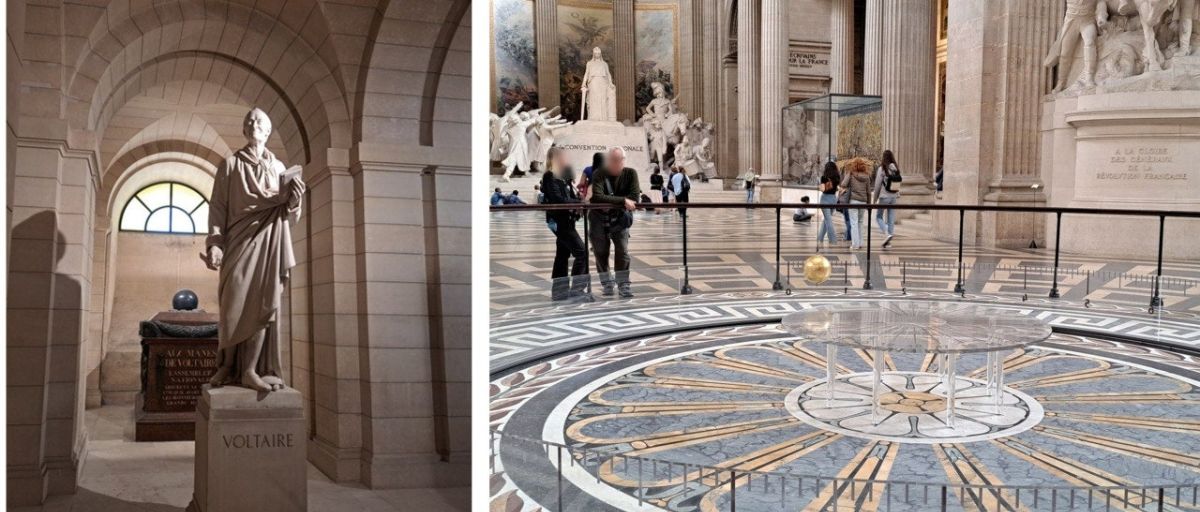
The façade is inscribed "Aux grands hommes, la patrie reconnaissante" ("To the great men, the grateful homeland"). Inside are the tombs of people who contributed to French history, art, science, literature and other fields, including Voltaire, Victor Hugo, Alexandre Dumas, Émile Zola and the Curies. Look at the names as if playing a hidden-picture game and see how many you know. Because of his African descent and for political reasons, Dumas was buried in his hometown and later moved to the Panthéon in honor of his cultural achievements. People dressed as musketeers took part in the ceremony, and it made headlines.
Another highlight is Foucault's pendulum. This experiment to prove the Earth's rotation lets you see for yourself how the amplitude and direction of its swing change over time. It was here at the Panthéon that Foucault demonstrated the experiment to the public in 1851. The pendulum is surprisingly large, and music plays on the hour as its swing grows wider and wider. Don't miss the sculptures about the French Revolution and the work by Anselm Kiefer.
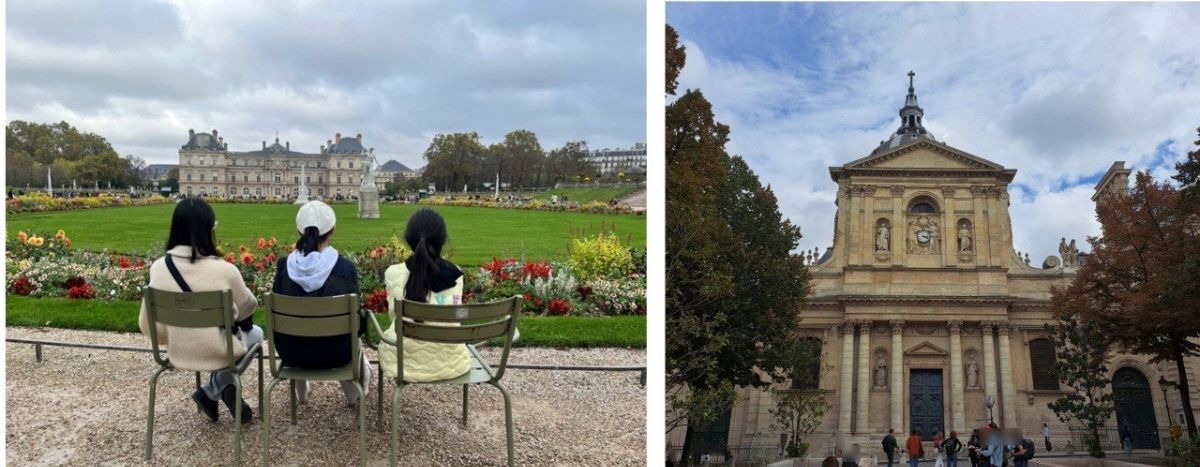
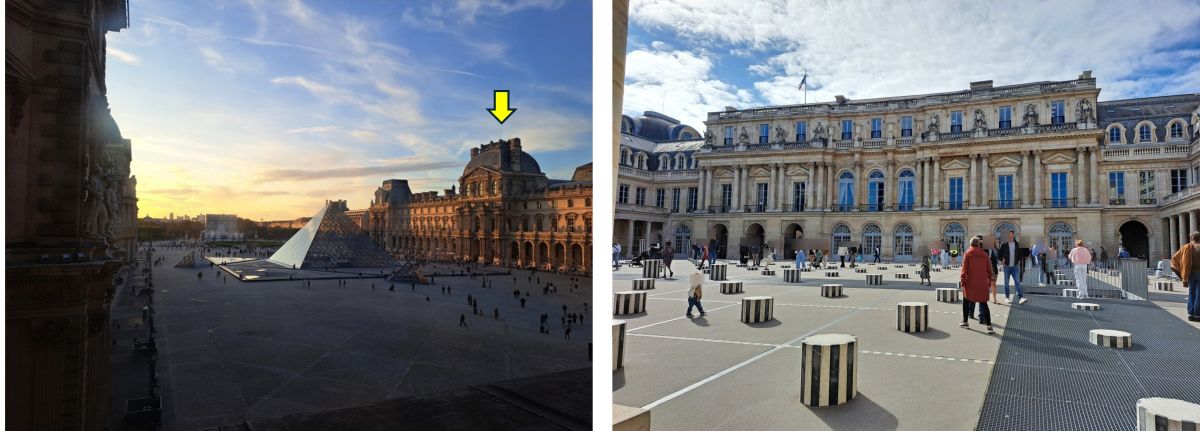
■ Richelieu's footprints Do you know what the Luxembourg Palace, the Sorbonne Chapel, the Louvre and the Palais-Royal have in common? All are linked to Cardinal Richelieu. Dumas visited the Luxembourg Palace to plan his work and to stroll, and in the novel it is the site of the duel between the Musketeers and d'Artagnan, and of the cardinal's intrigues. The Sorbonne Chapel holds his tomb, and at the Louvre, the building on the left as you face the museum is the Richelieu Wing. The wing's most famous exhibit is the Code of Hammurabi, of "an eye for an eye, a tooth for a tooth."
The Palais-Royal was originally a huge mansion showing off Richelieu's power, known as the Palais-Cardinal. After his death, Louis XIV spent his childhood there, and it was renamed. The Comédie-Française theater and the Richelieu site of the national library are also parts of this palace.