Paris · Architecture
Berlioz's Bust and the Symphonie Fantastique
Palais Garnier · Paris, France
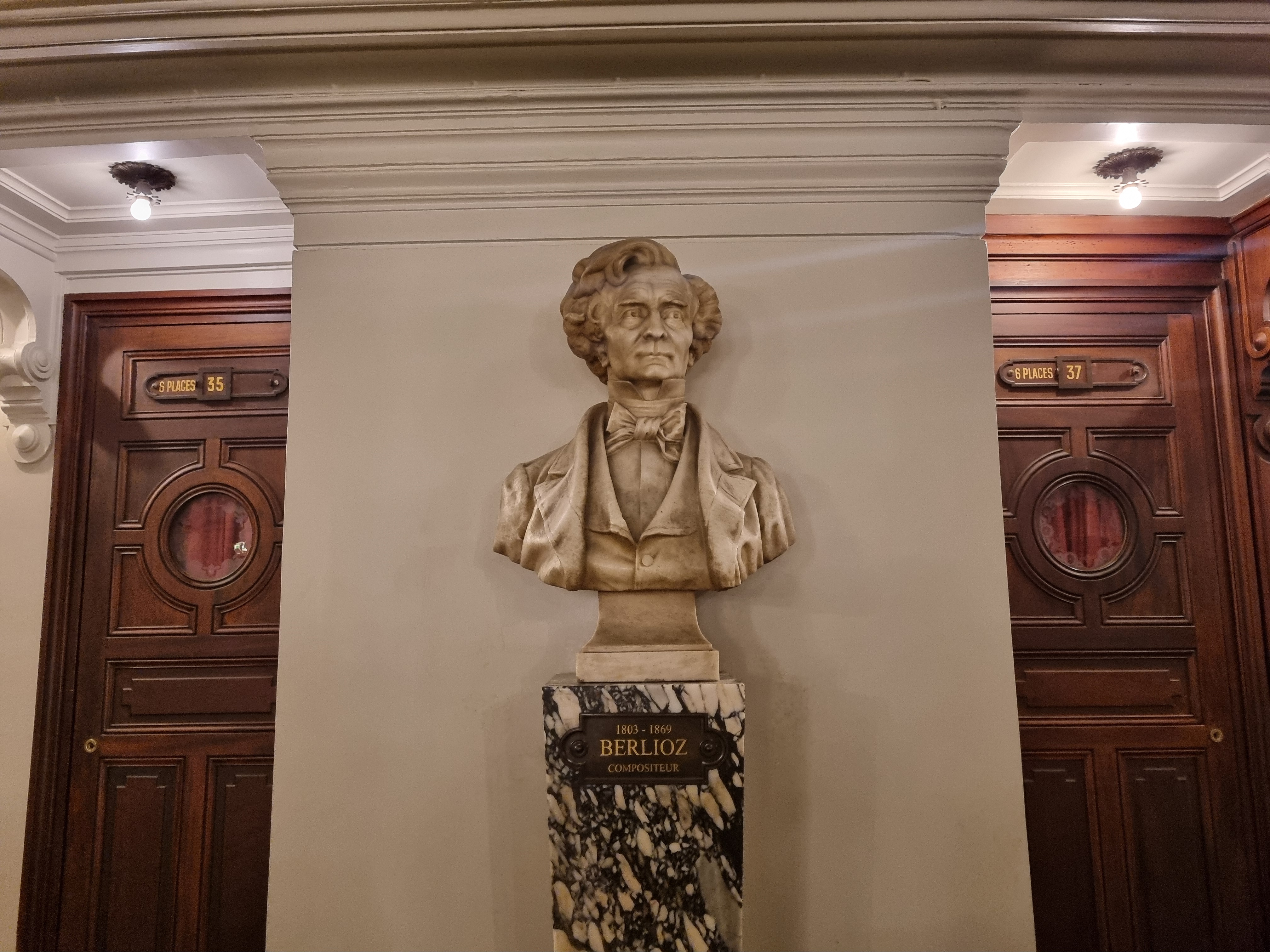
The busts around the theater portray French artists who were active from the 17th century to the end of the 19th. This one depicts the composer Hector Berlioz, a man with deep ties to the opera house.
Berlioz grew up with a physician father and even went on to medical school, but never gave up his dream of becoming a composer. He taught himself to play instruments and went to the opera almost every day. He eventually abandoned his medical studies, entered the Paris Conservatoire late, became a composer, and tried his hand at writing operas as well. Sadly, his operas never found great success.
What made him famous was a groundbreaking symphony, the Symphonie fantastique. A symphony is a work for a large orchestra, and Berlioz was especially known for program music, meaning music that has a title and expresses a particular theme or story. As the title suggests, "fantastique" is the program here: the piece depicts a young artist who, heartbroken, turns to drugs and is tormented by visions. It reflects Berlioz's own experience of unrequited love.
The object of his affection was Harriet Smithson, an English actress three years his senior. Berlioz even studied English hard so he could write her a heartfelt letter, but a letter from an unknown student was never going to get a reply, and his love went unreturned. He composed the Symphonie fantastique out of this sad experience. Later, once Berlioz had established himself as a composer, he did marry Smithson, but sadly they separated after ten years of marriage. Listening to the Symphonie fantastique, you can feel Berlioz's love, longing, anger and despair.