Paris · Painting
The Real Face Behind the Glamour: Toulouse-Lautrec's Portrait of a Montmartre Woman
Musée d'Orsay · Paris, France
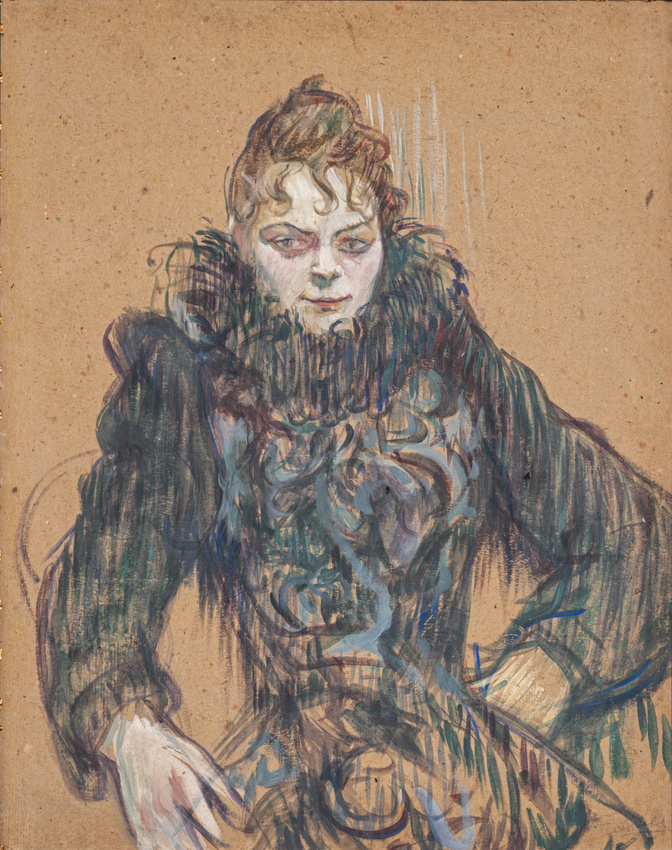
Toulouse-Lautrec painted this honest portrait of one of the women living in his own neighborhood of Montmartre. The woman in this painting is believed to have been a dancer or sex worker in Montmartre. Her face is dressed up elegantly, but underneath that there's a complicated mixture of exhaustion and blankness. The lavish fur trimming her clothes and collar is rendered with Toulouse-Lautrec's signature rough, rapid brushwork, and in sharp contrast to that glamour, her hands and expression reveal a faint tension and fatigue. This kind of careful observation was possible precisely because Toulouse-Lautrec lived in Montmartre and treated these women not merely as models, but as neighbors and companions.
Late-19th-century Montmartre looked nothing like the charming tourist destination we picture today. Administratively a district on the outskirts of Paris at the time, it was a place where bars, impoverished artists, dancers, sex workers, and the poor all lived side by side. Low rents and a free-spirited atmosphere also drew artists there in droves. Born into an aristocratic family, Toulouse-Lautrec had a genetic condition that left him very short in stature with weak legs, which made him a perpetual outsider in high society. As a result, he found far more intimacy and comfort among the unpretentious people of Montmartre — especially the women who worked through the night and slept through the day — than he ever did in the calculated world of fashionable society.
This woman embodies the alluring image of the city, and at the same time brings to mind the long working hours, social prejudice, and the sheer weight of making a living that Montmartre's women had to endure. Toulouse-Lautrec was, more than perhaps any other painter, exceptionally gifted at revealing the human truth hiding behind that glamour.