Paris · Painting
A Name Erased for Being a Woman: Morisot's The Cradle
Musée d'Orsay · Paris, France
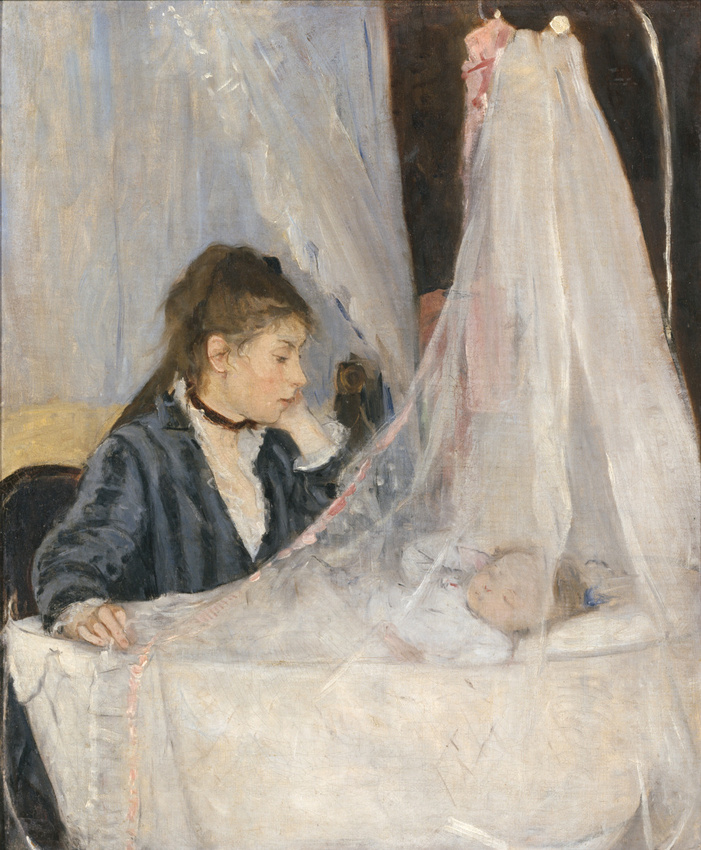
The woman quietly gazing at her newborn in the cradle is Edma, Berthe Morisot's older sister. Her eyes hold a mix of postpartum exhaustion, worry, and love all at once. It reads today as an ordinary family moment, but at the time it was a fairly radical painting.
In that era, male painters were expected to paint mythology, history, heroic events. Morisot instead turned her brush toward the reality of women's lives inside the home — the everyday moments of raising a child. The choice of subject alone was a quiet act of defiance. The reception, though, was cold. Even after it was shown at the first Impressionist exhibition, contemporary critics barely acknowledged the artist's gender at all — a sign of just how hard it was for women artists to be taken seriously.
Morisot was able to become a painter at all largely because of her wealthy family and a mother who arranged private lessons for her daughters. But in an era when women couldn't enroll in art academies or take classes involving male nude models, she naturally turned to the subjects closest at hand: domestic life and motherhood. The Cradle — a painting by the only woman who was a full member of the Impressionist circle, confronting women's lives head-on — was born out of exactly that constraint.