Paris · Architecture
Two Flowers of Light in a Forest of Stone
Notre-Dame de Paris · Paris, France
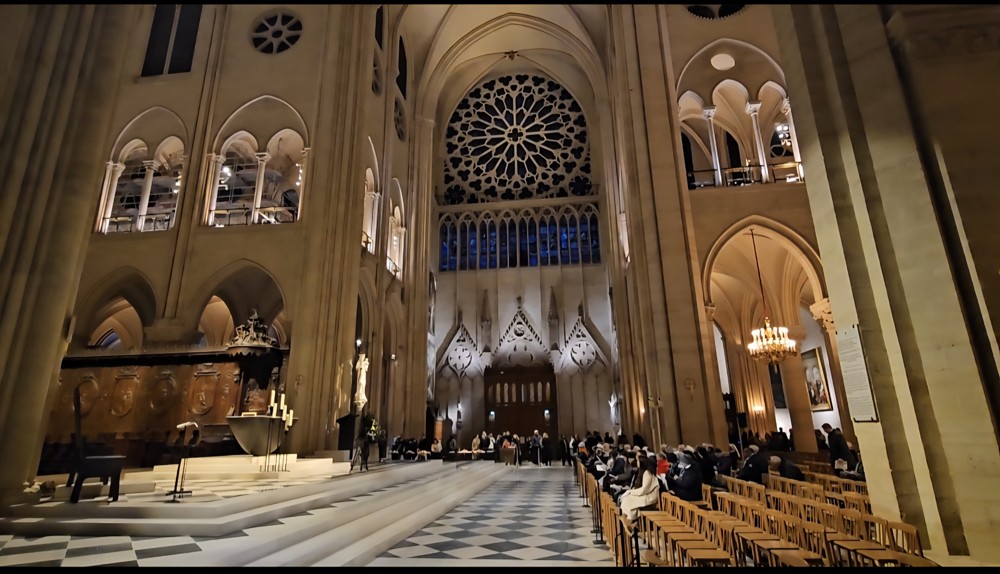
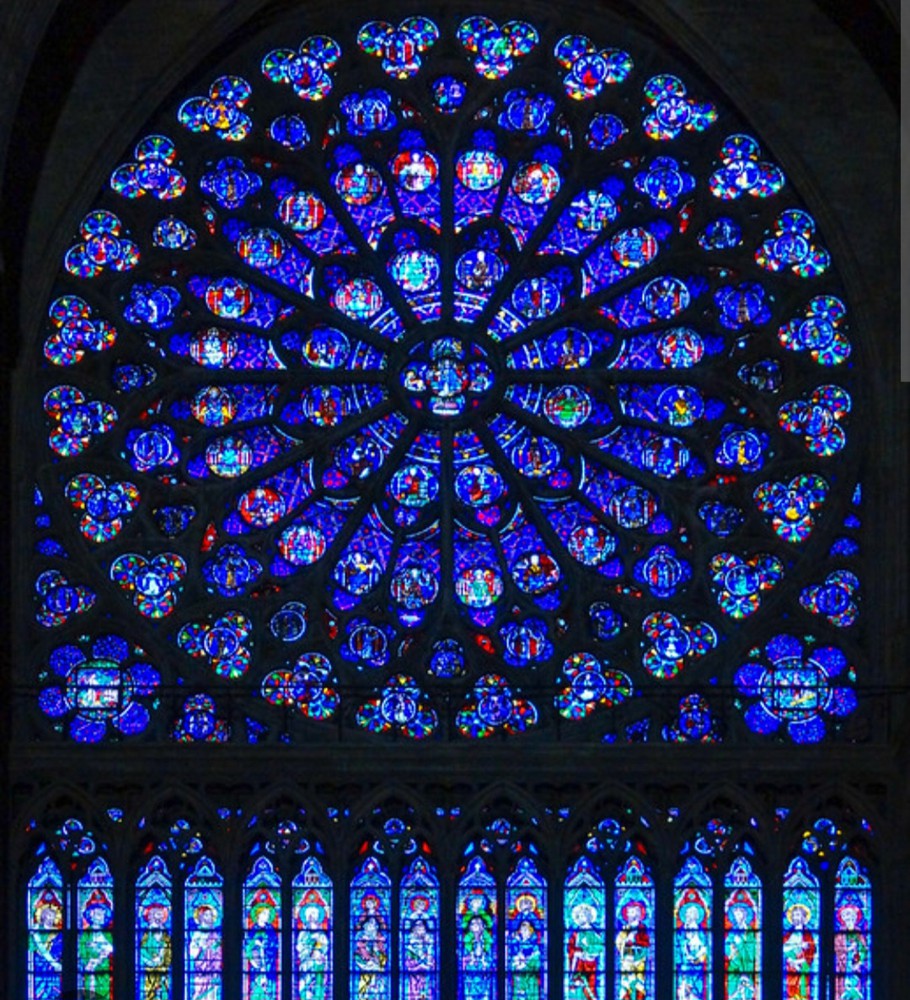
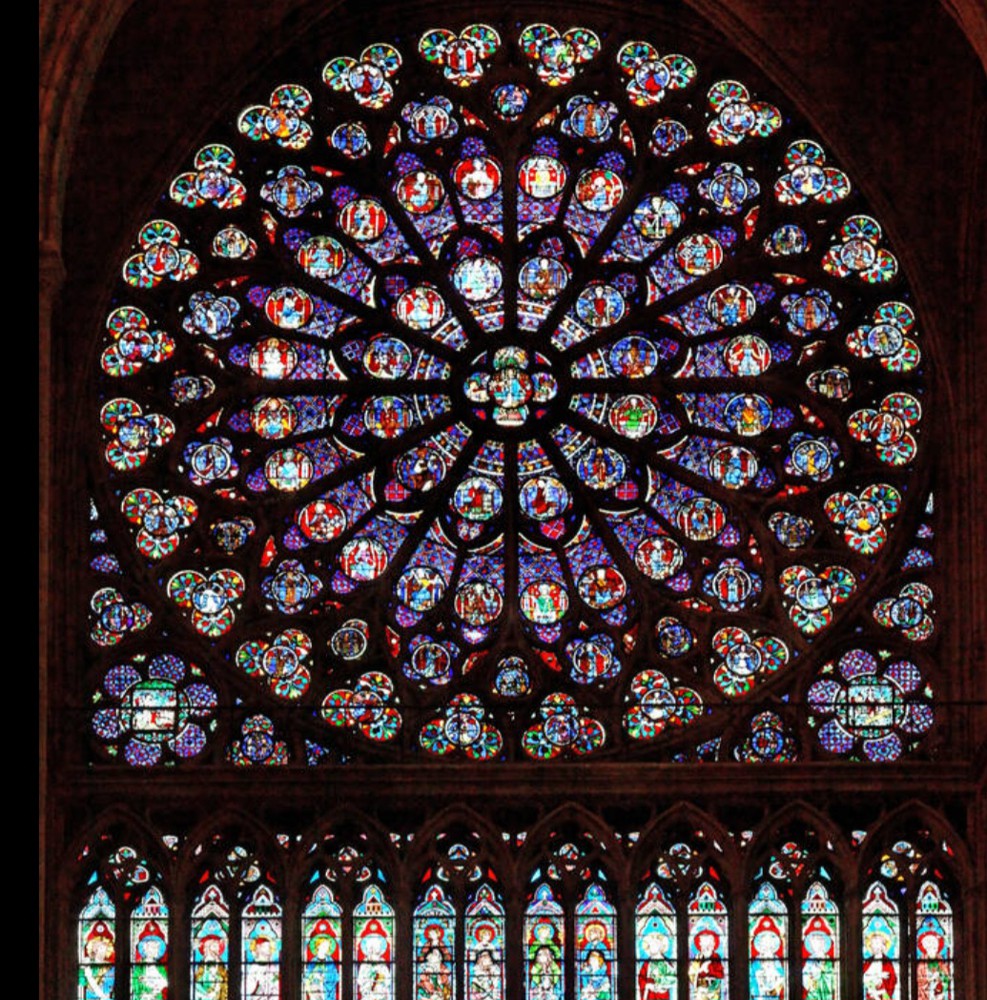


Stand where the cathedral's two arms cross and turn your head from side to side. Two enormous flowers of light have bloomed in this forest of stone: the north and south rose windows, facing each other across the transept. The north window dates to 1250, and the south one followed ten years later; both are said to have been given to the cathedral by Louis IX, known as Saint Louis. The north window, on your left, stands for the Old Testament, and the south window, on your right, for the New.
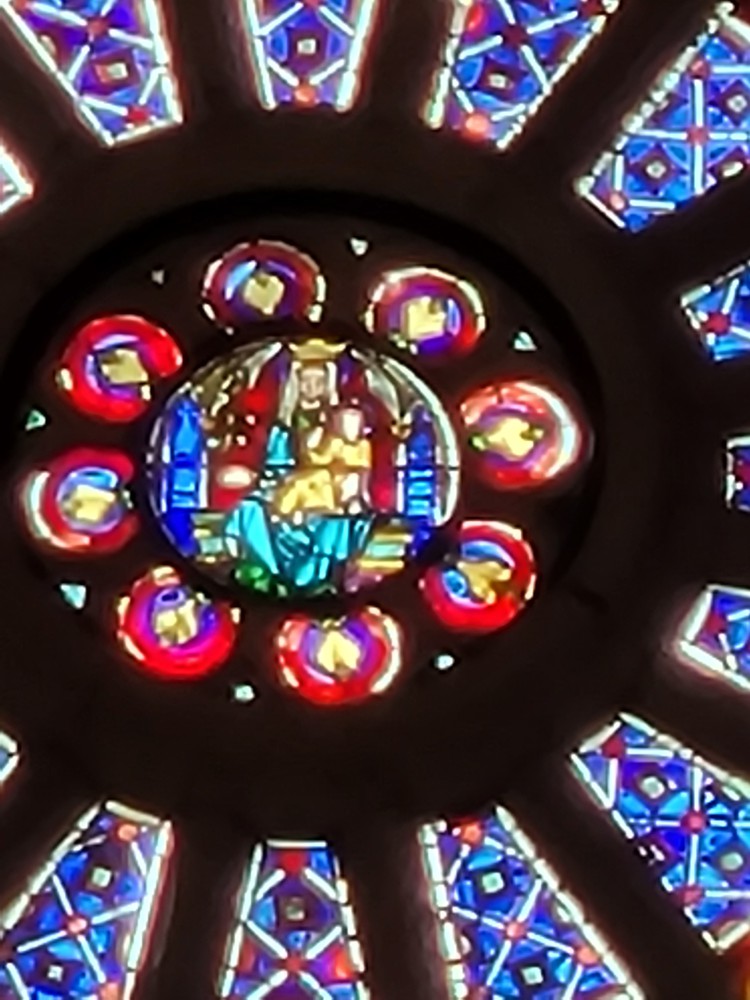
Start with the north rose. It is a vast circle 13 meters across, about as tall as a four-story apartment block, and it is steeped in a calm, deep blue that quiets the mind. Made in the 13th century, it has survived for nearly 800 years. Taking advantage of the north side's scarce light, the blue glass evokes the age of the Old Testament, before the coming of the Savior. At its very center sits a small Virgin Mary holding the infant Jesus, ringed by more than 80 Old Testament figures like layers of petals. Every prophet and king fixes their gaze on that single point, the child at the center, and the blue seems to hold all the longing of waiting: when will he come?
Now turn to face the south rose, and the mood changes at once. Strong, warm red light seems to pour into the church. This window stands for the New Testament, in which the Old Testament's promise is at last fulfilled, and for the glory of Christ. It measures 12.9 meters across on its own and a remarkable 19 meters including its surround. The risen Christ sits at the center, surrounded by the twelve apostles and saints. Made up of four large circles holding 94 round relief medallions, the window reads like a book, telling the story of Jesus's life and of the people who lived alongside him. At the very center, twelve medallions represent the twelve apostles; the next two rings show martyrs and female saints; and in the fourth ring you can see angels alongside revered saints such as Saint Denis, Saint Margaret of Antioch and Saint Eustace. The medallions also depict Old Testament scenes along with stories from the Gospel of Matthew. In the corners are key scenes such as the Resurrection and Adam and Eve; below you can find Saint Peter and Saint Paul, and above, Mary Magdalene and Saint John.
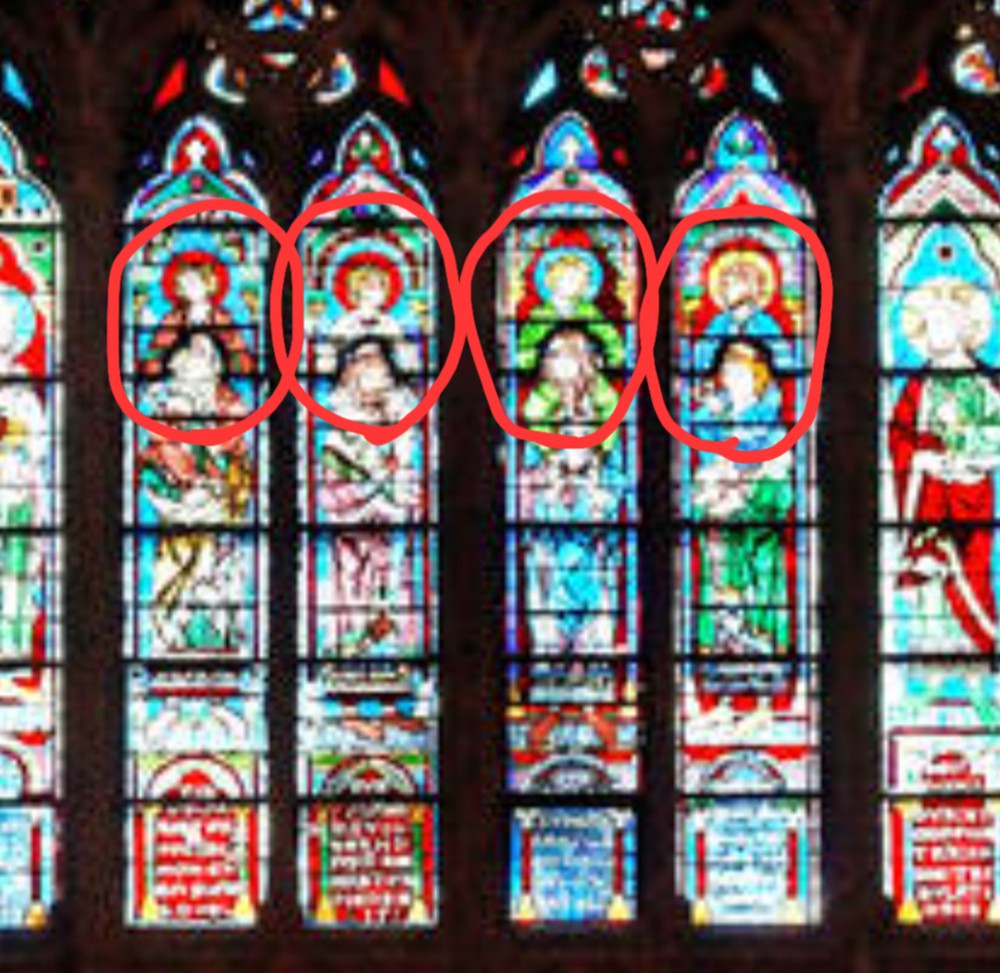
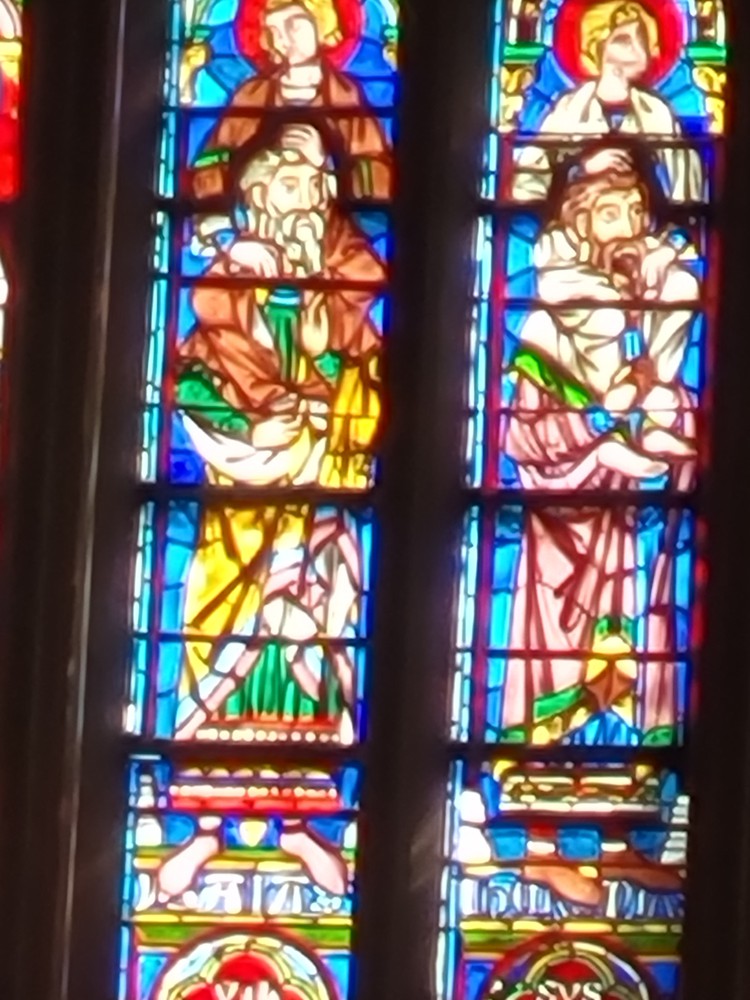
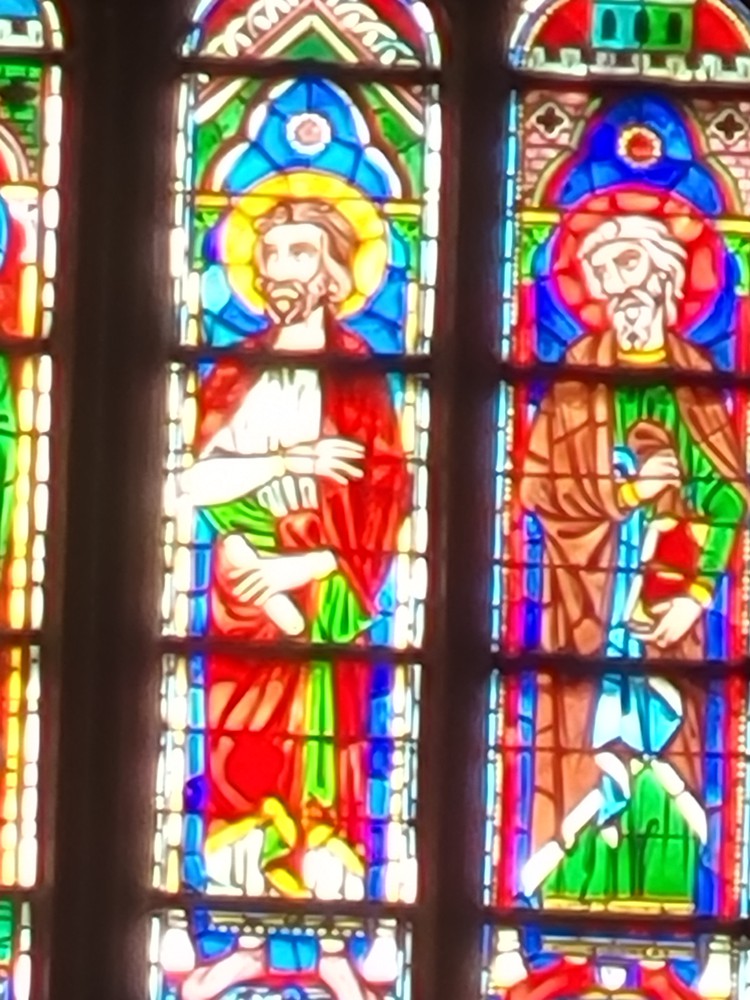
At the top of the window, Christ is shown enthroned in glory, surrounded by his apostles. The sixteen tall stained-glass panels beneath depict prophets; they were not part of the original design but were added in the 19th century, when the cathedral was restored. There is a clever secret here, too. Look at the four long windows stretching below the rose: four great Old Testament prophets carry the four evangelists of the New Testament on their shoulders. The message is that the New Testament can see wider and farther only by standing on the shoulders of the Old, a giant. And both of these beautiful windows miraculously survived the terrible fire of 2019.
Craftspeople removed thousands of pieces of glass one by one, handling each as gently as a baby, and spent years cleaning and restoring them. Thanks to them, we may now be looking at colors even brighter and clearer than before the fire, closer to the true colors of 800 years ago. Across the cathedral, the two roses face each other and still tell the great story of salvation. Imagine the north singing a song of promise, "He will come," and the south answering with joy, "He has come at last," in a beautiful dialogue of light. And besides these two famous roses, do not miss the other stained-glass windows, which blend so beautifully with the golden stone of the walls.