Paris · Architecture
The Spire Reborn
Notre-Dame de Paris · Paris, France
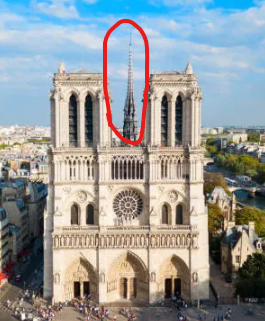
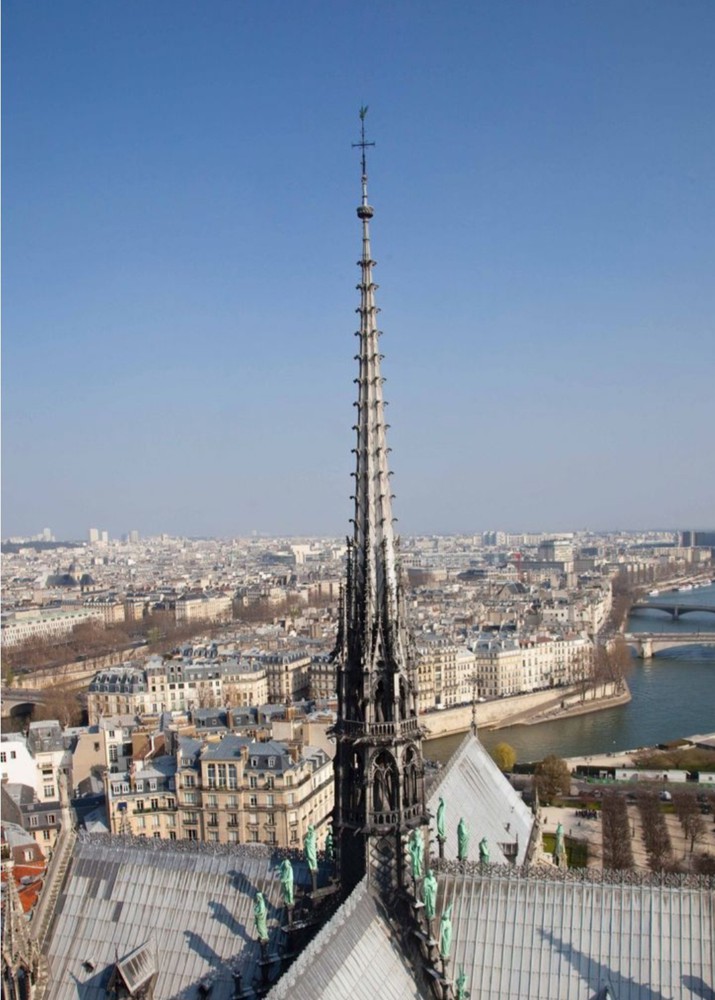
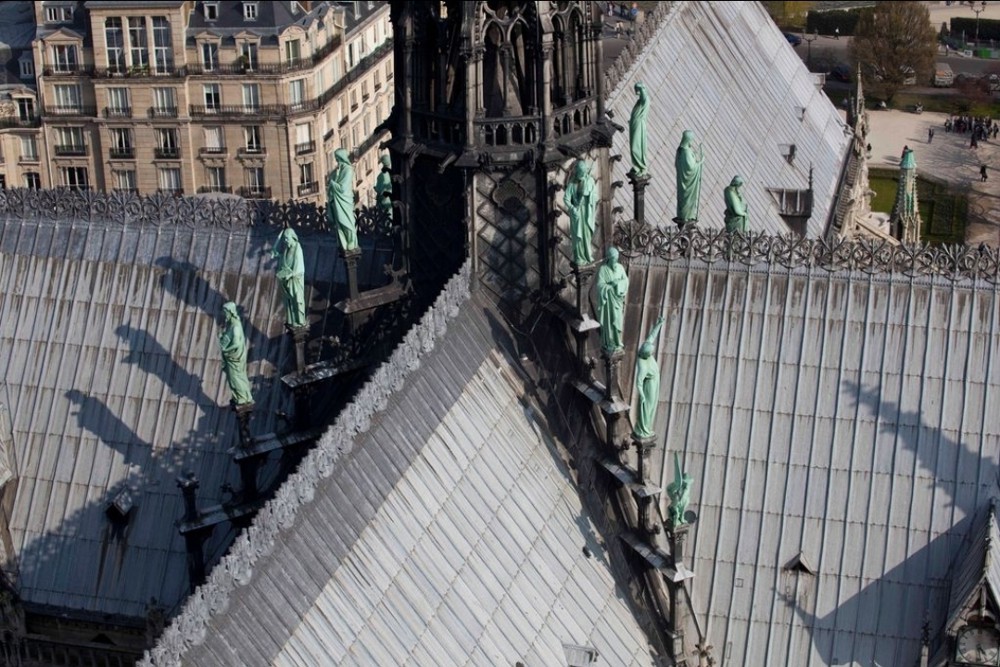
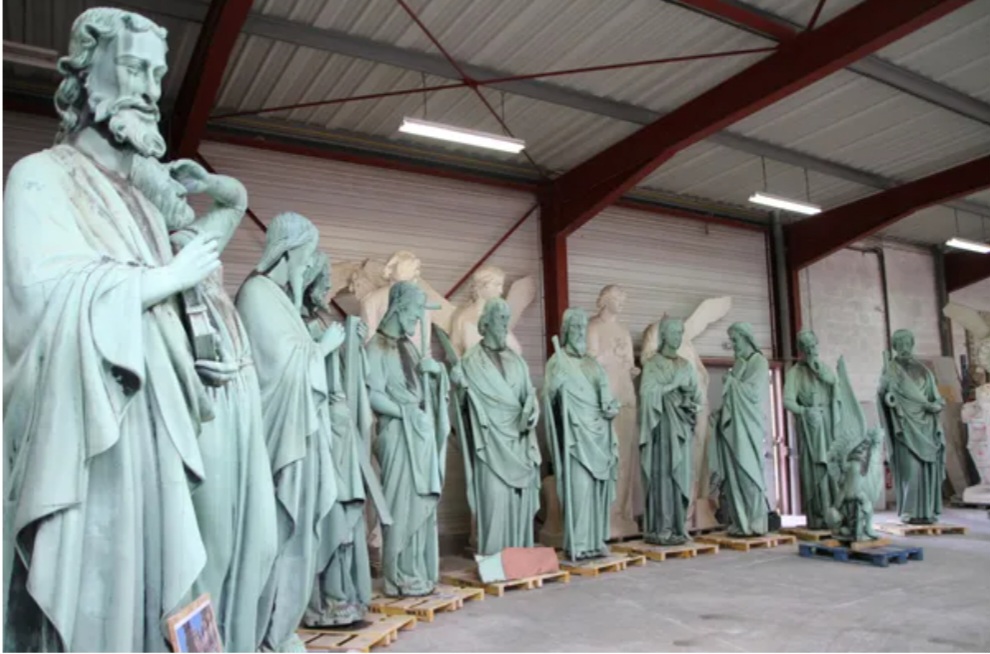


Soaring into the Paris sky, Notre-Dame's spire is the cathedral's signature silhouette, and it carries a full-blown drama of its own. You might assume it dates from the Middle Ages, but that is one of the biggest misconceptions about Notre-Dame. The original medieval spire was taken down in the 18th century, worn out by the centuries and judged unsafe. The spire we know today is a masterpiece redesigned in the 19th century by the great restorer Viollet-le-Duc, who made it taller and more ornate to express his belief of what Gothic architecture ought to be. Rising 96 meters, it is surrounded by statues of the twelve apostles placed at the four compass points, climbing up the roof toward the spire. Below them, lower down, a bull for Luke, a lion for Mark, an eagle for John and an angel for Matthew face the apostles.
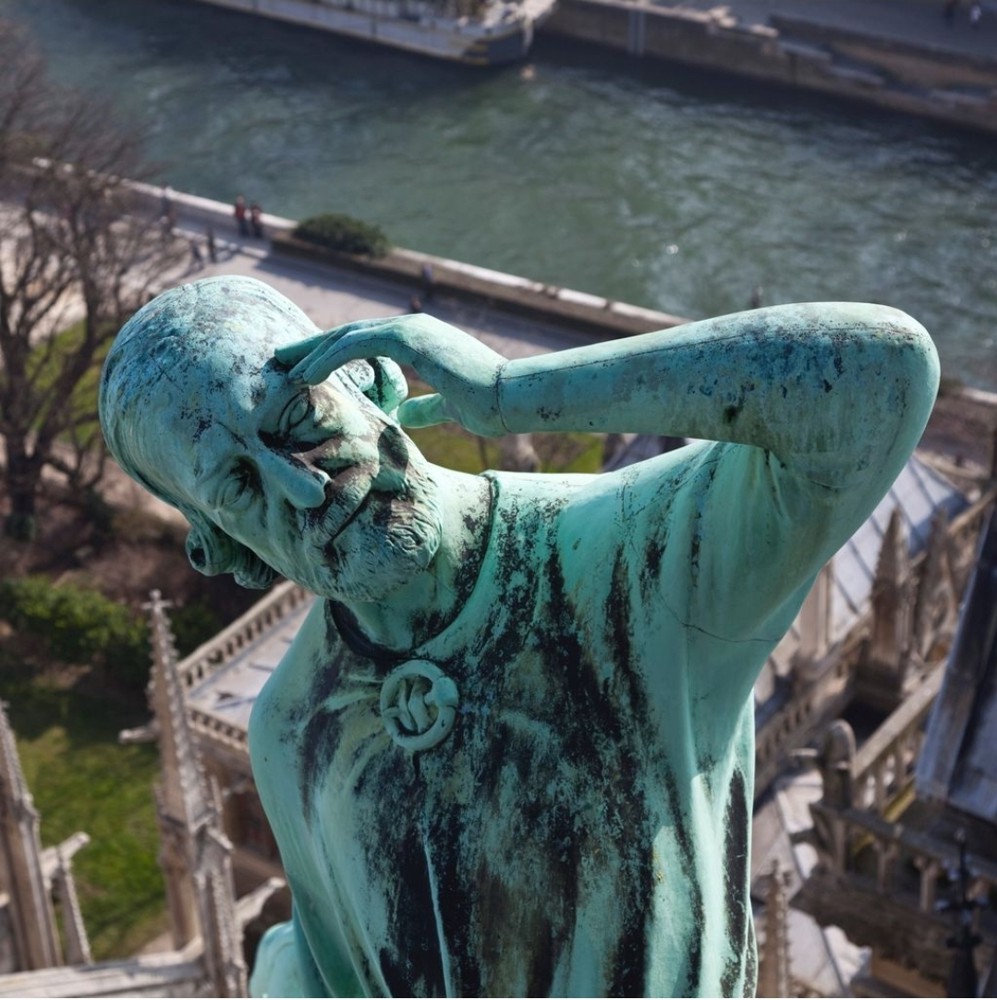
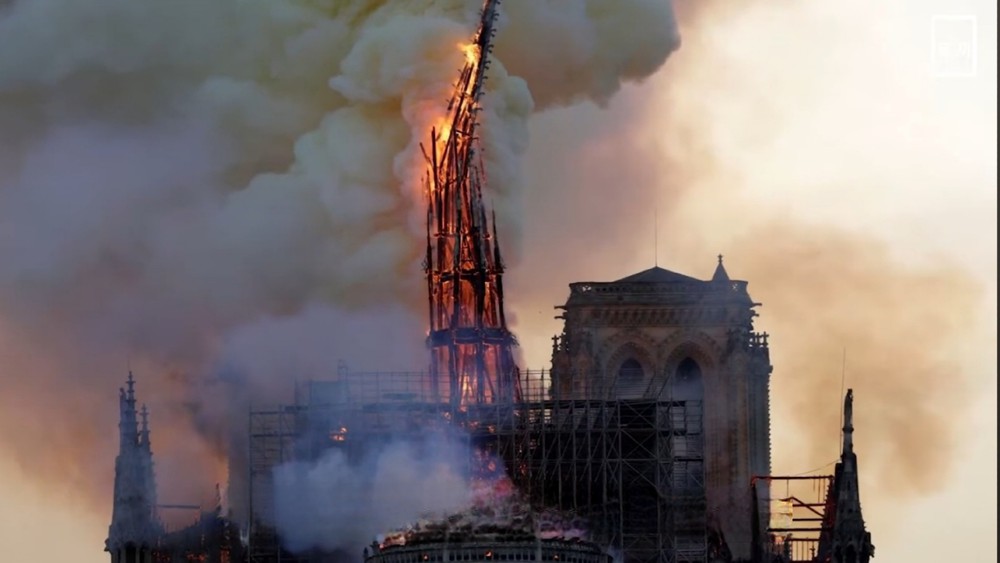
Look closely and you will notice something curious: all the apostles gaze out over Paris, except one, who has turned to look up at the spire. This is Saint Thomas, the patron saint of architects, and the face is Viollet-le-Duc's own. He carved himself gazing up in awe at the great work he created. Even more remarkable, these statues had been lifted down to the ground for restoration just four days before the 2019 fire, and so escaped the flames by a miracle. The spire itself was not so lucky. In April 2019, when the majestic structure of 500 tonnes of oak and 250 tonnes of lead was engulfed in fire and collapsed, people around the world felt a loss they will never forget.
But despair turned out to be the prelude to a great revival. For a time, some argued for rebuilding in a modern design, yet in the end the French chose to restore Viollet-le-Duc's plans exactly, to protect Paris's iconic skyline. Centuries-old oak trees were gathered from across France, and master craftsmen shaped the timber by hand with medieval-style axes, assembling the frame by traditional methods and covering it in lead. Viollet-le-Duc's masterpiece, known in its day as "the forest," has been brought back to life.
At the very top of the new spire, a golden rooster gleams, and it has become an icon of hope. The original rooster that crowned the spire was found, dented but intact, in the ashes after the fire. Inside it lay three treasures that watch over Paris: relics of Christ's Crown of Thorns, of Saint Denis, and of Saint Genevieve, patron saint of Paris. The restoration team carefully retrieved the relics and placed them back inside a new golden rooster, shaped like a flame, along with the names of the many people who took part in the work. In this way, the spire of Notre-Dame has become a symbol of hope that rose from tragedy, a link between the craftsmanship of past and present, and a testament that writes a still-unfinished story across the sky.