Paris · City Walks
Philippe Auguste's Wall: The Edge of 12th-Century Paris
Le Marais · Paris, France
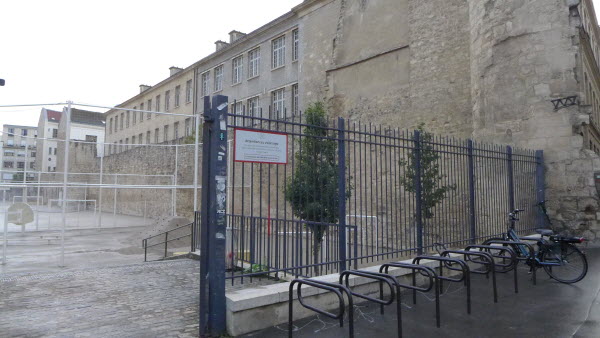
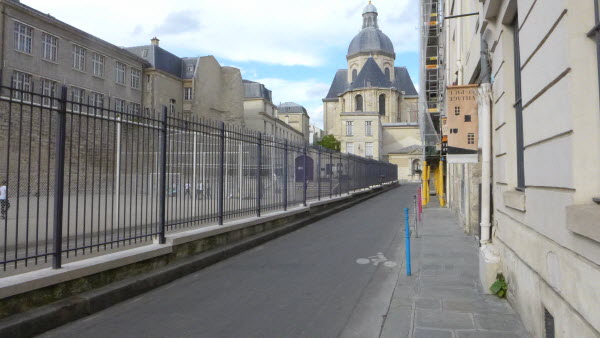
See the long wall running alongside the playground? It is a remnant of the Enceinte de Philippe Auguste, a medieval city wall from the 12th century. In 1190, Philippe Auguste, who ruled the Kingdom of France, decided to build a wall around the edge of Paris. It served as a fortress to protect the city from outside enemies and also marked the city limits. Fragments of the wall survive all over Paris, and this stretch alongside the playground is the best-preserved section.
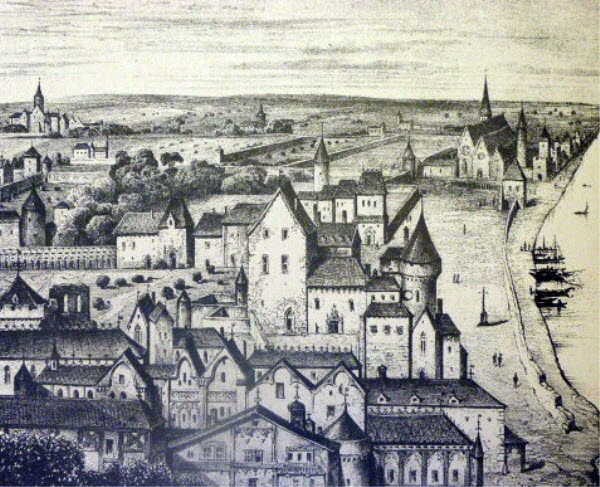
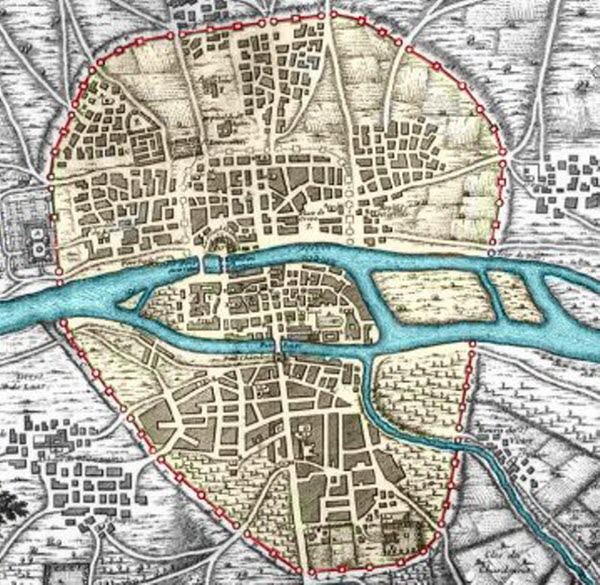
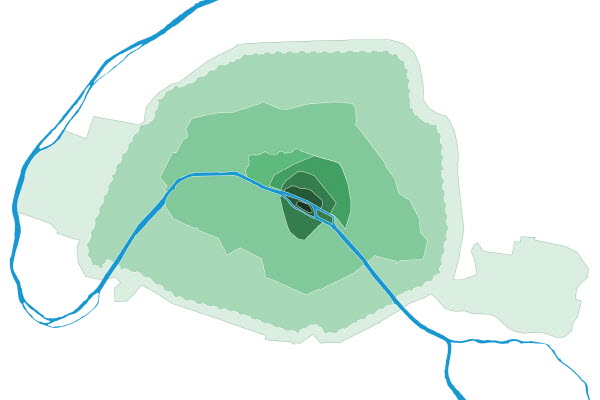
In Gallo-Roman times, in antiquity, Paris took shape around the Île de la Cité and gradually spread to both the south and north banks of the Seine. The reference images on the detail page show how the city, which began on the island, expanded, and where its boundary lay in the 12th and 13th centuries when Philippe Auguste's wall encircled it. Incidentally, this playground, where part of the wall still stands, belongs to the Lycée Charlemagne, one of France's most prestigious high schools.
The next chapter introduces Village Saint-Paul, which is currently undergoing major renovation. We weren't sure whether to include it, since the work makes it hard to appreciate the area's charm, and road closures and tangled routes could make it difficult to navigate. But the atmospheric Village Saint-Paul is a hidden gem of Le Marais, loved by Parisians, and many workshops, shops, cafés, and restaurants remain open despite the construction, so we've prepared a short introduction. Given the renovation, we recommend exploring at your own pace with the map on the detail page.