Paris · City Walks
Place des Vosges: Paris's First Royal Square
Le Marais · Paris, France
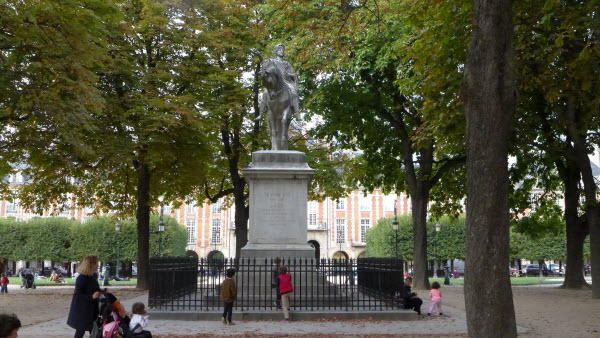
Place des Vosges is the first royal square in Paris, built over seven years starting in 1605 at the command of Henri IV. A royal square is one commissioned by a king or created to celebrate royal power and glory. Paris has five: Place des Vosges, Place Dauphine, Place des Victoires, Place Vendôme, and Place de la Concorde. In French, a royal square is a place royale, and its distinguishing feature is a statue of the king, often on horseback, at the center. At Place des Vosges, that's an equestrian statue of Louis XIII.
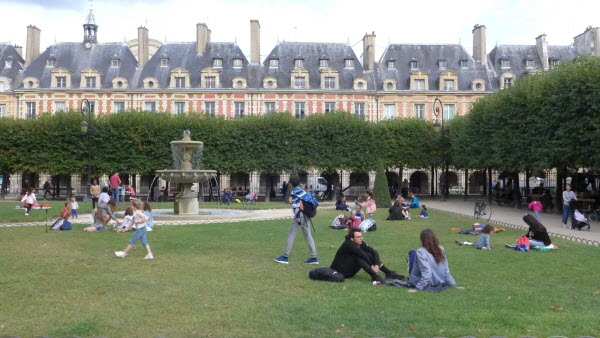
The square matters as Europe's first residential square created through urban planning. A planned square built as public space within the city's overall design, ringed by housing, was seen as a new type of urban living representative of the 17th century, and it spread across Europe. Above all, every building around the square was planned with the same design. European cities feel beautiful because their buildings follow consistent patterns that harmonize with their neighbors, and Place des Vosges was the first to introduce that concept. Blue slate roofs, red brick, and pale gray limestone frame the square. These colors recall the French flag and are said to symbolize liberty, equality, and fraternity. Imagine how deliberate and special a square 140 meters on each side must have looked in a 17th-century Paris that had grown naturally over more than a thousand years.
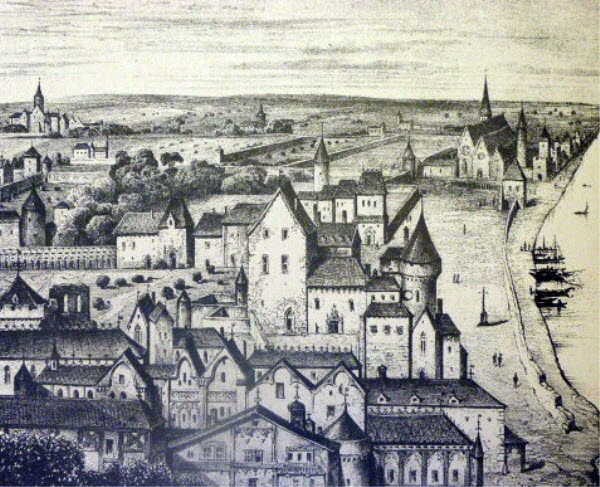
This is where the Hôtel des Tournelles, a royal palace home to kings from Charles VI to Henri II, once stood. Henri IV, often called the king the French loved most, wanted to build a factory producing gold, silver, and silk on the site after the palace was demolished. The plan fell through, and a square took the palace's place. In planning Place des Vosges, Henri IV intended a public space for all Parisians rather than one social class. Instead, the brick buildings on all four sides were completed as residences for royalty and nobles, and the square developed into a closed residential square for the aristocracy and the bourgeoisie rather than a space for all citizens. The 36 pavilions around the square housed nobles, bourgeois, and senior officials even then, and today they are said to be home to France's elite and politicians.
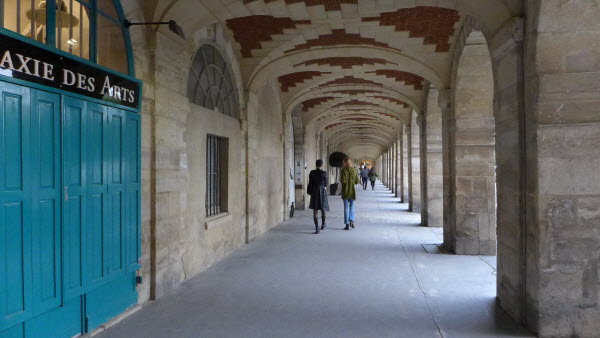
The arcades along the ground floor are another hallmark of Place des Vosges. Le Marais was a marshland the Seine often flooded, so the ground was frequently muddy, and worse when it rained. The arcade wrapping around the ground floor let people stroll in the fresh air without getting wet, on clean, mud-free ground. Today, just walking around the arcades, with their galleries, cafés, and shops, is a treat in itself.