Paris · Sculpture
A Vessel That Held Status, Not Flowers: The Borghese Vase
Borghese Vase · Paris, France
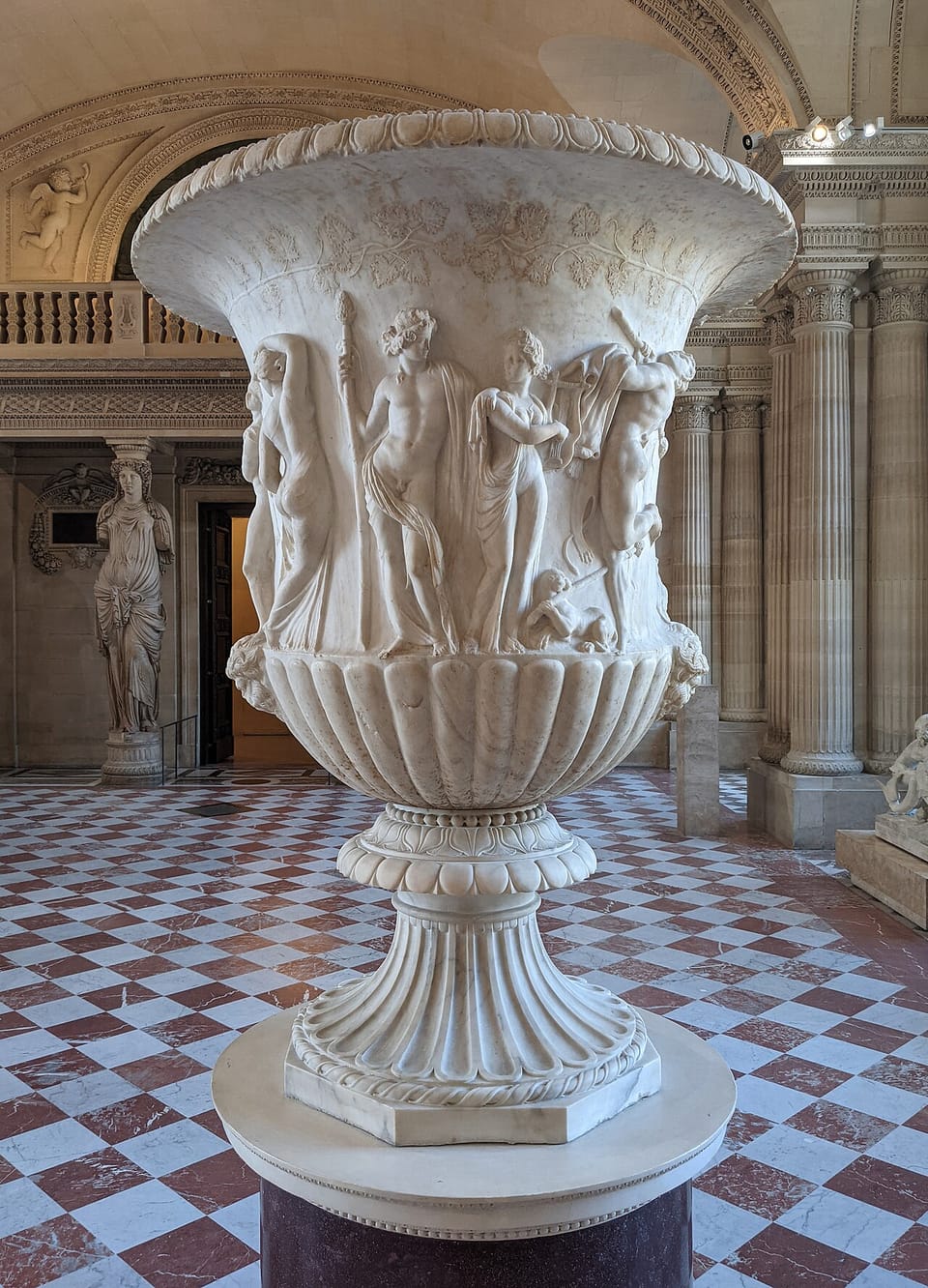
The Borghese Vase is so massive that it was never actually used to hold flowers — instead, it served as an ornamental piece that wealthy Roman aristocrats displayed to signal their social standing.
At its center is Dionysus, the god of wine, with his wife Ariadne, surrounded by his followers — maenads and satyrs dancing and playing music. Scenes like this were common in ancient Greek depictions of Dionysian festival processions, offering a glimpse into the Greek belief that dance and music could forge a connection between mortals and the divine.
What makes this vase so remarkable, above all, is the sheer precision of its carving. Dionysus and the other figures all appear caught in a moment of ecstatic abandon, their expressions and poses rendered with striking vitality — all the more impressive considering the piece is some 2,000 years old, a testament to the extraordinary skill of its makers.
Like the other works we've seen today in the Borghese and Caryatid rooms, this vase is Greek in origin but was actually found in Rome. It, too, passed through the Borghese family's collection before Napoleon brought it to the Louvre.