Paris · Painting
Woman with a Parasol and Suzanne Hoschedé
Giverny · Paris, France
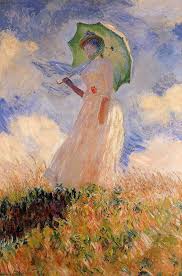
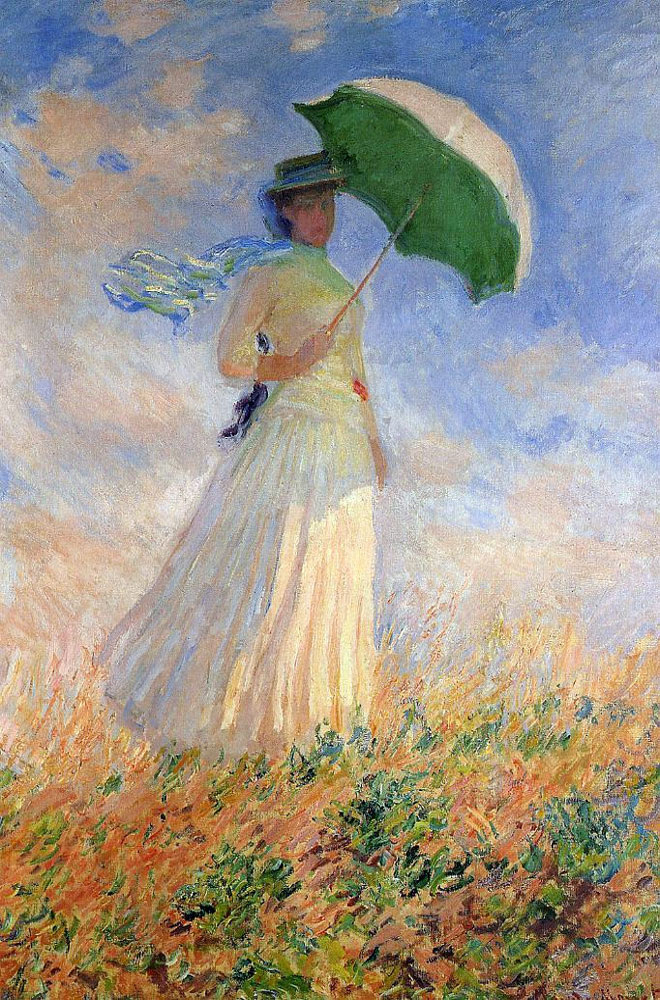
Turn your gaze and you'll see a bright, colorful painting of a woman holding a parasol, a mood that couldn't be further from "Camille on Her Deathbed." There are two similar paintings: "Woman with a Parasol Turned to the Right" and "Woman with a Parasol Turned to the Left." The titles are wonderfully literal. In one she has her back to the light and in the other she faces it, so the shadows fall in different places.
The model isn't Camille. While Camille was alive, most of the women in Monet's paintings were her, but after her death he often painted Suzanne Hoschedé, the daughter of Alice Hoschedé. Yet in these works her face is hard to make out. Some say Monet didn't focus on the figure and painted her as just another part of the landscape, while others compare the works with a similar one and read it differently.
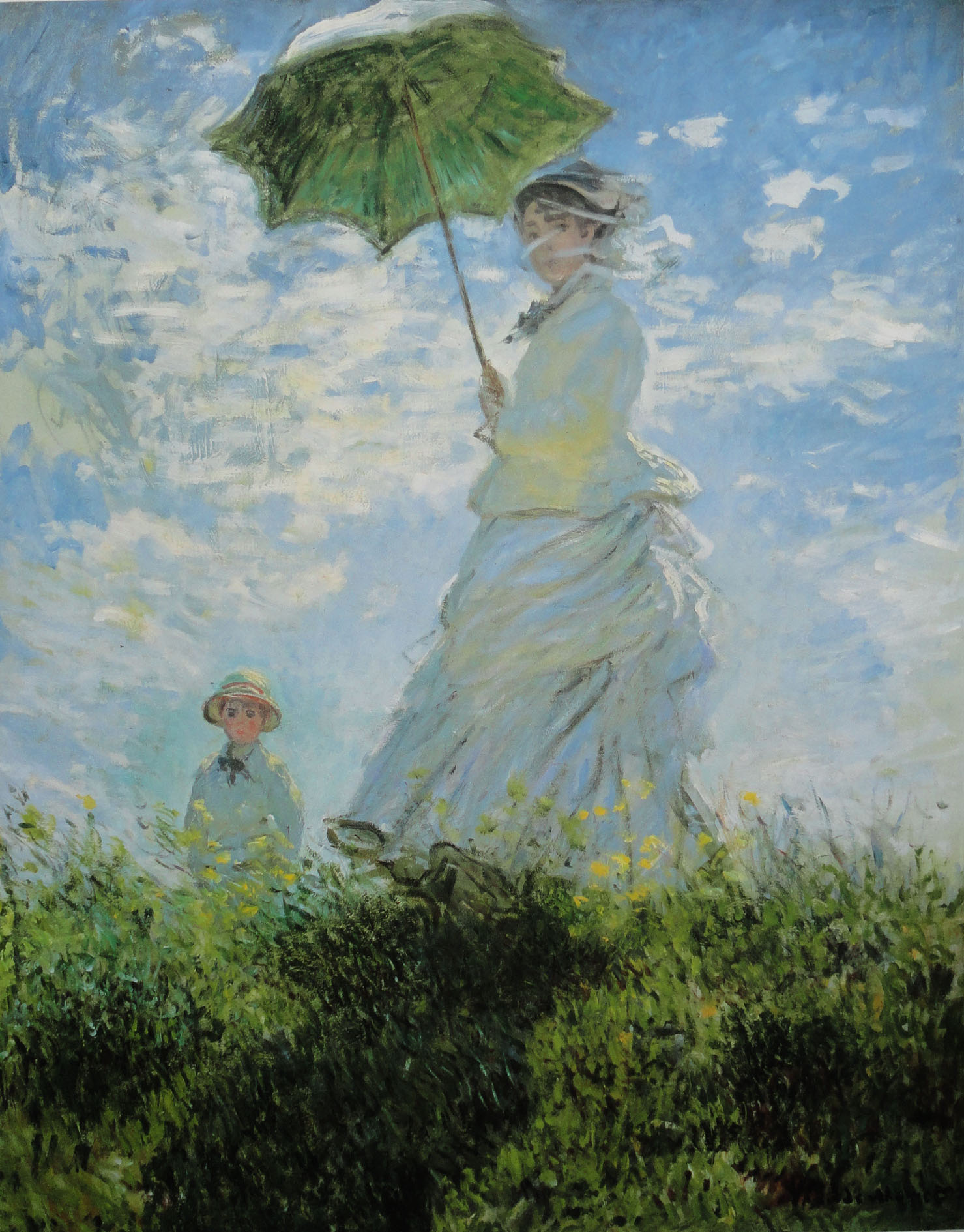
That similar work is "The Walk," shown on the detail page. It depicts his wife Camille and their son Jean: the three were out for a stroll when Monet, struck by the beauty of the scene, painted it. Camille's face here is quite clear, with distinct features. So some infer that Monet left Suzanne's face unpainted because he was remembering Camille when he looked at her. Now head upstairs to Monet's bedroom.