Paris · Painting
Three Masters Who Passed Through Auvers
Auvers-sur-Oise · Paris, France
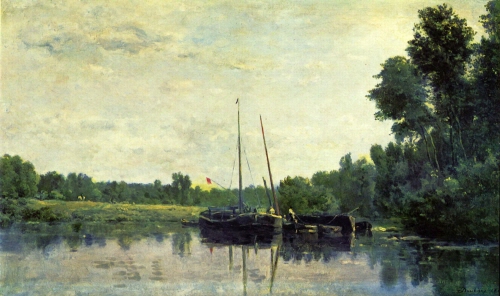
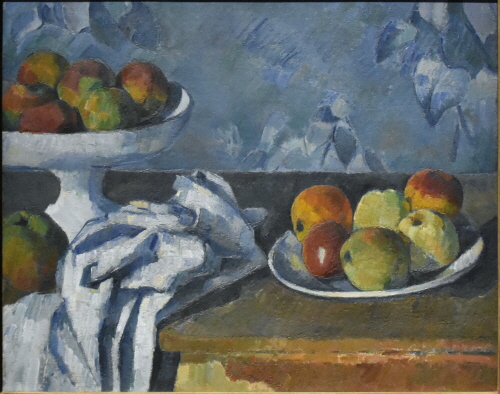
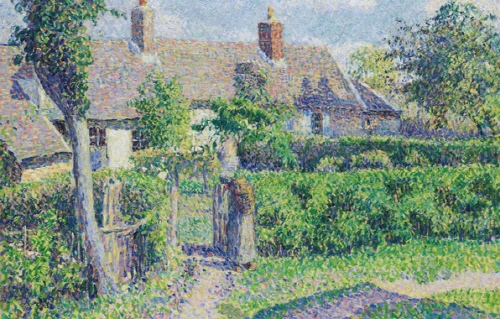
Among the great painters who passed through Auvers-sur-Oise, setting Van Gogh aside, I recommend three: Daubigny, Pissarro and Paul Cézanne. Plenty of other artists came through, but these three led 19th-century art history, so here is a brief introduction to each.
You met Daubigny earlier. Active at Barbizon, the home of Realism, he is best described as a landscape painter. He began learning to paint from his father, Edmé François, also a landscape painter, spent a year in Italy studying the old masters, and on returning to Paris studied under Delaroche, painting historical and religious subjects. Before long, though, he was captivated by the Barbizon painters, and after meeting Corot, who painted nature, he turned decisively to a naturalist style. He loved working outdoors, face to face with nature. Starting from minimal compositions and observing the light and shade of tone with great rigour, he painted in a restrained, calm and simple style. He neither beautified nor idealised nature, painting it just as he saw it, but his deep love for it filled his works with subtle light and clear air. He caught the ever-changing beauty of nature with a sensitive eye and rendered it dreamily; his technique for depicting light reflected off objects seems perfectly suited to capturing a landscape's fleeting impression. He specialised in waterside scenes, and by spending whole days afloat on a lake, he could capture the light as it changed from moment to moment. That made him a pioneer of Impressionism, and he is seen as the link between Corot's naturalism and the Impressionism of Monet and Sisley.
Next is Camille Pissarro, a name that may be unfamiliar. Influenced by Courbet, he began as a Realist and grew into a master of landscape. He stayed in constant touch with younger Impressionists such as Monet and Sisley and took part in the Impressionist exhibitions. The oldest of the group, he influenced younger painters like Cézanne and Gauguin and helped lead the movement. The young Impressionists revered him like a father, and Cézanne, today regarded as the father of modern painting, was especially fond of the kind and generous Pissarro. According to a memoir later written by Pissarro's son, Cézanne walked several kilometres every day to see him. Nearly all of Pissarro's surviving works are landscapes, from quiet countryside and humble nature to scenes of bustling Paris. His paintings feel especially simple and warm because he stayed true to the Impressionist technique of focusing on the effects of light. Less famous than the other Impressionists, he painted the most quintessentially Impressionist pictures of them all.
Last is Paul Cézanne. Born into a wealthy family, he enrolled in law school at his father's wish. But Cézanne, interested in art since childhood, could not adapt to law school, dropped out and began studying art in earnest. His path as an artist was far from smooth. Early on he painted realistic pictures in the manner of the Impressionists, using the harmony of light and colour, but gradually he broke away to create a distinctive world of his own. He is said to have declared: "Everything in nature is formed of the sphere, the cone and the cylinder. We must learn to paint using these simple shapes." Cézanne placed little weight on light and shade or perspective, which painting had traditionally prized. Instead he simplified objects into spheres, cones and cylinders, and strove above all to balance the composition of the whole picture. For his time, these techniques were radical. In the 20th century, Picasso and many other painters began to study his work, and out of that came new modern movements such as Cubism and abstraction. That is why Cézanne is called the father of modern painting.