Paris · Architecture
'The Resistance of 1814' and 'The Peace of 1815'
Arc de Triomphe · Paris, France

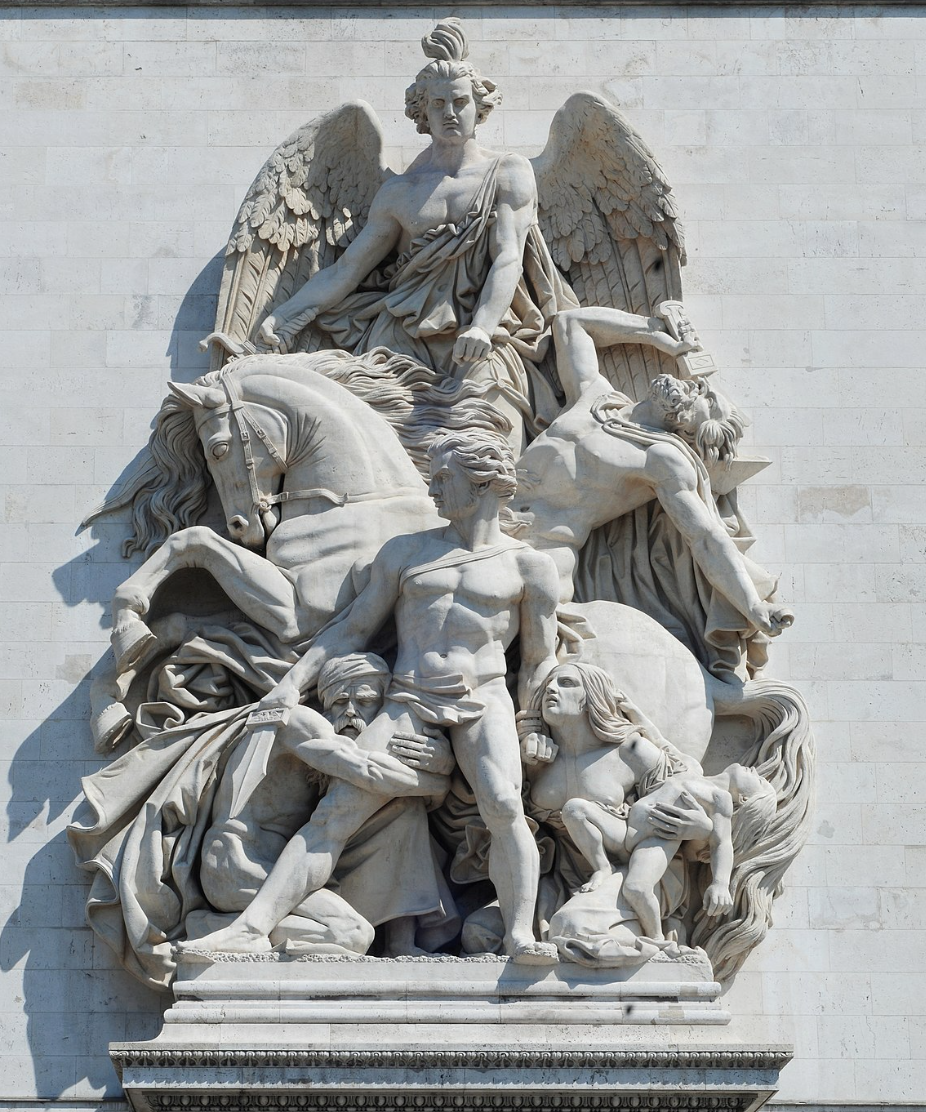
The right-hand pillar holds "The Resistance of 1814" by Antoine Étex, which honors the French resistance fighters defeated by the Allied armies while Napoleon was exiled on Elba. At the center, a nude man stands firm, gripping a double-edged sword. Below him, an old man and a woman cradling a dead child seem to hold him back from the battlefield. The old man clinging to his leg is his father, and the woman is his wife. He seems to be going to avenge the family he has lost, and his expression shows a steadfast resolve to defend his invaded homeland. Behind him, a man on horseback toppling backward in pain symbolizes the sacrifice of the patriot. At the very back, a winged figure with a sword in one hand and flames on his head embodies the fierce spirit of resistance through those wings and flames.
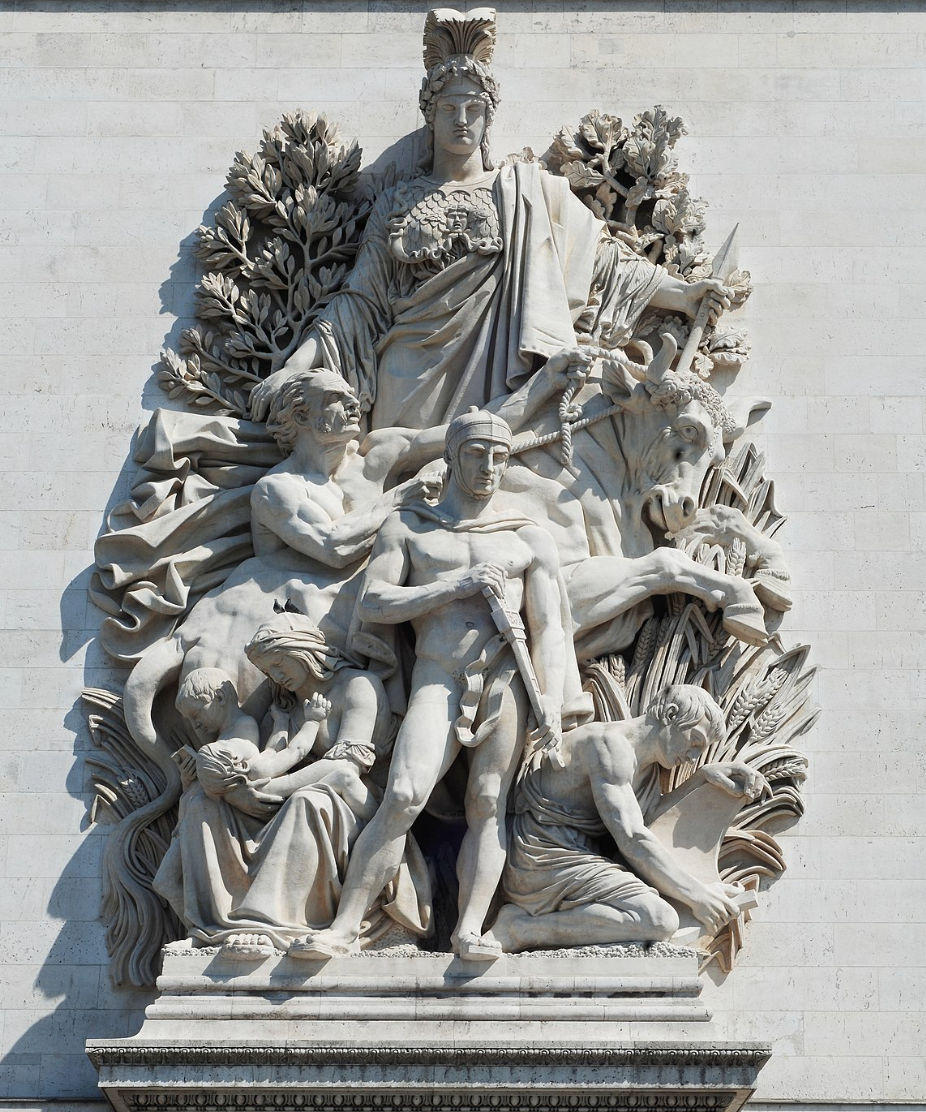
On the left pillar is "The Peace of 1815," also by Étex, and the mood is noticeably calmer. It signifies the peace that would come to Paris after the Treaty of Paris, which followed Napoleon's defeat at Waterloo. The nude man at the center is sheathing his sword, a man at lower right is harvesting, a man at left holds an ox, and a woman at lower left tends to a child. At the very back stands Minerva, the Roman goddess of wisdom, the arts and labor, upright as though guarding the peace.