Paris · City Walks
Notre-Dame: The Cathedral Victor Hugo Saved
Paris · Paris, France
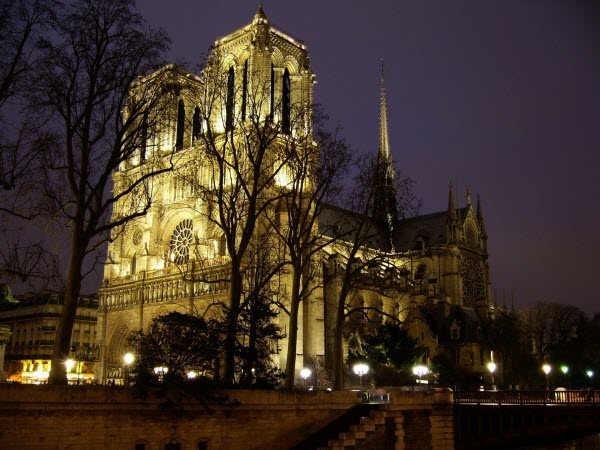
"Notre" is French for "our," and "dame" means "lady," so Notre-Dame is "Our Lady," meaning the Virgin Mary. Every church dedicated to her is called Notre-Dame, and since France has many of them, this one is known as Notre-Dame de Paris. The name is also familiar from Victor Hugo's novel and the musicals based on it.
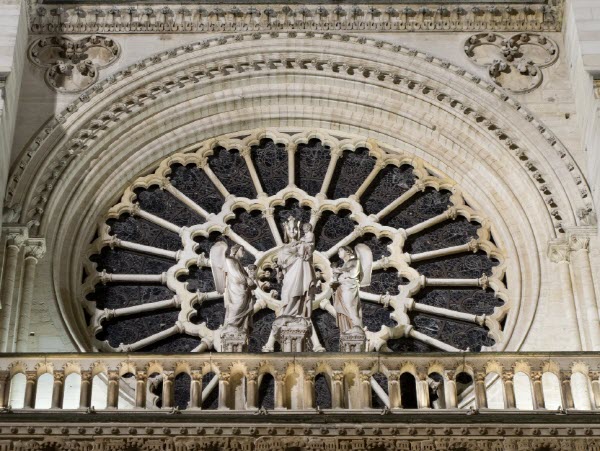
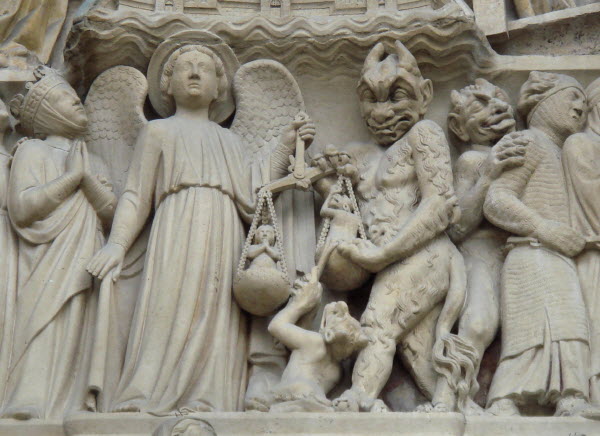
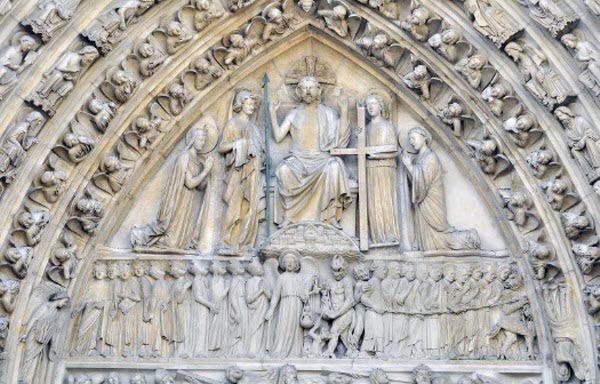
Befitting a church dedicated to the Virgin, the great round rose window in the center of the façade has the Virgin holding the infant Jesus at its heart. Below it stand 28 statues of the biblical kings of Judah, and below those are three portals: from left to right, the Portal of the Virgin, the Portal of the Last Judgment, and the Portal of Saint Anne, the mother of Mary. If you come back by day to see the interior, you enter through the Saint Anne portal on the right and leave through the Virgin portal on the left. On the central Last Judgment portal, look closely at the carving below Christ with his arms raised, and remember what the angel is holding.
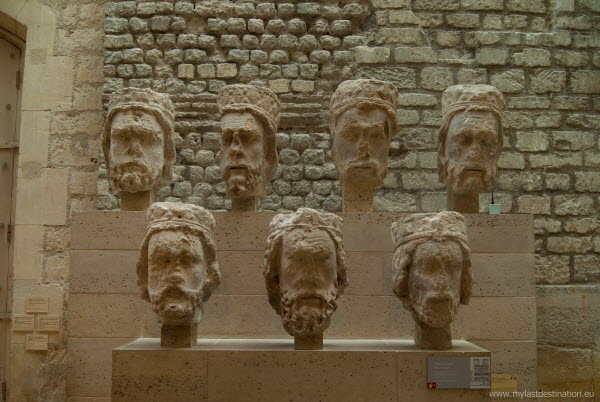
Notre-Dame has recently been through a great ordeal. On April 15, 2019, a fire broke out in its spire, the very symbol of Gothic architecture, and the spire collapsed. After more than five years of restoration, the spire was rebuilt and the cathedral reopened in December 2024. The cathedral has been damaged and restored again and again, and that is part of its story. It suffered badly during the French Revolution of 1789. Notre-Dame was a symbol of royal and church power, and the revolutionaries destroyed and looted its treasures. They mistook the 28 statues of the kings of Judah above the three portals for the kings of France and beheaded them all, as if sending them to the guillotine. Statues were smashed and fires were set here and there until the cathedral could no longer serve as a sacred place. It was even threatened with demolition, and it survived thanks to one novel, Notre-Dame de Paris, which shares the cathedral's name. Its author was the great French writer Victor Hugo, and it's the book many readers know as The Hunchback of Notre-Dame. When calls came to tear the building down, Hugo, who cared deeply about protecting France's heritage, defended it in the way he did best.
The novel is set in 15th-century Paris, when the Middle Ages, a thousand years long, were giving way to the Renaissance. The medieval world centered on God: living by divine teaching mattered more than personal ideas or desires, and all art pointed toward God. "Renaissance" means "rebirth" in French and refers to the revival of ancient Greece and Rome, which had been human-centered. As the Renaissance spread around the 15th century, long-suppressed human desires burst forth, and this turbulent age is the story's backdrop. The musical opens with the poet-minstrel Gringoire, who acts as a narrator, singing "Le temps des cathédrales" ("The Age of Cathedrals"). Cathedrals, with spires that pierce the sky and big windows filled with stained glass: Notre-Dame, right in front of you, is the prime example. It's called the essence of the Gothic style, and it is far larger than the Romanesque churches that came before.
The leads are Esmeralda, a beautiful Gypsy woman loved by every man; Quasimodo, the hunchbacked bell ringer of Notre-Dame; Frollo, the archdeacon who treats Quasimodo like a bell to be rung; and Phoebus, captain of the guard. Every man in the story desires Esmeralda, and that seething love brings tragedy to all of them. Frollo, a churchman, falls for her beauty and orders Quasimodo to abduct her, but Phoebus catches them in the act; Frollo flees and only Quasimodo is seized. Quasimodo was born with sight in one eye only and a spine that never straightened, and ringing the bells cost him his hearing. Unable to hear well, he can't answer in court, is convicted, and is whipped and scorned. When no one helps him, kind Esmeralda brings him water, and he falls in love with her. But the man Esmeralda loves is Phoebus, who saved her. Though engaged to someone else, Phoebus presses Esmeralda for physical intimacy; the archdeacon, spying on them, flies into a rage, stabs Phoebus and flees. Esmeralda, standing there, is blamed and sentenced to hang. Quasimodo carries her into the cathedral. At the time, a church was sacred ground that could not be violated, and even a convict inside couldn't be arrested. But Frollo, consumed by desire, demands her love again, forcing her to choose between death and him, and is refused once more. So he sets the hanging in motion and watches from the tower, smiling. Quasimodo sees it, and in his fury shoves Frollo off the tower, then dies himself holding the dead Esmeralda. In a world where divine teaching and moral rules had mattered most, the unleashing of suppressed human desire signals the end of the medieval age, the end of the age of cathedrals. At the curtain call, they reportedly sing "Le temps des cathédrales" once more, with the lyrics changed from "the age of cathedrals has come" to "the cathedrals are crumbling."
Hugo wrote the novel at twenty-nine, in just six months. Many French readers took an interest in Notre-Dame, and the money raised helped restore it to its present form. Twenty-one heads of the beheaded kings of Judah were found in a mansion nearby and are now in the Musée de Cluny; the kings you see today were made during the 19th-century restoration. After the 2019 fire, donations poured in from around the world once again, and Notre-Dame has regained its soaring medieval silhouette.