Paris · Painting
Paul Gauguin, Landscape
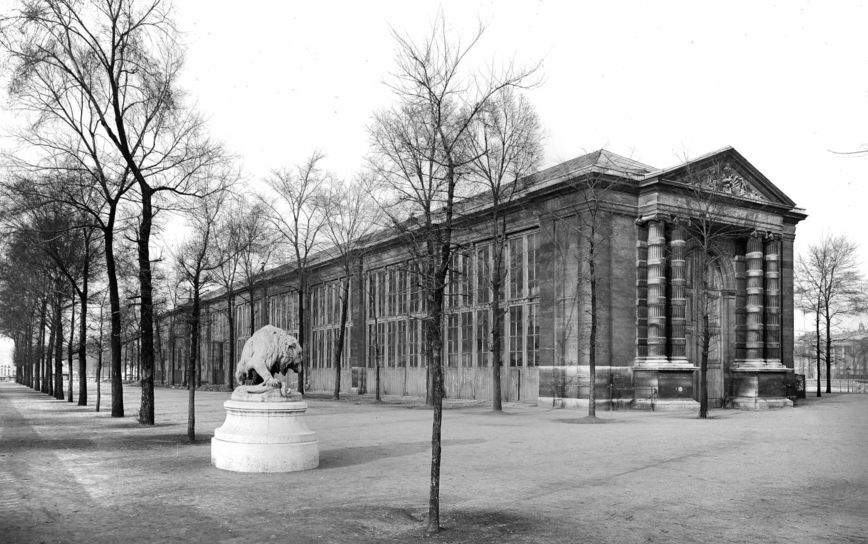
Musée de l'Orangerie · Paris, France
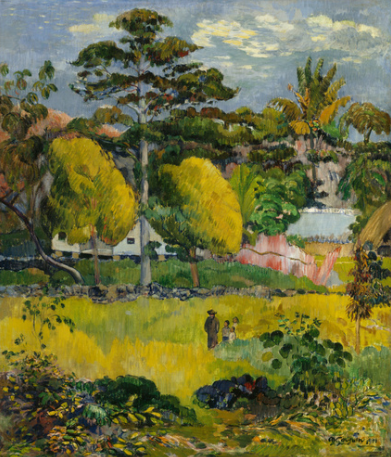
Two years before painting this, in September 1901, Gauguin left Tahiti for the Marquesas Islands, which became his final home; he died there in 1903. This work is thought to date from shortly after his arrival in the Marquesas.
Small figures appear amid dense tropical vegetation: a bride in black followed by children, which once led the painting to be known as Bride and Children. As he had done on first arriving in Martinique and Tahiti, Gauguin celebrates the wild, untouched beauty of nature in this painting as well.
Its most striking feature is an almost total absence of perspective. Nearby trees and a distant house all seem to sit on the same flat plane, as though cut from paper and pasted together. Rather than conjure depth, Gauguin pursued a strange, dreamlike mood. Look closely at the trees and grass and you'll notice the paint isn't brushed on so much as built from long, repeated hatching strokes, as if drawn in pencil, lines that give the whole canvas a living texture and energy.